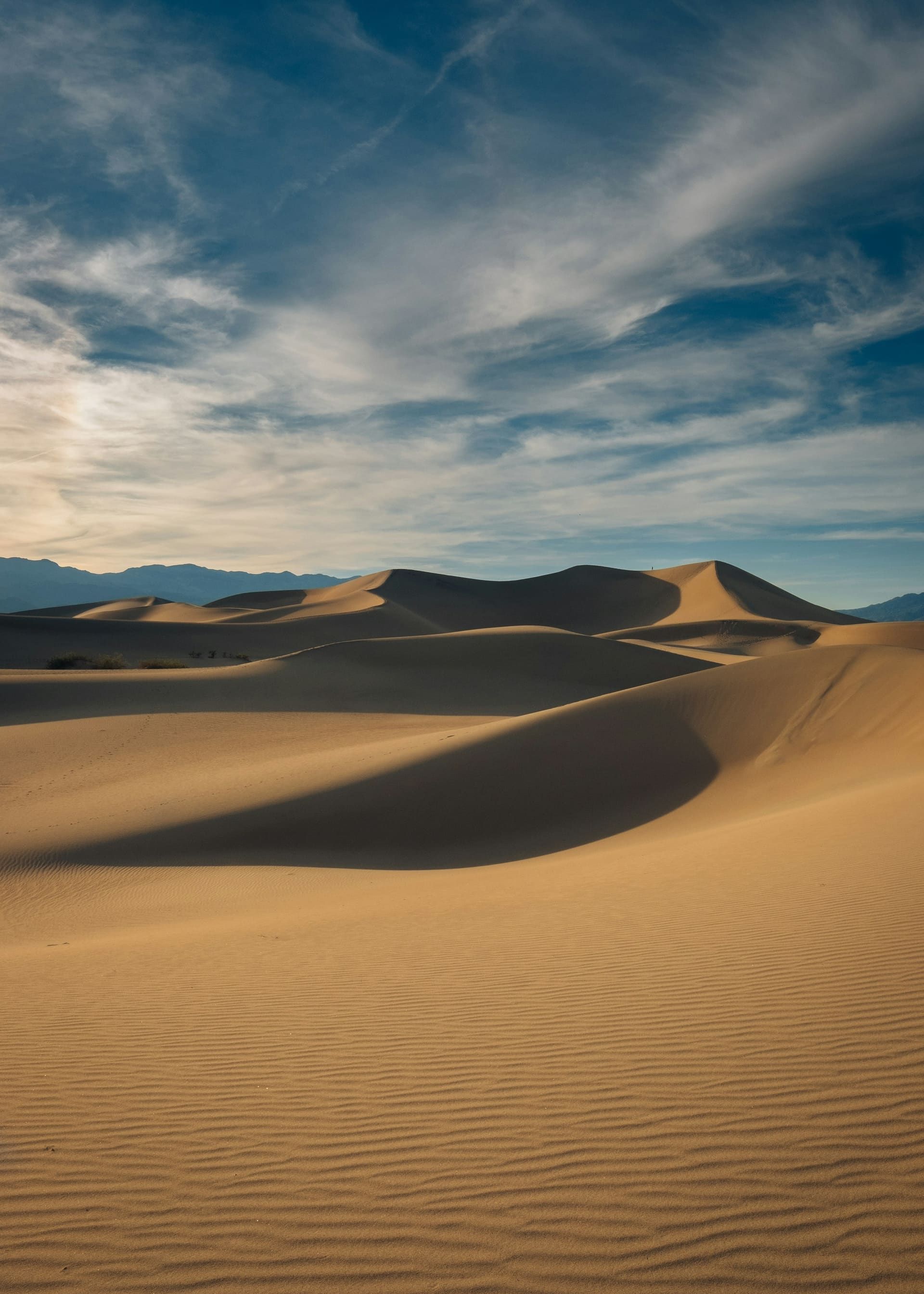
DDCR vs Al Marmoom safari, Dubai's two conservation zones compared
The 30-second verdict, who books the DDCR and who books Al Marmoom
The 30-second answer routes by what the conservation morning is for rather than by personal preference. The decision matrix below scores both reserves across 8 criteria, but the shortlist of routings covers most bookings.
- You came for the 400-head oryx herd, almost always in frame on a morning drive
- You want a chef-prepared dinner at an exclusive camp
- You travel as a couple and want a small exclusive camp
- You're staying inside the desert at Al Maha overnight
- Your budget caps under AED 500 per adult on conservation
- You came to photograph 158 bird species at Al Qudra Lakes
- You travel with kids and want cycling, falconry, and the lake walk
- You booked this week and the DDCR is sold out
Side-by-side spec sheet, DDCR vs Al Marmoom on 8 attributes
A side-by-side spec sheet covers the eight attributes that move the conservation-zone decision. Pricing references the 2026 standard package for a morning safari at the Dubai Desert Conservation Reserve and a sunrise eco-route at Al Marmoom Reserve booked through the BookMySafari editorial desk.
| Attribute | DDCR | Al Marmoom Reserve |
|---|---|---|
| Drive time from Dubai Marina | 55 to 65 minutes southeast on the E66 | 40 minutes south on Al Qudra Road |
| Access model | 225 km² fenced, ranger-patrolled, permit-only entry | 10 km² open public reserve with published eco-rules |
| Operators on the system | 6 licensed luxury operators (cap held since 2018) | 4 MBRC-certified eco-operators on off-track routes |
| Arabian oryx population and odds | 400-head herd, oryx almost always on a morning drive | 80-head reintroduced herd, oryx usually seen on a morning drive |
| Bird species checklist | 105 species (desert-and-ghaf habitat) | 158 species (Al Qudra Lakes pull migratory waterfowl) |
| Camp size at dining | Exclusive conservation camp, small guest count | 20 to 30 guests at a Heritage Centre eco-camp |
| Dining format | Chef-prepared multi-course dinner at an exclusive camp | desert breakfast or eco-tour standard menu, dry |
| AED price spread 2026 | AED 695 to AED 2,500+ | AED 350 to AED 750 |
Dubai's two faces of conservation
The gated DDCR and the open Al Marmoom reserve
An oryx crossing the open ground of the DDCR, migratory waterfowl on the Al Qudra Lakes inside Al Marmoom, a vintage 1950s Land Rover on a DDCR conservation route, an Arabian gazelle at the dune fringe of Al Marmoom, and a falconry handler with a saker falcon at an exclusive desert camp.


DDCR vs Al Marmoom · what changes
The 8 attributes that move the conservation-zone decision
Side-by-side at the standard 2026 package. The reserve you pick changes the AED outlay, the oryx population density, the bird checklist depth, the camp size, the dining licence, and the overnight option.
Access model, the fenced DDCR gate vs Al Marmoom open access with eco-rules
The DDCR and Al Marmoom share the conservation framing but operate on opposite access models. The dichotomy drives every downstream difference in pricing, operator count, and wildlife reliability.
The DDCR is total exclusion. The 225 km² perimeter is fully fenced, ranger-patrolled, and gated. No self-drive 4x4s, quad bikes, motorcycles, hikers, or campers enter the reserve under any circumstances. Entry runs exclusively through a small set of licensed luxury operators, including Arabian Adventures and Platinum Heritage, under concessions agreed with six qualifying tour operators in the reserve's management plan. Each operator pays a per-head conservation levy that funds ranger payroll, fence maintenance, the oryx programme, and the ghaf-tree reforestation. The model trades AED at the entry level for density control and wildlife reliability.
Al Marmoom is open access with eco-rules. The 10 km² reserve carries no perimeter fence and admits any visitor on the paved roads, a sedan reaches the Al Qudra Lakes car park, the Heritage Centre, and the cycling-track kiosks. The reserve operates under a published eco-code: no off-track driving outside marked routes, no flash photography of any wildlife, no drone flying without an MBRC permit, no littering, no swimming in the lakes, no alcohol, dogs only on the cycling track. Off-track dune routes for commercial tours are restricted to the 4 MBRC-certified operators, including a heritage Land Rover and falconry operator, a conservation-drive operator, Al Marmoom Heritage Centre, and an entry-level eco-safari operator. The model trades wildlife density for open access and a structural AED 345 saving on the entry level.
The AED 345 floor gap, what the DDCR levy actually buys
The Al Marmoom entry level prices at AED 350 on the entry-level eco-safari operator's sunrise; the DDCR entry level prices at AED 695 on the heritage-fleet operator's morning. The AED 345 gap is the largest single decision pivot between the two conservation zones and the most asked question at the editorial desk. The breakdown below traces what the gap actually funds.
| Option | Al Marmoom AED | DDCR AED | What the gap funds at the DDCR |
|---|---|---|---|
| Eco-route entry level | AED 350 (entry-level eco-safari operator, sunrise) | AED 695 (heritage-fleet operator, morning) | Perimeter fence and ranger force (AED 180-240 per head levy). |
| Heritage package | AED 450 (Al Marmoom Heritage Centre camel/equestrian) | AED 950 (a luxury operator's desert breakfast safari) | Vintage 1950s Land Rover + exclusive camp footprint. |
| Gold package | AED 650 (conservation-drive operator, Gold) | AED 1,100 (a luxury operator's DDCR sundowner) | Sundowner drive and dinner inside the reserve. |
| Platinum package | AED 750 (heritage Land Rover + falconry operator, cycling and oryx walk) | AED 1,950 (a heritage operator's Platinum safari) | Chef-prepared dinner at an exclusive reserve camp. |
| Luxury ceiling | AED 750+ (heritage Land Rover + falconry operator, premium) | AED 2,500+ (Al Maha private day or VIP private) | In-reserve suite, butler service, private naturalist guide. |
The AED 345 gap at the entry level covers three specific structural items the Al Marmoom model does not carry. First, the perimeter fence and ranger force that the DDCR funds through a published per-head levy of roughly AED 180 to AED 240, Al Marmoom carries no fence and a smaller ranger footprint. Second, a higher vehicle-to-visitor ratio: the 6- operator concession cap holds DDCR dune-line density well below the Al Marmoom average. Third, the premium dining infrastructure, with the licensed alcohol footprint confined to Al Maha; Al Marmoom runs dry across every certified-operator route.
Arabian oryx, 400-head DDCR herd vs 80-head Al Marmoom herd
Both reserves carry free-ranging Arabian oryx populations that anchor the conservation framing. The DDCR holds Dubai's largest oryx herd at roughly 400 head across 225 km², with oryx almost always in frame on a morning permit slot. An early drive usually turns up the first oryx within the opening minutes inside the reserve gate. The herd has been free-ranging since the 2003 founding under the Mohammed Bin Rashid Al Maktoum reintroduction programme.
Al Marmoom holds an 80-head reintroduced herd across a 10 km² open public footprint, with oryx usually seen on a winter sunrise eco-route. The herd was reintroduced starting 2013 under the same MBRC oryx programme and now breeds on the reserve. The population density runs roughly 4x lower than the DDCR, a comparison that matters less for the binary sighting question (both deliver oryx in the frame) and more for the herd-shot brief (the DDCR delivers groups of 15 to 25 oryx on a single ridge; Al Marmoom typically delivers smaller scatter groups of 3 to 8). If a herd composition is the photograph the trip is for, the DDCR is the routing.
Bird species, 105 desert species at DDCR vs 158 at Al Marmoom
The bird-species comparison reverses the oryx narrative. Al Marmoom documents 158 bird species against the DDCR's 105 because Al Marmoom contains the Al Qudra Lakes, a 10-lake cluster pumped by solar water that attracts migratory waterfowl every November to March. The DDCR's desert-and-ghaf habitat holds 53 fewer species because the gated reserve carries no equivalent lake habitat at any scale.
The Al Marmoom checklist runs to flamingos, grey herons, MacQueen's bustard, marsh harriers, white-eared bulbul, Eurasian wigeon, pintail ducks, and a peak migration roster that the ranger calls on the lake-edge route between November and March. The Al Qudra Lakes deliver mirror reflections at sunrise and migratory waterfowl often in frame on the lake-edge routes. The DDCR's 105 species runs strong on arid-zone residents (sand partridge, hoopoe lark, Arabian babbler, brown-necked raven) and the falconry display covers the saker or peregrine for handler-perched photography. If the brief is a bird portfolio with lakes and migrants, Al Marmoom is the only Dubai routing that delivers it.
Dining, a chef-prepared multi-course dinner at the DDCR vs a dry eco-menu at Al Marmoom
The DDCR dinner-safari package serves a chef-prepared multi-course dinner, an Arabic coffee ceremony, and a falconry presentation inside an exclusive camp. The course progression typically opens with a chilled mezze tasting, runs to a slow-cooked lamb shoulder main, and finishes with an Arabic dessert plate and coffee. Al Maha Resort holds a full alcohol licence at Al Diwaan restaurant with wine, beer, spirits, and in-suite dining service for resort guests.
Al Marmoom carries no licensed dinner footprint at any price level. The reserve eco-code prohibits alcohol across every certified-operator route, and the dining format runs to desert breakfast at the Heritage Centre, an eco-tour standard menu on the morning conservation drive, or a picnic at Family Lake. The dining is generous and authentic, Arabic coffee, fresh dates, balaleet, eggs and meat with khameer bread, but it does not match the DDCR premium dining package. If a licensed dinner inside a conservation reserve is the anniversary brief, Al Maha's licensed restaurant is the only in-reserve option.
Vehicle, vintage 1950s Land Rover at DDCR vs Land Cruiser at Al Marmoom
The DDCR runs Land Cruisers on most operator routes, with a vintage 1950s Land Rover fleet run by a heritage-fleet operator on its conservation routes. The vintage Land Rover is slower, quieter, and rides higher than the Cruiser; the visual signature of a sand-coloured heritage Land Rover on a ghaf-edged dune is the single most photographed vehicle frame inside the reserve. Bookings specifically for the heritage vehicle experience (the open-side body, the heritage colour, the engine note) route to that operator's packages from AED 695 upward.
Al Marmoom runs Toyota Land Cruiser fleets across the 4 certified eco-operators, with deflated tyres at 18 PSI on off-track segments. The Heritage Centre operates a small vintage-vehicle fleet for the heritage-tourism programme, period trucks and restored Land Cruisers, but the 1950s Land Rover fleet is not part of the Al Marmoom roster. Travellers who want the heritage Land Rover frame route to that heritage-fleet operator inside the DDCR; travellers who want the standard conservation vehicle on a budget route to Al Marmoom Land Cruisers.
Family-friendliness, DDCR conservation pace vs Al Marmoom activity mix
The DDCR runs at a conservation pace by design. The reserve management caps the intensity inside the perimeter to protect the ecosystem; most DDCR routes carry no or low-intensity dune driving. The signature sunrise camel trek runs from age 5 upward; the heritage-fleet operator's vintage Land Rover Heritage Safari accepts children from age 5, with under-5s requiring a private booking. The wildlife drive at family pace suits parents and younger children, with the limitation that the DDCR carries one activity per visit, the wildlife morning, the heritage dinner, or the Al Maha overnight stay.
Al Marmoom suits families wanting an activity mix on one visit. The day layers across the 10 km Al Qudra cycling and fat-bike loop (AED 50 to AED 120 per hour at the kiosk), a 45 to 90 minute camel trek at the Heritage Centre, an equestrian sunrise walking ride for beginners, a falconry demonstration with a heritage handler (AED 75 per adult), a ranger conservation walk on the oryx programme (AED 100 per adult), and a picnic at Family Lake. Total AED outlay rises against the budget Lahbab equivalent, but the day stretches from 5:00 AM sunrise to a 1:00 PM family lunch with five distinct activity blocks. Families that want both reserves run a standard recipe: one Al Marmoom Wednesday for the activity mix and one DDCR Saturday morning for the 400-head oryx herd.
Overnight stay, Al Maha inside the DDCR vs no in-reserve option at Al Marmoom
Al Maha, a Luxury Collection Desert Resort, is the only accommodation inside the DDCR perimeter. The 42 private suites each open onto unbroken desert with a temperature- controlled plunge pool, a private deck, and a sliding-glass wall to the dunes. Rates vary by season, check current pricing, and typically include half board, a sunrise camel trek, a wildlife drive, and falconry. A nearby resort property at the perimeter runs day-trip excursions inside the DDCR.
Al Marmoom carries no in-reserve resort accommodation. The reserve management has not licensed any overnight footprint inside the 10 km² perimeter, and overnight programming routes through the city hotels in Dubai or through a Lahbab overnight desert camp at AED 350 to AED 750 per head. Travellers who want to wake up inside the desert with an oryx at the deck route exclusively to Al Maha inside the DDCR; the Al Marmoom equivalent is a day-trip from a city hotel followed by a sunrise eco-route.
The decision matrix, 8 criteria scored out of 10
The decision matrix scores both reserves across the 8 criteria the desk logs as the most asked at booking. The DDCR wins oryx sighting reliability, camp size and dining intimacy, dining format, vehicle and heritage signature, and the in-reserve overnight option. Al Marmoom wins price floor, bird species checklist depth, and family activity mix. The overall tally: DDCR 68 of 80, Al Marmoom 62 of 80. The decision is close on the score and decisive on the brief, pick by what the trip is for, not by tally alone.
| Criterion | DDCR | Al Marmoom | Note |
|---|---|---|---|
| Price floor 2026 per adult | 4/10 | 10/10 | DDCR AED 695 vs Al Marmoom AED 350. The AED 345 gap is the perimeter fence and higher vehicle ratio, not operator margin. |
| Arabian oryx sighting reliability | 10/10 | 8/10 | The DDCR oryx are almost always in frame on a morning drive across a 400-head free-ranging herd; Al Marmoom oryx are usually seen on a smaller 80-head reintroduced herd. |
| Bird species checklist depth | 7/10 | 10/10 | Al Marmoom lists 158 species against the DDCR 105 because Al Qudra Lakes pull migratory waterfowl the gated reserve cannot match. |
| Camp size and dining intimacy | 10/10 | 8/10 | DDCR exclusive camps cap at 40 to 60 guests; Al Marmoom Heritage Centre runs 20 to 30-guest eco-camps but no full-evening dining footprint. |
| Dining format at the camp | 10/10 | 6/10 | The DDCR dinner package serves a chef-prepared multi-course menu at an exclusive camp; Al Marmoom runs desert breakfast and eco-tour menus only, dry. |
| Vehicle and heritage signature | 10/10 | 7/10 | Vintage 1950s Land Rovers run at a heritage-fleet operator inside the DDCR; Al Marmoom runs Land Cruiser and Heritage Centre vintage vehicles only. |
| Family activity mix on one visit | 7/10 | 10/10 | Al Marmoom layers Al Qudra cycling, equestrian, falconry, conservation walk, and lakes picnic; DDCR runs conservation-pace routing only. |
| In-reserve overnight option | 10/10 | 3/10 | Al Maha 42-suite resort sits inside the DDCR perimeter; Al Marmoom carries no in-reserve accommodation and routes overnight stays to Lahbab or city hotels. |
| Total out of 80 | 68 | 62 | Decisive on the brief, not on the tally. |
4 scenarios where the DDCR is the right answer
Four traveller scenarios route to the DDCR rather than the Al Marmoom default. Each pairs a specific persona with the reason the DDCR wins on the day, meaning Al Marmoom cannot deliver the same thing regardless of how the booking is routed.
The DDCR dinner package serves a chef-prepared multi-course menu inside an exclusive conservation camp. The course progression typically opens with a chilled mezze tasting, runs to a slow-cooked lamb shoulder main, and finishes with an Arabic dessert plate and a Bedouin coffee ceremony. Al Marmoom Heritage Centre runs desert breakfast and eco-tour menus only, no licensed dinner footprint exists inside the reserve at any price level.
The DDCR holds Dubai's largest unfenced Arabian oryx population at roughly 400 head, with oryx almost always in frame on a morning permit slot. An early reserve gate clear usually delivers a first oryx sighting within the opening minutes of the drive. Al Marmoom's reintroduced herd sits at 80 head on a 10 km² open footprint; oryx are usually seen there too, but the population density runs roughly 4x lower than the DDCR.
Al Maha, a Luxury Collection Desert Resort, is the only accommodation inside the DDCR perimeter, 42 private suites each opening onto unbroken desert with a temperature-controlled plunge pool. Al Marmoom carries no in-reserve resort; the closest equivalent routes through a city hotel or a Lahbab overnight desert camp at AED 350 to AED 750 per head.
A heritage-fleet operator runs a vintage 1950s Land Rover fleet inside the DDCR. The visual signature of a sand-coloured heritage Land Rover on a ghaf-edged dune is the single most photographed vehicle frame inside the reserve, paired with the falconry display and a desert breakfast composition. Al Marmoom runs Land Cruiser fleets and Heritage Centre vintage vehicles, but the 1950s Land Rover is the specific frame travellers cite at booking.
4 scenarios where Al Marmoom is the right answer
Four traveller scenarios route to Al Marmoom rather than the DDCR. Each pairs a specific persona with the reason Al Marmoom wins on the day, meaning the DDCR cannot deliver the same thing at the same AED outlay or with the same family-friendly mix.
Al Marmoom's entry-level eco-safari operator prices at AED 350 per adult, half the AED 695 DDCR floor, with the same conservation framing on a certified eco-route. The AED 345 gap is structural: the DDCR funds a fenced perimeter, a higher ranger-to-visitor ratio, and a 6-operator daily cap, while Al Marmoom's open-access model with eco-rules holds its costs against a smaller operator footprint. If the brief is conservation access at the entry level, Al Marmoom delivers it for AED 345 less.
Al Marmoom documents 158 bird species against the DDCR's 105 because the Al Qudra Lakes, a 10-lake cluster pumped by solar water inside the reserve, attract migratory waterfowl every November to March. The desk-logged checklist runs to flamingos, grey herons, MacQueen's bustard, marsh harriers, white-eared bulbul, and Eurasian wigeon at peak migration. The DDCR holds no equivalent lake habitat; the gated reserve runs a desert-and-ghaf bird community only.
Al Marmoom layers a family day across the 10 km Al Qudra cycling and fat-bike loop (AED 50 to AED 120 per hour at the kiosk), a 45 to 90 minute camel trek or equestrian sunrise ride at the Heritage Centre (AED 150 to AED 450), a falconry demonstration with a heritage handler (AED 75 per adult), a ranger conservation walk on the oryx programme (AED 100 per adult), and a picnic at Family Lake. The DDCR runs at a conservation pace with limited family-activity layering; the wildlife drive is the main draw.
DDCR permit slots, capped by the 6-operator daily cap held since 2018, sell out 4 to 6 weeks ahead through Christmas, New Year, and UAE National Day weekend. Al Marmoom's 4 MBRC-certified eco-operators carry same-week availability across winter for any traveller missing a DDCR window. The reliable oryx sightings and the 158-species bird checklist deliver a conservation morning when the DDCR slot is not bookable.

The do-both approach
Book Al Marmoom on day one and the DDCR on day three
A two-or-three-day Dubai trip routes both conservation reserves inside one booking window without compression. Day one: Al Marmoom sunrise eco-route from a 5:00 AM Marina pickup, reserve perimeter at 5:40 AM, oryx and gazelle on the lake-edge route, migratory waterfowl at the Al Qudra Lakes at 6:30 AM, desert breakfast at 7:15 AM, falconry demonstration at 8:00 AM, drop-off by 10:00 AM. Day two rests. Day three: a DDCR heritage dinner safari from a 3:30 PM Marina pickup, reserve gate at 4:35 PM, vintage Land Rover on the dune line at 4:45 PM, sunset oryx drive with the 400-head herd, chef-prepared dinner from 7:30 PM, drop-off by 11:00 PM. Two complementary conservation mornings and evenings, one combined AED outlay between AED 1,045 (Al Marmoom Eco-Route + a DDCR morning) and AED 2,500 (Al Marmoom Platinum + a DDCR dinner safari) per adult.
- Day 1 Al Marmoom sunrise 158 birds at the lakes, 80-head herd, falconry
- Day 3 DDCR heritage dinner 400-head herd, vintage Land Rover, chef-prepared dinner
- Combined AED outlay AED 1,045 to AED 2,500 per adult, both reserves
- Routes through one chat editorial desk confirms both inside one WhatsApp thread
Real guests · both conservation zones
What guests said after booking the DDCR, Al Marmoom, or both
Six reviewers across DDCR dinner safaris, Al Marmoom Eco-Route Pilot, and combined two-reserve bookings, pulled from TripAdvisor, Google, and the BookMySafari WhatsApp inbox. Names abbreviated, location preserved.
Booked Platinum Heritage in the DDCR at AED 1,750 for the Heritage Dinner Safari. The vintage Land Rover, the 5-course menu with sommelier wine, the falconry display, the oryx 30 metres from the table. Worth every dirham above Al Marmoom for the anniversary.
Picked Al Marmoom on the AED 350 Eco-Route Pilot tier because the DDCR was sold out for our travel week. Saw 6 oryx and 2 gazelle on the morning route and the ranger called migratory flamingos at the Al Qudra Lakes. AED 345 less than the DDCR floor and we got the conservation morning.
Stayed two nights at Al Maha inside the DDCR. The private plunge pool, the butler breakfast on the deck, the silent sunrise from the suite. An oryx walked past at 6 AM. The desk was clear that Al Marmoom carries no equivalent in-reserve resort, so we paid the DDCR premium.
I shoot birds. 158 species on the Al Marmoom checklist beat the DDCR 105 for our trip, and the ranger called the migratory wigeons at dawn over the Al Qudra lakes. The DDCR is better for the oryx; Al Marmoom is better for the birds.
Family of four. The desk routed us to Al Marmoom on Wednesday for the cycling track, the falconry demo, and the conservation walk (AED 350 each adult, kids on the Heritage Centre rate), and saved the DDCR for a couples-only dinner safari on Friday at AED 1,750.
Anniversary dinner brief. Asked the desk for the quietest licensed dining option in the desert. DDCR Heritage Dinner Safari at AED 1,750 per head, sommelier wine, 40 other guests in the entire camp, oryx grazing 30 metres from the table. Al Marmoom carries no licensed dinner footprint.
WhatsApp the editorial desk for a conservation-zone brief
Message the BookMySafari booking desk on WhatsApp with the wildlife the trip is for, the AED ceiling per adult, the traveller mix, and whether an in-reserve overnight at Al Maha is on the table. We route to the right reserve (the DDCR, Al Marmoom, or the do-both itinerary), the right package across the AED 350 to AED 2,500 ladder, and confirm the exact pickup time for your hotel zone inside a single chat. Reply within 10 minutes. Bookings on this page are fulfilled by Velari Tourism L.L.C, DET license #1491675, in coordination with the DDCR's 6 licensed operators and the 4 MBRC-certified Al Marmoom eco-operators.
Message us on WhatsAppFrequently asked questions about DDCR vs Al Marmoom safaris
-
Is the DDCR worth AED 345 more than Al Marmoom?
Yes, when a chef-prepared dinner at an exclusive reserve camp, a vintage 1950s Land Rover ride, a 400-head oryx herd, a fenced and ranger-patrolled perimeter, or an Al Maha overnight stay is the brief. The AED 345 gap between the Al Marmoom AED 350 floor and the DDCR AED 695 floor pays for the perimeter fence, the higher ranger-to-visitor ratio, the exclusive camp format, and the in-reserve dining infrastructure. No, when the brief is a certified eco-morning with oryx usually seen, a 158-species bird checklist, or a family activity mix that layers cycling, falconry, and a conservation walk, Al Marmoom handles those three cases at half the DDCR floor. -
How many Arabian oryx live in each reserve?
The DDCR holds Dubai's largest unfenced Arabian oryx population at roughly 400 head across 225 km², with oryx almost always in frame on a morning permit slot. Al Marmoom holds a smaller 80-head reintroduced herd across 10 km² of open public reserve, with oryx usually seen on a morning eco-route. The DDCR delivers higher sighting reliability and herd density; Al Marmoom delivers a credible conservation morning at half the AED floor. The DDCR herd has been free-ranging since the 2003 founding; the Al Marmoom herd was reintroduced under the Mohammed Bin Rashid Al Maktoum oryx programme starting 2013. -
Why does Al Marmoom list 158 bird species and the DDCR only 105?
Because Al Marmoom contains the Al Qudra Lakes, a 10-lake cluster pumped by solar water inside the reserve, that attracts migratory waterfowl every November to March. The lake habitat pulls flamingos, grey herons, marsh harriers, Eurasian wigeon, MacQueen's bustard, and white-eared bulbul that the DDCR's desert-and-ghaf habitat cannot support. The DDCR's 105-species checklist runs strong on arid-zone species (sand partridge, hoopoe lark, Arabian babbler) but the reserve carries no lake habitat. If the brief is a bird portfolio at peak migration, Al Marmoom delivers 53 more species than the gated reserve. -
Can I drive my own car into either reserve?
Not into the DDCR. The 225 km² protected reserve is fenced and ranger-patrolled; no self-drive 4x4s, quad bikes, or motorcycles enter the perimeter under any circumstances. Entry runs through a small set of licensed luxury operators, including Arabian Adventures and Platinum Heritage. Al Marmoom is open public reserve with paved-road access, a regular sedan reaches the Al Qudra Lakes car park, the Heritage Centre, and the cycling-track kiosks. Off-track dune driving inside Al Marmoom is restricted by the eco-rules to the 4 MBRC-certified operators regardless of vehicle. -
Which reserve is better for a first conservation safari?
Al Marmoom suits 6 out of 10 first-time conservation-safari bookings because the AED 350 floor, the reliable oryx sightings, the 158-species bird checklist, the Al Qudra Lakes, and the family activity mix deliver a credible conservation morning at half the DDCR floor. The DDCR suits the remaining first-timers when the brief specifically requires oryx almost always in frame on a morning drive over a 400-head herd, a chef-prepared dinner at an exclusive reserve camp, a vintage 1950s Land Rover ride, or an Al Maha overnight stay. The 8-criteria decision matrix above scores the trade-off; the DDCR wins 5 criteria and Al Marmoom wins 3. -
Can I do both the DDCR and Al Marmoom on the same Dubai trip?
Yes. A two-or-three-day Dubai trip routes both reserves inside one booking window without compression. Day one: Al Marmoom sunrise eco-route from a 5:00 AM Marina pickup, reserve perimeter at 5:40 AM, oryx and gazelle on the lake-edge route, desert breakfast at 7:15 AM, falconry demonstration at 8:00 AM, drop-off by 10:00 AM. Day two rests. Day three: a DDCR heritage dinner safari from a 3:30 PM Marina pickup, reserve gate at 4:35 PM, vintage Land Rover on the dune line at 4:45 PM, sunset oryx drive, chef-prepared dinner from 7:30 PM, drop-off by 11:00 PM. Combined AED outlay between AED 1,045 (Al Marmoom Eco-Route + a DDCR morning) and AED 2,500 (Al Marmoom Platinum + a DDCR dinner safari) per adult. The editorial desk confirms both bookings inside one WhatsApp chat.
