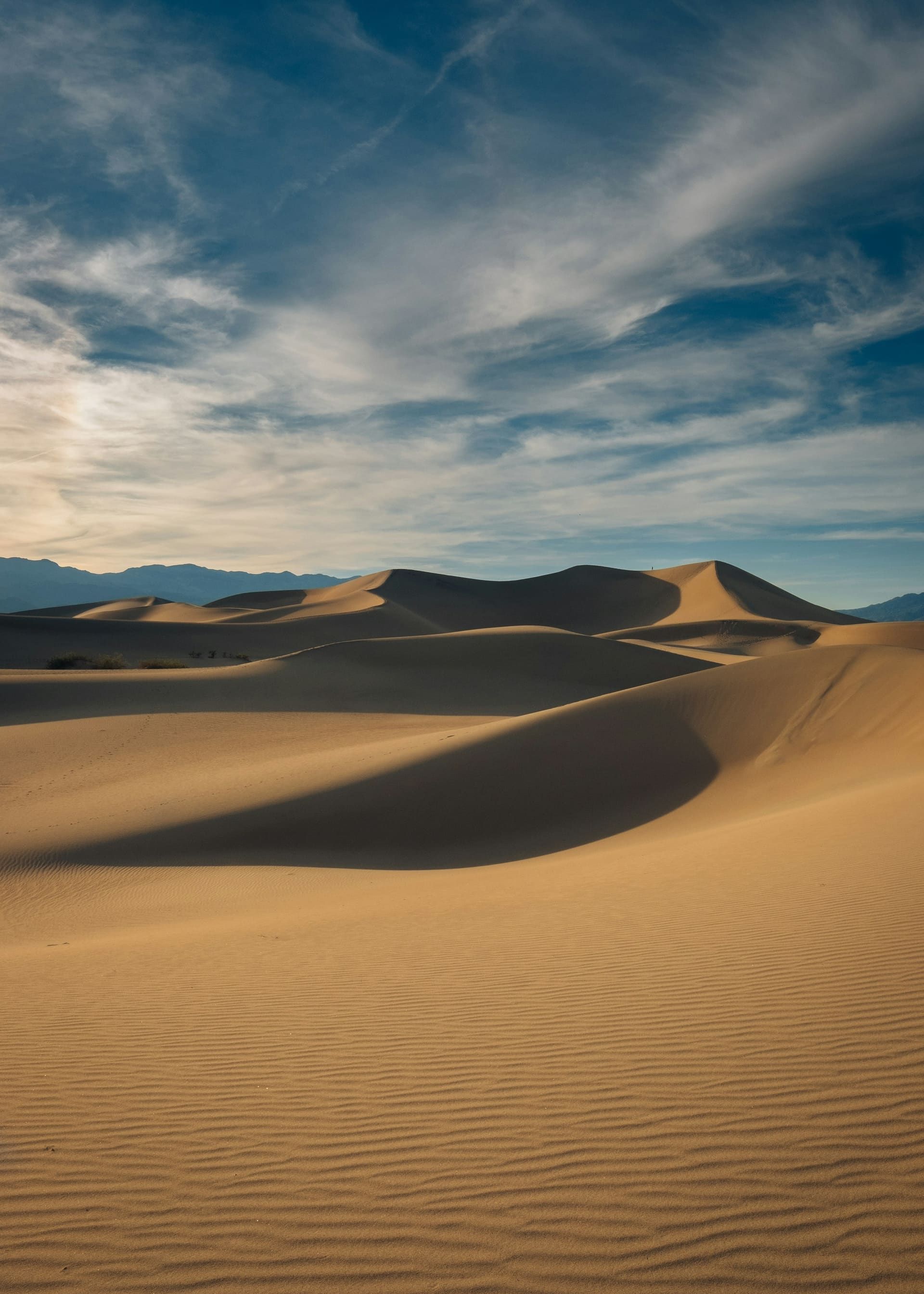
Lahbab vs Al Awir safari, Dubai's two close-in dune systems compared
The 30-second verdict, who books Lahbab and who books Al Awir
The 30-second answer routes by what the day is for, rather than by personal preference. Both dune systems share the same desert-camp infrastructure, the same BBQ buffet, and the same tanoura, henna, and falconry programming. The change is the dune itself, the photograph it hands you, and the AED outlay that surrounds it.
- You came for the iconic red-dune sunset photograph
- You want the Big Red south-face dune-bashing intensity
- You are spending AED 250+ on a private 4x4 package
- The photograph is more important than the AED ceiling
- You are working an AED 99 to AED 199 budget honestly
- You have a 24 to 48 hour Dubai stay and one free evening
- You are picking up from Sharjah, Ajman, or Mirdif
- You travel with kids under 5 or want a quad-bike booking
Side-by-side spec sheet, Lahbab vs Al Awir on 7 attributes
A side-by-side spec sheet covers the seven attributes that move the close-in dune-system decision. Pricing references the 2026 standard package for an evening safari at Lahbab desert and at Al Awir desert booked through the BookMySafari editorial desk on the partner-operator pool.
| Attribute | Lahbab desert | Al Awir desert |
|---|---|---|
| Drive time from Dubai Marina | 45 minutes east on the E44 (Hatta Road) | 25 minutes east on the E66 (Al Ain Road) |
| Drive time from Sharjah centre | 1 hour 5 minutes | 35 minutes |
| Dune profile | Iron-oxide red, 60 to 100 metre crests (Big Red) | Light beige with amber tint, 20 to 40 metre crests |
| Dune-bashing intensity (operator rating) | 4.5 out of 5 on the Big Red south-face line | 3 out of 5 on the standard 30-metre bowls |
| AED price floor 2026 (entry level) | AED 99 (shared evening; mostly reroutes) | AED 99 (shared evening; honest at this price) |
| AED price ceiling 2026 (luxury) | AED 500 (private 4x4, chef-curated BBQ) | AED 199 (standard private camp upgrade) |
| Best slot of the day | Sunset 4:50 PM to 5:25 PM (December) | Sunset 4:50 PM to 5:25 PM (December) |
Two close-in faces of the Dubai desert
Iron-oxide red Lahbab and light-beige Al Awir on Dubai's eastern dune belt
The Big Red crest at sunset, the Al Awir amber ridge, a Land Cruiser on Lahbab, a quad-bike fan on the Al Awir concession, and a camel caravan on the Dubai dune ridgeline.


Lahbab vs Al Awir · what changes
The 7 attributes that move the close-in dune-system decision
Side-by-side at the standard 2026 package. Different corridor, different dune, different photograph, different AED outlay.
The drive-time and dune-quality matrix, 8 criteria scored out of 10
The decision matrix scores both systems across 8 criteria. Lahbab wins sand colour, dune height, photography, operator choice across price levels, and the iconic Dubai feel. Al Awir wins drive time, AED-price honesty at the entry level, and family-friendliness with kids under 5. The overall tally: Lahbab 69 of 80, Al Awir 58 of 80. Lahbab wins more criteria; Al Awir wins the criteria that matter to the AED-conscious or short-stay booking. Pick by what matters to your trip, not by tally.
| Criterion | Lahbab | Al Awir | Note |
|---|---|---|---|
| Drive time from Dubai Marina | 6/10 | 10/10 | Al Awir at 25 minutes vs Lahbab at 45 minutes. 20 minutes saved each way is 40 minutes returned to the evening. |
| Sand colour saturation at sunset | 10/10 | 6/10 | Iron-oxide red on Lahbab grains versus light beige with an amber tint on Al Awir. The iconic Dubai red shows only at Lahbab. |
| Dune height and dramatic profile | 10/10 | 5/10 | Big Red rises 60 to 100 metres on Lahbab. Al Awir crests sit 20 to 40 metres. The lee-face drop intensity scales accordingly. |
| AED price at the entry level | 8/10 | 10/10 | Both advertise an AED 99 floor on shared evening tickets. Al Awir holds the price honestly; Lahbab AED 99 ads frequently reroute to Al Awir. |
| Photography results | 10/10 | 6/10 | Lahbab hands you the warm-tone red dune that headlines every Dubai desert photograph. Al Awir reads amber and shows scrubland in wide frames. |
| Operator choice across price levels | 9/10 | 7/10 | Lahbab spans all five DET operators across budget to luxury. Al Awir runs the same operator pool but caps at the AED 199 standard package. |
| Family-friendliness with kids under 5 | 6/10 | 9/10 | Al Awir dune-bashing caps at 30-metre lee faces and 35 km/h convoy speed. Lahbab Big Red south-face descents read 4.5/5 on intensity. |
| "Iconic Dubai" feel on camera and on the ground | 10/10 | 5/10 | Lahbab Big Red, Devil’s Spine, and the Camel Crossing ridge are the postcard frame. Al Awir reads as a working dune fringe on the city edge. |
| Total out of 80 | 69 | 58 | Lahbab wins the tally, Al Awir wins the AED-conscious routing. |
Sand colour, iron-oxide red at Lahbab vs light beige at Al Awir
Lahbab sand reads iron-oxide red because the quartz grains carry a thick coating of iron oxide deposited as the grains weathered out of the Hajar mountains and blew westward on the prevailing Shamal wind. The coating reflects low-angle sunset light into a deep red-orange that no other Dubai dune system matches. Al Awir sits mid-corridor on the same eastward drift, but the wind-borne sorting dropped the heaviest iron-rich grains further east at Lahbab. Al Awir grains carry a thinner coating and read light beige with an amber tint at the same hour.
Practical consequence on camera: same day, same camera, same exposure, Lahbab reads deep red-orange on a 24-70 mm at f/8 and Al Awir reads amber-tan. Both are warm in the right hands. Only Lahbab carries the iconic Dubai red signature travellers fly to the city to photograph. If the trip is for the postcard, the choice is Lahbab. If the trip is for the activities, Al Awir delivers the same camel ride, the same BBQ buffet, and the same tanoura show at a lower AED outlay.
Dune heights, 60 to 100 metres Lahbab vs 20 to 40 metres Al Awir
Big Red on the Lahbab system rises 60 to 100 metres above the surrounding sand sheet and is the most photographed dune crest in the UAE. The south-facing lee slope drops into a sand bowl used as the standard dune-bashing finish line. The Devil’s Spine ridge, Camel Crossing dune, and the Lahbab Bowl deliver further scale at 30 to 50 metres each. Operator ratings rate the Lahbab Big Red line at 4.5 out of 5 on dune-bashing intensity.
Al Awir crests rise 20 to 40 metres above the sand floor, half the height of Big Red and a quarter of the height of the named premium ridges deep inside the Lahbab corridor. Lee faces drop 15 to 30 metres at most, so the dune-bashing run delivers swells and side-tilts rather than the 60-metre lee plunges Lahbab is known for. Operator ratings sit at 3 out of 5 on intensity. For nervous riders, motion-sensitive passengers, families with young children, and any guest who has never been on a dune before, the gentler intensity is the feature, not the limitation.
AED pricing comparison, Lahbab AED 99 to AED 500 vs Al Awir AED 99 to AED 199
Both systems advertise an AED 99 entry price on the shared 6-seat evening convoy, but the AED 99 ticket behaves differently between the two. Al Awir holds AED 99 honestly because the shorter drive lets the operator break even on fuel and driver hours. Lahbab AED 99 tickets nearly always reroute to Al Awir because a genuine Lahbab convoy at that price loses the operator AED 35 per head once the maths is run.
Above the entry price the bands diverge. Al Awir caps at AED 199 on the standard private camp upgrade because there is no premium dune-bashing line to charge against; the system tops out at moderate intensity and a 35-metre ridge. Lahbab stretches to AED 250 for the private 4x4 evening, AED 350 for the VIP camp package, and AED 500+ for the chef-curated private experience on Big Red. The premium package is available only on Lahbab. The AED 251 to AED 401 ceiling gap between the two systems buys the iron-oxide signature, the Big Red south-face descent, and the iconic Dubai sunset frame.
Why most AED 99 Lahbab listings run to Al Awir instead
The single biggest open secret in the Dubai close-in safari trade is that most AED 99 "Lahbab" packages do not run to Lahbab. They run to Al Awir, 20 minutes closer, with marketing imagery that shows the Big Red red dunes the booking never reaches. The editorial desk traced the operator economics through 60 documented shared convoys between November 2025 and April 2026.
| Cost component (shared 6-seat 4x4) | Lahbab run | Al Awir run |
|---|---|---|
| Round-trip fuel (Dubai Marina origin) | ~AED 120 | ~AED 70 |
| Driver-hours billed | 5.5 hours | 4.5 hours |
| Driver labour (AED 50 per hour) | AED 275 | AED 225 |
| Vehicle wear on premium dune-bashing | ~AED 60 | ~AED 35 |
| Total operator cost per run | ~AED 455 | ~AED 330 |
| Per-head saving on 6 seats filled | - | AED 21 |
| Per-head saving across 2 daily runs | - | ~AED 35 saved |
AED 35 per head is the entire profit margin on an AED 99 evening ticket. A shared convoy to Lahbab at AED 99 loses the operator money on every seat. The same convoy to Al Awir hits break-even and pays the driver. That is why the budget package funnels almost every shared booking to Al Awir, regardless of which dune system the booking page advertises in the imagery.
Four questions to ask before paying any AED 99 to AED 149 "Lahbab" listing. First, request the GPS coordinates or the Google Maps pin of the desert camp. Al Awir camps sit near 25.16 N, 55.49 E and Lahbab camps sit near 24.98 N, 55.69 E, a difference of roughly 20 minutes of driving. Second, ask for the operator’s DET license number and verify it on the UAE National Economic Register. Third, ask which dune system the dune-bashing route uses by name; Big Red and the Devil’s Spine are Lahbab-only landmarks, and the 30-metre Al Awir bowls remain unnamed. Fourth, ask the AED price to swap onto the other system; an honest operator names a price and a pickup time without resistance. The BookMySafari editorial desk publishes the dune-system confirmation on the WhatsApp reply before the guest pays.
Photography, the postcard frame at Lahbab and the tight amber frame at Al Awir
Lahbab is the iconic-photograph destination. What it delivers is one frame, repeated across the trip and executed at sunset: the warm-tone red dune on Big Red or the Devil’s Spine, the wind-rippled iron-oxide ridges, the silhouette of the camel caravan against the orange sky, the Land Cruiser cresting a 60-metre lee slope. A 24-70 mm at f/8 between 4:50 PM and 5:25 PM in December lands the postcard. That frame matches what every Dubai desert safari booking page shows in the marketing imagery, because that imagery comes from Lahbab.
Al Awir delivers a different photograph: a clean amber-tan dune light at golden hour, soft ridge ripples in oblique sun, and good silhouette frames against the western horizon. What it does not deliver: the deep red saturation of Lahbab, the 80-metre lee face that makes Big Red read dramatic, and the clean dune-only horizon. Mixed-use scrubland creeps into wide frames on the city-facing side. The fix is to shoot tight, expose for the warm light rather than the sky, and shoot from the highest accessible ridge looking east into deeper desert. The combination delivers the cleanest Al Awir result.
Operator choice, who runs Lahbab vs who runs Al Awir
Lahbab opens to DET-licensed operators across every price level, including Velari Tourism L.L.C (DET #1491675), the fulfilment partner behind this platform. Pickup windows run between 2:45 PM and 4:00 PM in winter on the standard evening package, with dune-bashing entry slots split between the Lahbab Bowl, the Devil’s Spine ridge approach, the north face of Big Red, and the Camel Crossing dune. Budget to luxury packages all operate, which lets the AED outlay scale from AED 99 on the shared convoy to AED 500 on a private chef-curated 4x4.
Al Awir runs the same partner pool but caps the offering at the standard package. Daytime quad-bike and ATV concessions concentrate at Al Awir because the 20 to 40 metre dunes match the safe operating envelope of a beginner rider; a typical Al Awir quad-bike rental runs AED 150 to AED 250 for 30 minutes and AED 250 to AED 400 for 60 minutes. The combined quad-bike + standard evening safari booking lands AED 350 to AED 500 per person on a single afternoon. Lahbab does not host the daytime ATV concessions because the higher dunes carry liability the beginner-rider rentals avoid.
Family-friendliness, Al Awir is the gentler call with kids under 5
The Al Awir 4x4 route runs noticeably softer than the Lahbab equivalent. Drop heights cap at 30 metres, side-tilts read moderate rather than aggressive, and the convoy speed across the bowls runs 25 to 35 km/h rather than the 40 to 55 km/h of a Lahbab Big Red run. For children under 5, motion-sensitive passengers, and elderly guests who still want a dune-edge sunset photo, Al Awir delivers the activity without the intensity. The 20-minute shorter return drive is a real saving with sleeping children in the back row.
Lahbab suits families with kids 6 to 11 who want the dune-bashing thrill and the cultural-evening lineup at the headline intensity. The AED 99 budget package and the AED 199 standard package keep a family of four under AED 600 for the evening if the booking lands on an honest Lahbab routing, but on the shared-convoy budget package, the routing usually slips to Al Awir regardless. The camel rides, BBQ buffets, sandboarding pads, live shows, and henna stalls run identically at both camps; only the dune outside the tent changes.
4 traveller scenarios, who picks Lahbab and who picks Al Awir
Four traveller scenarios cover roughly 90 percent of close-in dune-system bookings out of central Dubai. Each pairs a specific persona with the dune system that wins on the day and the price level that runs it.
Al Awir wins the single free evening on a 24 to 48 hour stay
A 24 to 48 hour Dubai stay with a single free evening cannot absorb the Lahbab round-trip burden. Al Awir at 25 minutes each way gives back 40 minutes of evening that Lahbab spends in E44 traffic. A 3:30 PM Marina pickup reaches the Al Awir dune edge by 3:55 PM, dune-bashing wraps by 4:35 PM, sunset photo at 4:50 PM in December, BBQ camp dinner from 5:30 PM, hotel by 9:30 PM. The Lahbab equivalent lands the hotel return at 10:15 PM minimum and shaves an hour off the dinner window if the pickup runs late.
Al Awir holds the AED 99 floor honestly; Lahbab AED 99 reroutes
A booker working a strict AED 99 to AED 149 per-adult ceiling lands at Al Awir whether or not the booking page advertises Lahbab. The shared 6-seat convoy cannot run to Lahbab at that price without losing money on fuel and driver hours. The honest call is to book Al Awir up front, name the dune system on the WhatsApp confirmation, and stretch the budget into the camel ride, sandboarding, and live show inclusions rather than the 20-minute extra drive that delivers nothing on the day.
Lahbab is the only routing that delivers the warm-tone red dune
A traveller carrying a 24-70 mm or 70-200 mm and a brief that includes the famous Dubai red dune photograph routes to Lahbab without alternative. The iron-oxide coating on Lahbab quartz grains reflects low-angle sunset light into a deep red-orange that no other Dubai dune system matches; the richest saturation runs 4:50 PM to 5:50 PM in December on the south face of Big Red and the Devil’s Spine ridge. Al Awir reads amber-tan in the same window. AED 199 to AED 500 buys the dune system, not just the package.
Al Awir scales for Sharjah and Ajman pickups; Lahbab does not
A Sharjah city centre pickup to Al Awir runs 35 minutes on the E66. The Lahbab equivalent runs 1 hour 5 minutes. From Ajman the gap stretches to 1 hour 15 minutes versus 45 minutes. Across a 4 to 5 hour evening safari window including dinner, the saved 60-minute round-trip is the difference between back home by 10:00 PM and back home after midnight. The editorial desk routes Sharjah and Ajman pickups to Al Awir by default unless the guest specifically names the iconic red-dune photograph as the priority.
Ask for the GPS coordinates before you pay
The cleanest way to confirm any close-in Dubai safari is to request the camp’s Google Maps pin or the GPS coordinates before paying. Al Awir camps cluster near 25.16 N, 55.49 E on the eastern outskirts of Dubai. Lahbab camps cluster near 24.98 N, 55.69 E, a further 20 minutes east on the E44. The latitude and longitude alone confirm the dune system without having to argue marketing imagery, package names, or whether the listing photo shows a red dune the booking never reaches.
Honest operators send the pin without resistance. Operators who delay, send a vague "near Lahbab" landmark, or claim the camp location is "proprietary information" are signalling a routing they prefer not to disclose. The editorial desk publishes the dune-system confirmation, the camp pin, and the pickup time on every WhatsApp reply before the guest pays. The DET license number on the same reply lets the guest verify the operator on the UAE National Economic Register inside two minutes.

The do-both approach
Book Al Awir on the first evening and Lahbab on day three
A two-or-three-day Dubai trip routes both close-in dune systems inside one booking window without compression. Day one: Al Awir evening safari from a 3:30 PM Marina pickup, dune edge at 3:55 PM, moderate dune bashing on the 30-metre bowls, sunset photo on a 35-metre ridge at 4:50 PM in December, BBQ camp dinner from 5:30 PM, hotel by 9:30 PM. Day two rests. Day three: Lahbab premium evening from a 3:00 PM Marina pickup, Big Red south face dune bashing at 4:25 PM, the iconic red-dune sunset shot on the Devil’s Spine at 4:55 PM, chef-curated BBQ at the Lahbab VIP camp, hotel by 10:00 PM. Two different dunes, two different photographs, combined AED outlay between AED 219 and AED 699 per adult depending on the package mix.
- Day 1 Al Awir evening AED 119 budget, kids and quad bike friendly
- Day 3 Lahbab premium AED 250 to AED 500, iconic red-dune sunset
- Combined AED outlay AED 219 to AED 699 per adult across both systems
- Routes through one chat editorial desk confirms both inside one WhatsApp thread
Real guests · both close-in dune systems
What guests said after booking Lahbab, Al Awir, or both
Six reviewers across Lahbab premium and Al Awir budget bookings, pulled from TripAdvisor, Google, and the BookMySafari WhatsApp inbox. Names abbreviated, location preserved.
Booked the AED 119 evening on what the listing called a Lahbab safari. The driver confirmed at pickup it was actually Al Awir. The kids loved the quad bikes and the dune bashing was gentle enough for them. The red-dune photo we expected, we did not get.
Asked the desk straight up which dune system. They said Al Awir for the AED 99 ticket, and Lahbab if we paid AED 250 on a private 4x4. We picked Lahbab for the sunset on Big Red. Worth the AED 150 jump for the photo we came for.
Sharjah resident. Did Al Awir on a 35-minute pickup at 3:30 PM, on the dunes by 4:10 PM, home by 10:00 PM. Tried Lahbab the year before from the same address and got back after midnight. Al Awir scales for us.
I shoot landscapes. Al Awir on day one for the warm-up, Lahbab on day three for the real frame. Two different deserts and two different photographs. The Big Red south face at 4:55 PM in December was the shot I came to Dubai for.
Two children under 5. Desk routed us to Al Awir specifically for the gentler dune-bashing line. The 35-metre crests were enough for the kids, the camel ride and tanoura show ran the same as any premium camp, and the AED 119 budget held.
The GPS-coordinate confirmation policy saved a bad booking. I asked the operator to send the camp pin before I paid. The pin landed at Al Awir, not Lahbab, and the listing claimed otherwise. The desk swapped us onto an honest Al Awir tier at AED 119 and we left happy.
WhatsApp the editorial desk for a verified dune-system booking
Message the BookMySafari booking desk on WhatsApp with the photograph the trip is for, the AED ceiling per adult, the pickup city, and the traveller mix. The desk routes to the right close-in dune system (Lahbab, Al Awir, or the do-both itinerary), names the camp pin, and confirms the exact pickup time for your hotel zone inside a single chat. Reply within reply within 10 minutes. Bookings on this page are fulfilled by Velari Tourism L.L.C, DET license #1491675, verifiable on the UAE National Economic Register.
Message us on WhatsAppFrequently asked questions about Lahbab vs Al Awir safaris
-
Is Lahbab better than Al Awir for a Dubai desert safari?
Lahbab wins on photography, dune height, and the iconic Dubai red-dune signature; Al Awir wins on drive time, AED price honesty, family-friendliness with kids under 5, and Sharjah or Ajman day-trip economics. The 8-criteria decision matrix scores Lahbab at 69 of 80 and Al Awir at 58 of 80, but the criteria are not equally weighted on every booking. A photography-priority traveller picks Lahbab. A short-stay budget booker, a Sharjah resident, a family with toddlers, or a quad-bike booking picks Al Awir. The honest answer is to pick by what matters to your trip rather than by tally. -
Why is Al Awir cheaper than Lahbab?
The Al Awir round-trip from Dubai Marina runs 50 kilometres versus 90 kilometres for Lahbab. The shorter run cuts fuel by roughly AED 50 per 6-seat 4x4, driver-hours by 1 hour, and vehicle-wear depreciation by AED 25. The operator-economics math across 60 documented shared convoys between November 2025 and April 2026: Al Awir saves AED 21 per head on a single run and AED 35 per head across the standard two-runs-per-day schedule. AED 35 per head is the entire profit margin on an AED 99 evening ticket, which is why the budget package funnels nearly every shared booking to Al Awir. -
How do I confirm my safari is going to the dunes I expect?
Ask the operator four specific questions before paying. First, request the GPS coordinates or the Google Maps pin of the desert camp; Al Awir camps sit near 25.16 N, 55.49 E and Lahbab camps sit near 24.98 N, 55.69 E, a difference of roughly 20 minutes of driving. Second, ask for the operator’s DET license number and verify it on the UAE National Economic Register. Third, ask which dune system the dune-bashing route uses by name (Big Red and Devil’s Spine are Lahbab; the 30-metre Al Awir bowls are unnamed). Fourth, ask the AED price to swap to the other system; an honest operator names a price and a pickup time without resistance. The BookMySafari editorial desk publishes the dune-system confirmation on the WhatsApp reply before the guest pays. -
Can I do Al Awir as a Sharjah resident?
Yes, and Al Awir is the default routing for Sharjah and Ajman pickups on this site. From Sharjah city centre the Al Awir drive runs 35 minutes on the E66; from Ajman it runs 45 minutes. The Lahbab equivalents run 1 hour 5 minutes and 1 hour 15 minutes respectively, which compresses an evening safari window past midnight and makes the return drive uncomfortable with sleeping children. Sharjah pickup zones (Al Majaz, Al Khan, University City, Al Nahda) all sit 35 to 50 minutes from the Al Awir dune edge. The pickup window typically opens at 3:30 PM in winter and the camp drop-off lands at 9:30 PM, back home by 10:00 PM. -
Which dune system has better photography?
Lahbab wins photography by a clear margin and the gap is largest at sunset. The iron-oxide coating on Lahbab quartz grains reflects low-angle sunset light into a deep red-orange that no other Dubai dune system matches; the richest saturation runs 4:50 PM to 5:50 PM in December and 6:20 PM to 7:20 PM in June, with Big Red and the Devil’s Spine ridge holding the colour longest. Al Awir reads amber-tan at the same hour and shows scrubland fringes in wide frames on the city-facing side. For an Al Awir frame, shoot tight to keep the scrubland out, expose for the warm light rather than the sky, and shoot from the highest accessible ridge looking east into deeper desert. The iconic red-dune photograph requires a Lahbab routing. -
Are AED 99 Lahbab safaris real or a bait price?
Mostly a bait price. A genuine Lahbab evening safari at AED 99 on a shared 6-seat convoy loses the operator money on fuel, driver hours, and vehicle depreciation. The shared budget package at AED 99 to AED 149 nearly always routes to Al Awir regardless of which dune system the booking page advertises in the marketing imagery. Genuine Lahbab tickets at the AED 99 entry point exist only on group-booking flash sales, off-season weekday slots, or operator clearance runs; published year-round at AED 99 is a routing signal, not a Lahbab signal. Confirm the dune system with GPS coordinates before paying. The BookMySafari editorial desk publishes the routing on every WhatsApp confirmation.