What to expect on your first Dubai desert safari
The 30-minute pickup window, what actually happens before you leave the hotel
The pickup window opens at 3:00 PM and closes at 3:30 PM on a standard Dubai Marina, Downtown, or Business Bay hotel booking in winter. A Toyota Land Cruiser or a Nissan Patrol pulls up to the porte-cochère; the driver calls the front desk from the kerb. Most first-timers expect the driver to come up to the room; that pathway is reserved for mobility-assist guests pre-flagged in the booking note. The standard flow stays at the lobby.
The driver carries a paper or tablet manifest with your name, the hotel, the booking reference, and the package. Show one government photo ID at the lobby; the operator carries you under public liability insurance that names every passenger and the production team annotates the manifest in real time. Confirm the dune system on the manifest line, since the convoy splits at the Dubai Bypass intersection and a Lahbab booking accidentally loaded onto an Al Marmoom run lands at the wrong camp 60 kilometres apart.
Bring one small bag per guest. A 4-litre tote with a phone, a power bank, sunglasses, a light scarf, and a refillable water bottle covers the trip. Two or three guests share the back row of the Land Cruiser; the middle row seats two adults plus one child; the front passenger seat takes one adult with the longest legs. The driver loads the boot. Storage for cabin-size luggage stays at the hotel concierge; the operator declines to lock big bags inside the 4x4 because the dune-bashing run rattles unsecured items across the boot interior.
The drive out, 45 minutes from Marina, 60 minutes from Sharjah
The drive from a central Dubai hotel to the Lahbab dune edge takes 45 minutes along the E66 Dubai to Al Ain Road in normal weekday traffic. A Marina pickup at 3:00 PM clears the Sheikh Zayed Road tailback, joins the bypass at Al Awir, and turns south-east onto the desert highway by 3:25 PM. A Sharjah pickup adds 15 to 20 minutes because the driver routes through the inter-emirate border via the Emirates Road shortcut. A JBR or Palm Jumeirah pickup adds 5 to 10 minutes for the detour out of the marina district.
The Land Cruiser stops 200 metres from the dune edge at a roadside lay-by with a small cafeteria, a toilet block, and a fuel station. The driver deflates the tyres from 35 PSI to 18 PSI across 6 to 8 minutes; the lower pressure widens the contact patch with the sand and prevents the wheels from cutting into soft dunes. Use the lay-by toilet now; camp toilets are 90 minutes away on the schedule. Most first-timers underestimate this window and end up holding a full bladder through the dune-bashing run.
The driver speaks English on every standard booking and commonly carries a second language (Arabic, Urdu, Hindi, Tagalog, Russian, or Mandarin) across the wider Dubai operator pool. Ask the editorial desk before booking if a specific language matters; the partner operator publishes the driver-language register inside the daily roster. The windows roll down at the lay-by because the sand temperature drops sharply against the air-conditioning when the doors open at the dune edge.
Dune bashing, 25 minutes that feel like 10
Dune bashing on a Dubai evening safari runs 25 minutes from the moment the convoy enters the dune edge to the moment the vehicles plateau at the sunset photo stop. Most first-timers expect a full hour because tour-page copy elsewhere implies the entire afternoon happens on the dunes. The actual ride sits at 25 minutes; the perception sits closer to 10 minutes because the third minute spike of adrenaline compresses the rest of the run.
The driver runs the route in three escalating phases. Phase one (5 minutes) eases the Land Cruiser at a 15-to-20-degree incline over softer outer dunes. Phase two (12 minutes) climbs the bigger red dunes at 30-to-35-degree angles with the standard sideways slip on the descent. Phase three (8 minutes) routes through the largest crest line where the vehicle tips slightly past 35 degrees on a controlled fall. The roll-cage rating handles a complete rollover with seatbelts engaged. The Dubai Department of Economy and Tourism inspects every 4x4 every 6 months for the chassis stress certification.
The opt-out path exists at every step. Tell the driver on pickup that you want to skip the dune bashing and the routing shifts to a slow scenic line directly to the camp. The driver carries the slow-line route as a flagged manifest entry; the rest of the convoy continues without you. The 25-minute compression often leaves first-timers asking for a second run; the standard ticket caps at one. Private 4x4 bookings extend the dune window to 40 to 60 minutes on request. Every desert safari Dubai package lists its own dune-bashing length up front, so the duration is known ahead of booking.
The sunset photo stop, what to capture and what to skip
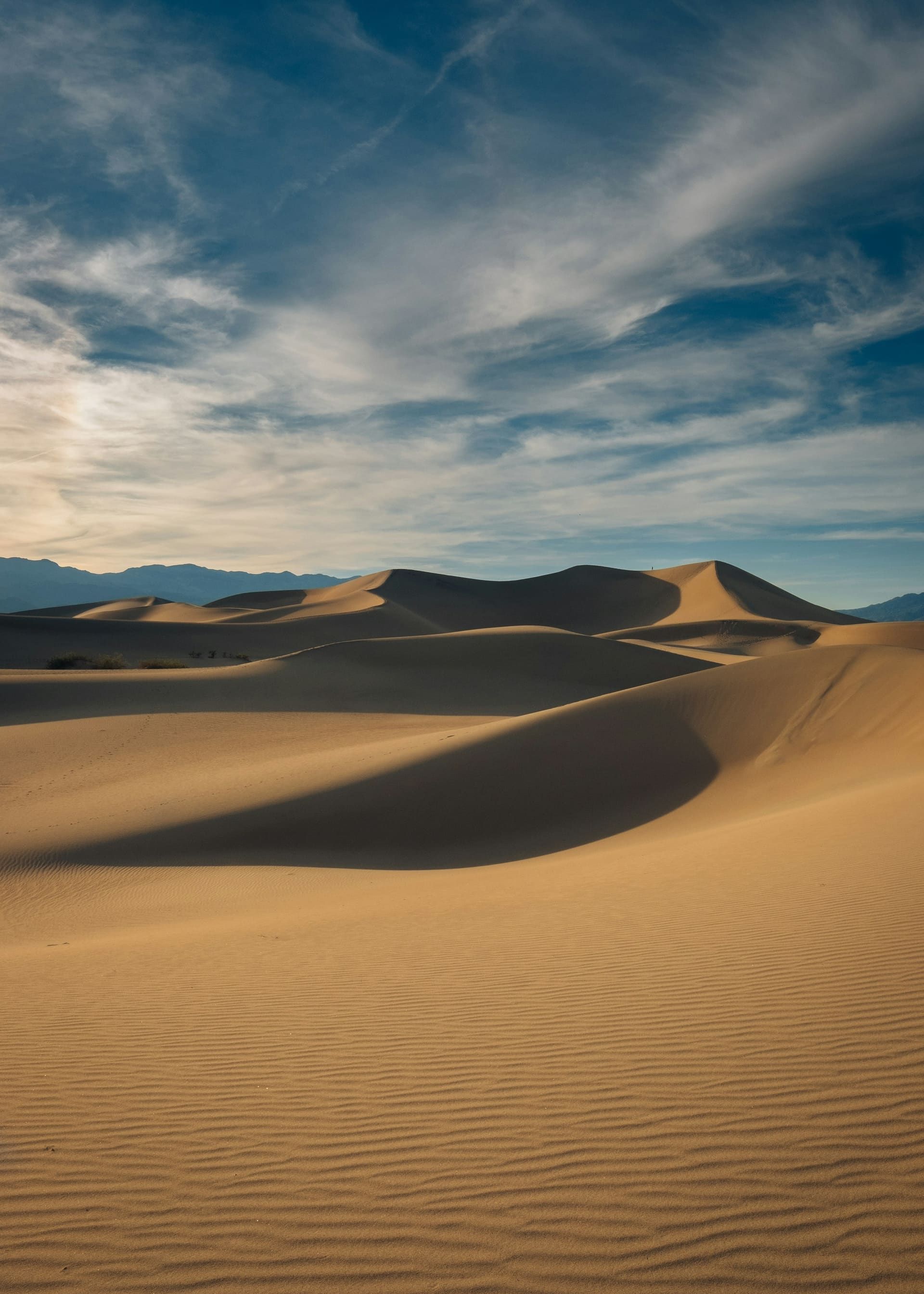
The sunset photo stop runs 15 minutes on the highest ridge inside the dune system. The driver parks the Land Cruiser at the lip; guests climb the last 30 metres on foot. Golden hour falls between 4:45 PM (December) and 6:50 PM (June); the light window peaks at the first 7 minutes after the convoy parks. Most first-timers spend the first 5 minutes taking selfies of the vehicle and miss the ridge frame entirely.
The frames worth capturing on this stop. The Land Cruiser silhouetted against the dune horizon line; the camel train (if the camp convoy passes the ridge that day); the dune shadow line stretching toward the camp; the panoramic crest view east toward the Hajar Mountains in winter. Shoot in landscape on a phone, switch to 0.5x ultrawide for the panoramic, and avoid the flash. The colour temperature shifts from 6000K daylight to 3000K warm across the 15-minute window; a slightly underexposed shot at the start of the stop renders the iron-oxide red of the Lahbab sand at its deepest.
Skip the dune skiing photo (the descent angle reads dull on camera) and the "feet in the sand" close-up (cliché frame that crowds the photo library). Skip the long-form drone shot on shared tours because the camp convoy follows the ridge inside the 15-minute window. Save the dramatic camp-fire frames for the camp arrival 30 minutes later, where the lanterns light against the dark dune backdrop and produce a stronger evening image.
Arriving at the desert camp, what the entrance looks like
The desert camp entrance opens onto a low-slung gate with two flaming torches, a brass lantern arch, and a host in a traditional robe handing out a welcome dallah of Arabic coffee and a small bowl of dates. The convoy parks 80 metres from the gate; the walk-in covers loose sand for the first 30 metres before reaching the woven palm carpets that line the camp courtyard. Closed-toe shoes earn their keep on this stretch.
The orientation walk takes 4 minutes. The host points out five things in sequence: the BBQ buffet station at the rear (open 7:00 PM to 9:00 PM continuously), the cultural performance stage in the centre, the henna and falcon-photography stations on the left flank, the camel paddock and sandboard stand on the right flank, and the toilet block plus prayer room at the corner near the entrance. The arrangement repeats across every standard camp in the Lahbab area. Premium camps add a private majlis section behind the buffet.
The camp seats 60 to 200 guests across one to four long shared tables in the open-air majlis. The cushioned floor seating sits at ankle height with low brass tables; chairs are available on request for guests who struggle with the floor sit. Families of 4 to 6 land at one end of a long table that functions as a private table in practice. Premium and luxury heritage bookings receive a roped-off section. The temperature on the dune drops 8 to 12 degrees Celsius between sunset and dinner; bring the light scarf packed at the hotel.
Three free camp activities and three paid ones
Three camp activities sit inside the standard AED 199 evening ticket and three sit outside. The free three: henna on one hand, sandboarding on a small dune, and a short camel ride of 5 to 10 minutes around the perimeter loop. The paid three at most standard camps: falcon photography (a posed shot with a Saker falcon on a gauntlet, AED 50), shisha at the camp lounge (AED 50 for a 45-minute session), and quad biking on a closed dune circuit (from AED 120 for the 30-minute closed circuit).
The free henna station applies a single design on one hand and takes 8 to 12 minutes per guest. Lines build between 6:30 PM and 7:30 PM; queue at 6:00 PM or after 7:45 PM for the shortest wait. The camel paddock runs three to five camels on rotation; expect a 10-to-15 minute queue at peak. Sandboarding uses plywood boards with a basic strap; the slide works once the guest commits a controlled push at the top of the small dune. Guests over age 14 enjoy the sandboard considerably more than guests under 10.
The falcon photography station carries the AED 50 price across most standard camps; a handful of premium operators include the photo inside the headline tariff. The photographer poses the falcon on a gauntlet and shoots a 45-second sequence on a DSLR; edited delivery via WhatsApp or Google Drive within 48 hours. Quad biking carries the highest accident rate at the camp; always confirm the closed-circuit track and the presence of a marshal before paying. The standard insurance covers a closed-circuit incident; an open-desert quad run sits outside operator coverage.
The BBQ buffet, a 7:00 PM open with a dedicated vegetarian rail
The BBQ buffet opens at 7:00 PM on a standard winter schedule and 7:30 PM on a summer schedule. The kitchen runs continuously rather than as a single seating; guests serve themselves at the heat lamps and the open BBQ stand whenever ready. The buffet stays open through 9:00 PM. Most first-timers eat between 7:15 PM and 7:45 PM to leave room for the fire show at 8:30 PM. The dessert flight opens at 8:00 PM and stays available alongside the Arabic coffee station until the return-transfer call.
The standard spread covers eight to twelve hot dishes plus four to six cold mezze. The BBQ stand grills marinated chicken thigh, lamb kofta, and beef tikka; the heat lamps hold biryani rice, dal, mixed vegetable curry, and steamed rice. Cold mezze covers hummus, baba ghanoush, fattoush, tabbouleh, vine leaves, and a feta-and-olive salad. The dessert table runs umm ali, kunafa, fresh fruit, and a soft-serve ice cream machine on most camps.
Vegetarian guests find a dedicated rail at every credible camp. The standard vegetarian section covers paneer tikka, vegetable biryani, vine leaves, falafel, hummus, baba ghanoush, and a fresh salad bar. Vegan, gluten-free, nut-free, and Jain diets are accommodated at booking with 24-hour notice. Halal certification covers every meat dish on every Dubai operator. Children commonly stick to the chicken, rice, and dessert sections. Soft drinks are unlimited; water refills happen at two stations near the entrance and the buffet.
Three live performances and the times they run
Three live performances run on a fixed sequence across every standard camp. The schedule: tanoura at 7:45 PM (12 minutes), belly dance at 8:10 PM (15 minutes), fire show at 8:30 PM (8 minutes). The performance stage sits at the centre of the courtyard; seating wraps the stage on three sides. The compere announces each act in English and Arabic with a short cultural note about the origin and the dance language.
The tanoura act stems from a Sufi-origin spinning dance performed by a male dancer in a weighted multi-coloured skirt that lights up with torch-effect LEDs. The dancer spins for the full 12 minutes; the act peaks in the last 3 minutes when the skirt detaches and spins above the dancer. The belly dance follows a tourist-grade Egyptian cabaret-influenced choreography; the dancer pulls willing guests for a brief joint dance segment in the second half. The fire show closes the sequence with poi spinning, fire-eating, and a fire-breathing finale.
The performance schedule shifts by 30 to 45 minutes on private-booking camps and on premium VIP packages, where the fire show stretches to 12 minutes and the tanoura act extends to 15. Some luxury heritage operators swap the tourist tanoura set for a live oud-and-percussion ensemble and a curated dance programme. Photography is welcome across every act; the only firm rule disables direct flash on the tanoura dancer.
25 minutes
Dune-bashing length, standard evening safari
Most first-timers expect a full hour. The ride runs three escalating phases before the convoy plateaus at the sunset photo stop.
Where the toilets, prayer rooms, and water points sit
Toilets sit at the camp entrance in a dedicated block of five cubicles, three for women and two for men, with a single accessible cubicle. The block carries running water, hand soap, paper towel, and a small bin. Most first-timers ask for the toilet during the dune-bashing window and discover the next access point sits 25 to 35 minutes away at the camp; use the roadside lay-by toilet before the dune section to avoid the squeeze. Wheelchair access at the camp entrance includes a ramp from the parking area; the courtyard floor is loose sand under woven palm carpets and a wheelchair rolls slowly.
A prayer room with two mats, a qibla marker, and a clean ablution corner sits adjacent to the toilet block. The room accommodates four to six guests at a time. Maghrib prayer falls between 5:30 PM and 6:45 PM depending on season; the camp host signals the approximate window on arrival. The room serves Sunni and Shia practice alike; the qibla marker uses a standard 246-degree heading for the Lahbab area. Friday-prayer accommodations on the rare safari-Friday booking happen at the roadside mosque 4 kilometres before the dune edge.
Water stations operate at two points: the welcome dallah area at the entrance and the rear of the BBQ buffet. The camp pours filtered water into reusable cups; a single refillable water bottle from your hotel works equally well. Hot Arabic coffee runs in the dallah from arrival to departure; the green-cardamom version is the default, the plain dark roast is available on request. Soft drinks (Pepsi, Coca-Cola, 7-Up, Mirinda), mint lemonade, and a fresh-fruit punch run from the buffet rail. Bottled water sits alongside the soft drinks at every station.
Alcohol at the camp, what is actually allowed
Alcohol does not appear at the standard Dubai desert safari camp. Most public-desert camps in the Lahbab area operate without a UAE liquor licence, which means no beer, wine, or spirits on site. The buffet pairs with mint lemonade, Arabic coffee, soft drinks, and bottled water. Bringing your own alcohol to a public desert area sits outside UAE law; the recommendation is to drink at the licensed hotel bar before the pickup or after the drop-off.
Premium and luxury heritage camps operating inside licensed venues serve alcohol on a paid bar. Sonara Camp inside the Dubai Desert Conservation Reserve and the Bab Al Shams dinner venues each carry a UAE liquor licence. Pricing runs AED 35 to AED 90 per serve for beer, wine, and signature cocktails. The booking confirmation discloses the licence and the bar tariff before payment. Confirm in writing if alcohol is non-negotiable to the trip plan; a Lahbab standard camp swap for a licensed luxury camp lifts the tariff substantially.
The UAE drink-drive rule reads as zero-tolerance. Guests who consume alcohol at the licensed camp ride home in the operator-arranged Land Cruiser, never in a private rental. Self-drive desert excursions sit outside operator coverage and outside legal access on most conservation reserves. The standard safari ticket includes the return transfer; the driver remains sober across the entire shift under operator HR policy.
Photography etiquette, what you can and cannot shoot
Photography at the Dubai desert safari camp runs on three rules. Photograph the performances and the landscape freely. Ask before close-up portraits of camp staff, dancers, or other guests. Use no direct flash on the tanoura dancer, whose costume relies on torch-effect LED mechanics that flash washes out. Drones require a licensed DCAA operator and a private booking; the shared convoy declines drones at the dune-bashing window because the multi-vehicle line moves too fast for safe filming.
Guest-on-guest photography crosses a line when the subject is an unrelated family at the dinner table or a stranger queueing for henna. The UAE Federal Penal Code (Article 378) treats unauthorised filming of another person as a punishable offence; the courts have enforced it in tourist contexts. Apply common sense; ask first; delete the frame on request. Camp staff intervene fast if a guest's behaviour drifts toward harassment, and the operator reserves the right to halt the trip.
Three frames carry diplomatic weight. The performer mid-routine (ask once, signal the intent with a thumbs-up). The local Bedouin host pouring coffee at the dallah (ask explicitly; most accept). The falcon on the gauntlet at the photography station (the AED 50 station fee includes a posed portrait, no extra ask needed). Outside the camp gates, the wider Dubai photography norms apply: no shooting at airports, ministry buildings, or military installations; ask before taking pictures of women in traditional dress; do not photograph any government police checkpoint.
Tipping the driver and camp staff, the AED 30 to 100 range
A typical tip on a Dubai desert safari runs AED 30 to AED 100 per family in 2026, split across four roles. AED 50 to the driver-guide who handled the pickup, the dune bashing, and the return drive. AED 20 to the henna artist for the application on one hand. AED 20 to the lead dancer who handled the tanoura or belly-dance act. AED 10 to the camel handler at the paddock. The total of AED 100 sits at the upper end of the range; AED 50 split across two roles lands at the lower end without a social awkwardness.
Premium and luxury heritage packages commonly bake a 10-percent service charge into the headline price. A AED 595 VIP ticket therefore lands at AED 654 all-in with service; an additional AED 50 to the driver remains welcome but never expected. A AED 1,295 luxury heritage ticket inside the DDCR often folds service into the bill; double-check the booking note before adding a second envelope. A discretionary AED 50 to the astronomer leading the stargazing session or the falconer hosting the bird-handling act lands well at this level when the host went beyond the standard set.
Tipping currency stays in AED cash. USD or EUR notes are accepted and routed through the office at a less-favourable exchange. Hand the tip to the recipient directly; the operator distributes the cash differently when paid via headquarters and the camp-floor team commonly loses the gesture in the system. Card-based tipping does not exist at most standard camps; carry the cash from the hotel ATM before pickup.
The return drive, when you get back to your hotel
The return transfer leaves the camp at 9:00 PM on a standard winter schedule and 9:30 PM in summer. The driver calls the manifest at the gate; guests group by vehicle and load in the same seating order as the outbound run. The drive back covers 45 minutes from the dune edge to a central Dubai hotel and 60 minutes to Sharjah; the route avoids the Sheikh Zayed Road tailback because the rush has dispersed by 9:30 PM. The Land Cruiser drops at the same porte-cochère used for pickup.
Drop-off sequence depends on the routing. The first guests off the vehicle commonly land at Sharjah and Al Awir; the convoy continues into Deira and Bur Dubai; the Marina and Downtown stops close out the run between 9:45 PM and 10:00 PM. JBR and Palm Jumeirah drop in the last 10 minutes of the shift. The driver confirms the final ETA inside the WhatsApp chat during the drive; the editorial desk relays a hotel-staff handoff if the guest needs help with bags or a wheelchair transfer at the entrance.
Most first-timers fall asleep inside the first 10 minutes of the return drive. The Land Cruiser carries soft cabin lighting and an AC that holds 22 to 24 degrees on the way back. Bottled water sits in the door cup-holder if you missed the camp refill. The driver remains awake under operator HR policy; the standard shift includes a 30-minute rest at the camp during the cultural performances. The drop-off completes with a rating-card prompt in the WhatsApp chat the next morning; the chat doubles as a confirmation that the trip closed cleanly.
Inside a 6-hour 30-minute evening
Five frames from a standard Dubai evening safari
A Lahbab dune crest at golden hour, the lit desert camp at twilight, the camel train on the sunset ridge, sandboarding at the camp dune, and the BBQ buffet plated. The five moments that anchor the 6-hour 30-minute schedule.


7 anxieties first-timers Google (and the honest answers)
Seven recurring questions appear in the Google autocomplete for "Dubai desert safari" yet rarely sit inside the operator listing pages. The honest answer to each appears below. The full list comes from a six-month crawl of "people also ask" boxes by the BookMySafari editorial desk, cross-referenced against TripAdvisor forum threads in the Dubai category.
- "Where do I go to the toilet on the dunes?" The roadside lay-by toilet 200 metres before the dune edge. The driver stops 6 to 8 minutes for tyre deflation; use the cafeteria toilet during the wait. The next toilet sits at the camp 90 minutes later.
- "Is the camp dry?" Standard Lahbab camps are dry; Sonara and Bab Al Shams serve beer, wine, and cocktails on a paid bar. Confirm the licence on the booking confirmation. Bringing your own to a public desert area sits outside UAE law.
- "What if I am vegetarian, vegan, or have an allergy?" Every credible camp runs a separate vegetarian rail and accommodates vegan, gluten-free, nut-free, and halal-only diets with 24-hour notice. Flag the diet in the WhatsApp confirmation. The editorial desk relays the request to the kitchen and confirms the substitution before pickup.
- "When can I pray?" A prayer room with two mats, a qibla marker, and ablution sits adjacent to the toilet block at the camp entrance. Maghrib falls between 5:30 PM and 6:45 PM depending on season. The camp host signals the window on arrival; Friday accommodations route via the roadside mosque 4 kilometres before the dune edge.
- "What language does the driver speak?" English on every standard booking; Arabic, Urdu, Hindi, Tagalog, Russian, and Mandarin appear across the wider driver pool. Ask the editorial desk for a specific language before booking; the partner operator publishes the driver-language register inside the daily roster.
- "Do I have to tip and how much?" Tipping is not compulsory yet welcome. AED 50 driver, AED 20 henna artist, AED 20 dancer, AED 10 camel handler; total AED 100 sits at the high end. AED cash, handed directly to the recipient. Premium packages commonly bake a 10-percent service charge into the headline price; check the booking note to avoid double-tipping.
- "Can I take photographs of the performers?" Yes for the landscape, the camp, and the performances. No flash on the tanoura dancer. Ask before close-up portraits of staff or other guests. UAE Federal Penal Code Article 378 treats unauthorised filming as a punishable offence; ask first, delete on request.
The expectation gap
What BookMySafari publishes versus what a typical operator leaves vague
Six recurring expectation gaps that drive first-timer anxiety on a Dubai desert safari. Each row resolves a question that surfaces on TripAdvisor forum threads in the Dubai category.

What the driver does not volunteer
The Land Cruiser pickup hides three details until you ask
The driver runs a tight schedule and rarely volunteers three pieces of information that improve the trip. The dune system on the manifest line (Lahbab vs Al Marmoom); the slow-line opt-out for guests who want to skip the dune bashing; and the multi-language register of the driver pool. Ask at the lobby and the answer arrives in 30 seconds. Wait until the dune edge and the routing locks.
- Dune system on the manifest Confirm Lahbab vs Al Marmoom before the convoy splits at Al Awir
- Slow-line opt-out Available at every step until tyre deflation at the dune edge
- Driver language register Arabic, Urdu, Hindi, Tagalog, Russian, Mandarin available on request
The nine-item pre-safari checklist to run before pickup
The pre-safari checklist below covers nine items that the driver rarely flags at the lobby. Each one removes a recurring first-timer friction point. Run the list before pickup; the editorial desk confirms the answer to every item inside the WhatsApp chat.
- Use the lobby toilet at 2:50 PM. Next access point at 4:00 PM lay-by. The camp toilet sits 90 minutes from pickup. Most first-timers regret missing the hotel-lobby window.
- Confirm the dune system on the manifest. Lahbab or Al Marmoom. The convoy splits at Al Awir 25 minutes into the drive. A wrong-dune booking lands 60 kilometres from the intended camp.
- Bring a light scarf or hoodie. Dune temperature drops 8 to 12 degrees Celsius between sunset and dinner. Winter evenings (November to February) feel surprisingly cold at the camp. Summer evenings stay warm but desert wind lifts the chill perception.
- Carry AED 200 in cash. Tips, shisha, quad bike, falcon photo. Standard camps run on cash for tips and most paid extras. The camp commonly accepts cards for shisha and quad biking; tips run in cash always.
- Charge the phone to 100% before pickup. The Land Cruiser commonly lacks a working USB port on older fleet vehicles. Bring a 10,000 mAh power bank. The sunset photo stop and the camp performance phase drain a phone battery fast.
- Wear closed-toe shoes. The camp courtyard sand is loose; sandals fill within 60 seconds. Trainers, plimsolls, or canvas shoes work. Avoid heels; the dune ridge walk catches them in soft sand.
- Flag dietary needs 24 hours before pickup. Vegan, gluten-free, nut-free, halal-only. The kitchen accommodates with notice; same-day requests work for vegetarian but lock vegan and gluten-free to a smaller menu.
- Confirm the language preference. English default; Arabic, Urdu, Hindi, Tagalog, Russian, Mandarin available. The partner operator publishes the daily roster of available drivers. Request 24 hours before pickup for a specific match.
- Save the WhatsApp number to the phone before pickup. The editorial desk handles in-flight changes. A delayed flight, an earlier finish, a forgotten item at the hotel: message the desk and the partner operator rearranges inside 10 minutes.
Real first-time bookings
What first-timers actually experienced
Six verified first-time guests across Marina, Downtown, JBR, Business Bay, Sharjah, and Deira pickups. Every quote ties to a specific anxiety the editorial desk preempted on the booking page.
I was worried about the dune bashing because every YouTube video showed people screaming. The driver eased into it and stopped after 25 minutes exactly as the BookMySafari page said. My 9-year-old loved it. Nobody told us beforehand that we would feel cold at the camp, which the page also flagged.
I am vegetarian and the page promised a separate buffet section. The camp had hummus, vine leaves, mezze, biryani, and a paneer dish at the heat lamps. The kitchen staff named the dish in English and Arabic. No friend group of mine had a vegetarian who actually felt accommodated before this trip.
I needed Maghrib prayer at the camp and the BookMySafari guide told me there was a prayer room near the entrance with mats and a qibla marker. The camp staff walked me there without a fuss. Other operators do not mention this on the listing page, so I almost skipped the safari last year for fear of a logistics mismatch.
My husband is a wheelchair user and the desk arranged a slow-drive route instead of the 25-minute dune bash. The Land Cruiser still ran the convoy. We arrived at the camp with the rest of the group and ate together. The page set the expectation so we did not feel singled out.
I tipped AED 50 to the driver and AED 20 to the henna artist exactly as the page suggested. The camel handler quietly asked for AED 10 at the gate. Everyone left smiling and nobody asked twice. The clarity on tipping was the single biggest improvement over the family safari I did three years ago.
I booked for a 70-year-old aunt who does not speak English. The driver spoke Arabic and Tagalog. The henna artist switched to Mandarin for our friend. The walkthrough on the page mentioned a multi-lingual camp staff and that line decided our booking. The fire show ran a full eight minutes.
What to do if something goes wrong
Three scenarios cover the common Dubai desert safari mishaps. The driver runs 30 minutes late at pickup; the family loses the booking note on the camel paddock; a child feels motion-sick during the dune bashing. The editorial desk handles each one inside the WhatsApp chat; the partner operator carries a duty manager on call across every shift.
A delayed driver triggers a WhatsApp escalation inside the 15-minute pickup window. Message the booking reference plus the lobby name to the editorial desk and the desk reroutes a second vehicle from the dispatch pool. The convoy holds at the dune edge for a 20-minute window; the operator absorbs the delay rather than charging the rebooking fee. A delayed flight on the inbound leg works the same way; flag the new ETA and the desk reschedules the trip to the next available date at no charge.
A motion-sick passenger triggers a slow-line redirect. Tell the driver mid-run; the vehicle exits the dune bashing line and routes slowly to the camp. The camp medical kit covers paracetamol, an antiemetic, water, and a quiet rest area in the rear majlis. A guest who develops a more serious issue (chest pain, breathing difficulty, fall injury) rides to the Lahbab clinic on the operator's vehicle; the duty manager calls the editorial desk who arranges hospital transport into central Dubai. Travel insurance covers the standard medical pathway under most policies; the operator's public liability insurance covers the rest.
Book your first Dubai desert safari, WhatsApp the editorial desk
Pick the date and the safari you want, and message the editorial desk. We confirm the dune system, the driver language, the dietary requirements, and the pickup time inside one chat. Bookings on this page are fulfilled by Velari Tourism L.L.C, DET license #1491675. Reply within 10 minutes.
Message the booking desk on WhatsAppFrequently asked questions about your first Dubai desert safari
-
What time does a Dubai desert safari actually start?
A Dubai evening desert safari starts with a 3:00 PM hotel pickup in winter (November to March) and a 3:30 PM to 4:00 PM pickup in summer (May to September). The driver arrives in an air-conditioned Toyota Land Cruiser or Nissan Patrol, calls the room from the lobby, and loads two to six guests per vehicle on a shared booking. The actual departure window is 3:00 PM to 3:15 PM at most Marina, Downtown, and Business Bay hotels. Deira, JBR, and Sharjah pickups happen 15 to 30 minutes earlier so the convoy stays on schedule for the dune system arrival at 3:45 PM. -
Is dune bashing scary on your first time?
Dune bashing on a Dubai desert safari runs 25 minutes at the standard package and feels closer to a theme-park ride than the off-road clips on YouTube. The Toyota Land Cruiser carries roll-cage protection, seatbelts on every seat, and a driver holding the RTA Safari Driving Permit. The driver eases into the first dune at a low angle, escalates over three or four crests, then plateaus. First-timers commonly report the third minute as the peak of the adrenaline. Guests with motion sensitivity, back issues, neck conditions, or pregnancy past the second trimester opt out at booking and the driver routes a slow line straight to the camp. -
Can I refuse the dune bashing once I am in the car?
Yes. The driver swaps the dune-bashing route for a slow scenic drive to the camp whenever a guest asks before the tyres are deflated at the dune edge. The opt-out adds no charge and the rest of the itinerary continues. The cleanest path is to message the BookMySafari editorial desk before the trip; the driver receives the note in the daily manifest and skips the dune section without a conversation at the dune edge. If you decide on the day, tell the driver immediately on pickup so the routing can shift before the convoy splits. -
How long does the whole experience last?
A standard Dubai evening desert safari runs 6 hours 30 minutes elapsed, 3:00 PM pickup to 9:30 PM drop-off. The breakdown sits at 45 minutes drive out, 25 minutes dune bashing, 15 minutes sunset photo stop, 2 hours 30 minutes at the desert camp covering dinner and live performances, and 45 minutes return drive. Summer schedules shift later by 60 to 90 minutes so the sunset photo stop catches the cooler 6:45 PM window in June. Overnight safaris extend to 18 hours total; morning safaris compress the schedule into 4 hours 30 minutes and skip the camp dinner. -
Do I need to tip the driver and camp staff?
Tipping is not compulsory on a Dubai desert safari yet the camp team relies on tips alongside operator wages. A reasonable family split for the AED 199 evening package sits at AED 50 to the driver-guide, AED 20 to the henna artist, AED 20 to the lead dancer (tanoura or belly-dance), and AED 10 to the camel handler. The total of AED 100 per family lands inside the standard AED 30 to AED 100 norm. Premium and luxury heritage packages commonly bake a service charge into the headline price; check the booking note to avoid double-tipping. AED cash is the norm; the camp staff structure distributes the tip differently when paid via headquarters. -
What happens if I am vegetarian or have a dietary restriction?
Every credible desert camp on a Dubai desert safari runs a separate vegetarian station alongside the BBQ buffet. The standard spread covers hummus, baba ghanoush, fattoush, tabbouleh, stuffed vine leaves, paneer, biryani rice, and roasted seasonal vegetables. Vegan, gluten-free, nut-free, and halal-only diets are accommodated at booking with 24-hour notice; the BookMySafari editorial desk relays the request to the kitchen and confirms the substitution before pickup. Allergen-aware seating tags are available on request. Children commonly stick to the chicken, rice, and dessert sections without any prompting. -
Will I get my own table at the desert camp?
The standard evening safari seats 12 to 16 guests per long communal table inside the open-air majlis. Private tables sit at the premium VIP package (from AED 595) where six guests share a cushioned floor section with low brass tables. Some luxury heritage camps plate the dinner inside a private cabana. Families of 4 to 6 on a shared booking commonly receive a one-end-of-table seating that functions as a private table in practice. Ask the camp host on arrival if the seating concerns you; the front desk reseats within the first 10 minutes. -
Can I bring my own camera or drone?
Cameras, GoPros, and mobile-phone gimbals are welcome on every Dubai desert safari. Drones require a DCAA permit and operator approval; the standard convoy moves too fast for filming and shared tours decline drones at the dune-bashing window. Private 4x4 bookings approve a licensed drone subject to a 90-second flight cap and a no-fly zone over the camp roof. Camp photography of performers carries one rule: no direct flash on the tanoura dancer, who relies on torch-effect costume mechanics that flash washes out. Ask camp staff before close-up portraits; most accept happily for a brief moment.