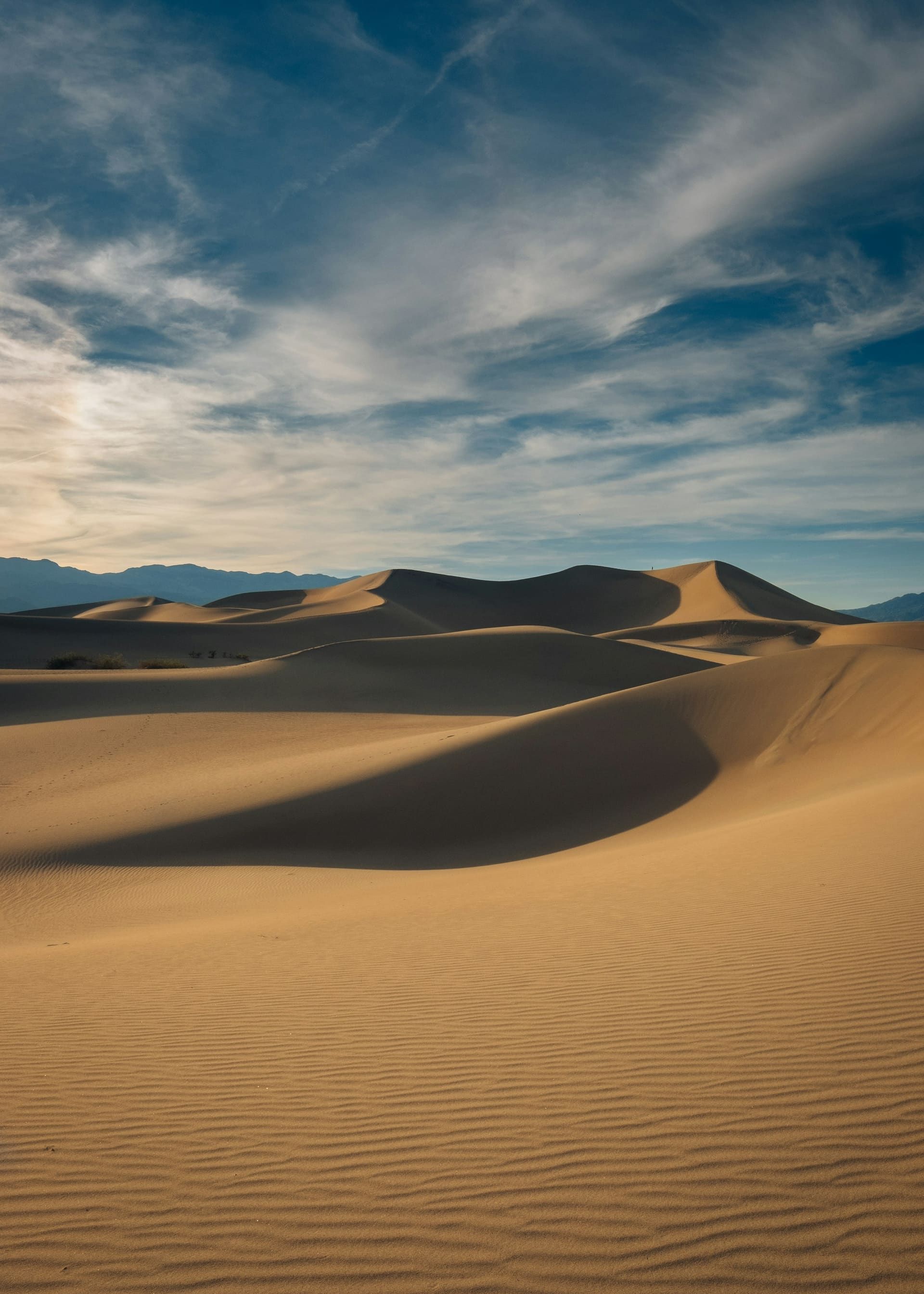
Best time of year for a Dubai desert safari
The six best months for a desert safari, ranked
Six months sit at the top of the Dubai desert safari calendar by temperature, daylight, sandstorm risk, and crowd density. The ranking below stacks them in order of overall experience quality, weighted toward first-time visitors with no fixed travel-date constraint. Pricing rises with the rank because the same logic that drives a great experience also drives demand.
- January. 19 to 24 degrees daytime, 13 to 16 degrees at night, zero sandstorm risk, full evening sunset at 5:50 PM. The single cleanest combination on the calendar. AED 199 to AED 249 standard evening.
- February. 21 to 26 degrees daytime, 14 to 17 degrees at night, soft yellow light through the month, mild humidity. Same price band as January, slightly lighter crowd volume after the first week.
- November. 24 to 30 degrees daytime, 17 to 21 degrees at night, the shoulder back into peak season. Sunset at 5:35 PM. Sandstorm risk closes at the end of July and stays closed through November. AED 199 to AED 229.
- December. 21 to 26 degrees daytime, 14 to 18 degrees at night, the peak month for price. The standard evening package sits at AED 229 to AED 249 across the month and rises to AED 349 across the December 26 to January 4 holiday spike.
- March. 25 to 31 degrees daytime, the first sandstorm advisories of the year, the last comfortable peak-season month. Sunset stretches to 6:30 PM by end of month. AED 199 standard evening.
- October. 28 to 34 degrees daytime, the shoulder back from summer, the quietest dune-traffic month of the cool-weather window. AED 169 to AED 199 standard evening, the best value-for-experience combination on the calendar.
April and May sit at the edge of the shoulder; June, July, August, and early September fall into off-peak heat. November returns to peak. The honest answer changes by traveller profile, and the sections below break the calendar apart month by month. The full desert safari Dubai lineup stays on the homepage for side-by-side package comparison once a specific month narrows your pick.
Month-by-month, what to expect from January to December
The table below maps every month against daytime temperature, night temperature, dune conditions, sandstorm risk, and the standard evening price band. The data references the National Centre of Meteorology UAE historical averages plus the BookMySafari editorial desk's quarterly operator-tariff sweep. Use the row that matches your travel month to set expectations before booking.
| Month | Day (°C) | Night (°C) | Dune conditions | Sandstorm risk | Evening AED |
|---|---|---|---|---|---|
| January | 19 to 24 | 13 to 16 | Firm, cool, ideal for bashing | Nil | 199 to 249 |
| February | 21 to 26 | 14 to 17 | Firm, mild humidity, soft light | Nil | 199 to 249 |
| March | 25 to 31 | 17 to 20 | Firm early, first heat by end of month | Low to moderate (rising) | 199 to 229 |
| April | 30 to 35 | 21 to 25 | Hotter surface, shorter activity window | Moderate | 179 to 219 |
| May | 34 to 40 | 25 to 29 | Surface above 42 °C at midday | Moderate to high | 169 to 199 |
| June | 38 to 43 | 28 to 32 | Surface 50 °C plus, 5:15 PM start | High | 149 to 179 |
| July | 41 to 45 | 30 to 33 | Hottest month, 4:30 PM pickup | High, calming late month | 149 to 179 |
| August | 40 to 44 | 30 to 32 | Mid-August holds the cheapest week | Moderate | 149 to 179 |
| September | 36 to 41 | 27 to 30 | Heat eases, humidity rises | Low | 169 to 199 |
| October | 28 to 34 | 22 to 25 | Shoulder sweet spot, quiet dunes | Nil | 169 to 199 |
| November | 24 to 30 | 17 to 21 | Peak return, firm cool dunes | Nil | 199 to 229 |
| December | 21 to 26 | 14 to 18 | Peak month, NYE spike late | Nil | 229 to 349 |
Two rules of thumb fall out of the table. First, daytime temperatures over 38 degrees Celsius shift the evening pickup time later by 60 to 90 minutes, which compresses the show-and-dinner window at the camp. Second, sandstorm risk peaks at the spring equinox in late March and through April, then again in a second smaller window in late May and June. The Lahbab dunes recover from a sandstorm inside 24 hours; the DDCR routes recover in 36 hours because the dune lines are less travelled.
Peak season, November through March explained
Peak season runs November through March because four conditions converge. Daytime temperatures sit at 18 to 30 degrees, low enough for outdoor activity through the afternoon. Sandstorm risk drops to near-zero across every standard pickup window. The sunset window stays late enough for a 3:00 PM pickup to feel relaxed, and early enough for the camp dinner to wrap by 9:00 PM. European, Russian, GCC, Indian, and US inbound tourism stacks against the same five months at scale.
The pricing consequence runs in lockstep with the experience quality. Standard evening tariffs rise from a base AED 199 at the start of November to AED 249 at the December peak, then ease back through January and February before climbing again into the March spring break window. The Lahbab convoy holds 110 to 180 vehicles a night across the peak, which raises the dune-bashing wait and shrinks the photographable golden-hour window slightly. Premium and luxury packages absorb the volume better because the DDCR restricts access to a small set of licensed operators and Sonara runs limited capacity that fills quickly.
Three winter-specific advantages compound. The dune surface stays at 20 to 28 degrees Celsius across the activity window, which keeps barefoot dune-walking comfortable for sandboarding and short camel rides. The night-time air at 12 to 18 degrees pulls the fire-show heat into a contrasting register that feels markedly more atmospheric than a summer evening at 32 degrees. The full evening cultural set runs in its standard slot rather than the compressed Ramadan or summer schedule, so the tanoura, belly dance, and fire show all land at their full length.
Shoulder season, April and October as sweet spots
April and October sit between peak and off-peak on every axis. Daytime temperatures land at 26 to 35 degrees, comfortable in the morning and through the late afternoon while the midday hours stay outside the safari window. Pricing eases from the peak AED 249 to a shoulder AED 169 to 219 on the same standard evening package. Tourist volumes drop by roughly 30 percent against the winter peak, which thins the Lahbab convoy from 150 vehicles a night down to 90.
October carries the edge over April on three counts. Sandstorm risk sits at zero through October, against a moderate-to-rising risk in April. The sunset hour sits at 5:55 PM at the start of October, which gives the evening safari its full activity window. The dunes carry a softer, lower-angle light through October because the autumn sun sits roughly eight degrees lower in the sky than the spring equivalent. April compensates with the longest sunset window of the shoulder, stretching to 6:45 PM by the end of the month.
For travellers prioritising photography on a budget, the second week of October is the single best slot on the calendar. The mid-August cheap rate holds in the background; the October shoulder carries a 20 to 30 percent discount alongside the cleanest light of the year. For families running spring-break itineraries from Europe or North America, the first week of April runs at full shoulder discount before the Easter spike lands and before the sandstorm risk window opens.
Summer, May through September honestly assessed
Summer holds three real advantages and three real costs. The advantages: pricing drops by 15 to 25 percent on every package, the Lahbab convoy shrinks to 50 to 70 vehicles a night, and the dune surface itself takes on a deeper saturation in the late-evening shadow because the sun angle compresses faster after sunset. The costs: daytime temperatures peak at 41 to 45 degrees Celsius in July and August, the evening pickup shifts later by 60 to 90 minutes, and the morning safari becomes the safer slot for under-12 children and any guest on heart, blood-pressure, or pregnancy medication.
The summer evening schedule itself behaves differently. The 4:30 PM pickup pushes the first dune-bashing window to 5:15 PM, when the surface temperature has eased back from its 50-degree midday peak to 38 degrees. The sunset stop runs at 6:50 PM in late June and 6:25 PM by the end of August, a stretch that earlier-season visitors find surprising. The camp dinner opens around 8:00 PM rather than 7:00 PM, and the tanoura performance finishes around 9:30 PM rather than the winter 9:00 PM. The return transfer lands at 10:00 PM rather than 9:30 PM, useful to know if your hotel has a late-night dinner booking on the same date.
For travellers who book the morning safari instead, summer holds up well. The 6:00 AM pickup lands at the dune edge by 6:30 AM, 30 degrees on the ridge, soft pink light over the Lahbab face, sandboarding and a camel ride completed before the 8:30 AM heat ramp. Read the what to wear on a Dubai desert safari guide for the season-by-season outfit table; the summer column carries specific shoe and fabric notes that earlier sections of this guide do not duplicate.
Sandstorm season, March through July risk window
Sandstorm season runs March through July in the Dubai desert with two distinct peaks. The first peak falls in late March and through April, driven by the shamal wind that pulls sand and dust up from the Saudi empty quarter. The second peak runs late May into June, driven by the same shamal mechanism but reinforced by the seasonal pre-monsoon atmospheric instability. Visibility falls below 500 metres for two to six hours during a major event, and the dune-bashing operation pauses entirely.
The National Centre of Meteorology UAE publishes morning-of advisories that operators read by 9:00 AM each day. A red-level advisory cancels the evening safari outright; a yellow-level advisory delays the pickup by one to two hours and routes the convoy to a sheltered alternative dune system. Reputable Dubai operators reschedule a sandstorm-day cancellation inside the same booking window at zero fee, and BookMySafari holds the partner operator to that promise on every booking. Budget operators occasionally retain deposits on weather cancellations, which is one of the most consistent Tripadvisor complaint categories for the AED 99 package.
Three to five storms per year reach the threshold that suspends operations entirely. They cluster around the spring equinox and again around the early-June solstice approach. For travellers booking inside the sandstorm window, build a two-day flex into the itinerary and confirm the reschedule policy on WhatsApp before paying the deposit. The Lahbab dunes recover within 24 hours; the DDCR routes inside 36 hours.
Sunrise and sunset windows month by month
The sunset window for a Dubai desert safari moves by 90 minutes between the late-December minimum and the late-June maximum. The table below publishes the mid-month sunrise time, the mid-month sunset time, and the golden-hour duration for each month. Photography-led travellers use the longer winter window; first-time evening guests pay closer attention to the sunset hour because the camp schedule keys to it.
| Month | Sunrise (mid-month) | Sunset (mid-month) | Golden hour | Evening pickup |
|---|---|---|---|---|
| January | 7:05 AM | 5:50 PM | 40 min | 3:00 PM |
| February | 6:50 AM | 6:10 PM | 35 min | 3:00 PM |
| March | 6:25 AM | 6:25 PM | 30 min | 3:00 PM |
| April | 5:55 AM | 6:40 PM | 25 min | 3:30 PM |
| May | 5:35 AM | 6:55 PM | 20 min | 3:30 PM |
| June | 5:30 AM | 7:08 PM | 15 min | 4:30 PM |
| July | 5:40 AM | 7:05 PM | 15 min | 4:30 PM |
| August | 5:55 AM | 6:45 PM | 20 min | 4:30 PM |
| September | 6:10 AM | 6:15 PM | 25 min | 3:30 PM |
| October | 6:25 AM | 5:50 PM | 30 min | 3:00 PM |
| November | 6:45 AM | 5:30 PM | 35 min | 3:00 PM |
| December | 7:00 AM | 5:35 PM | 40 min | 3:00 PM |
The 90-minute compression between winter and summer changes the rhythm of the safari itself. A 40-minute golden hour in December lets the convoy stop twice on the ridge, once for the wide group portrait and once for the individual sundown shots. A 15-minute golden hour in June compresses the same stop to a single five-minute window, and the photography session at the camp shifts to the dune-edge silhouette format that works better at lower light.
Pricing seasonality, when the off-peak floor opens
Dubai desert safari pricing follows a five-band seasonal curve through the calendar year. The bands below map every month against the multiplier applied to the standard AED 199 evening package. The AED 149 off-peak floor opens across the summer months on the shared package; the AED 349 ceiling appears across the December 26 to January 4 holiday spike and on NYE itself.
| Season | Months | Standard evening (AED) | Multiplier on AED 199 base | Surcharge events |
|---|---|---|---|---|
| Peak winter | Nov, Jan, Feb | 199 to 249 | 1.00× to 1.25× | UAE National Day weekend, +25% |
| Peak holiday | Dec 26 to Jan 4 | 299 to 349 | 1.50× to 1.75× | NYE itself, +40% on every package |
| Shoulder spring | Mar, Apr | 179 to 229 | 0.90× to 1.15× | Eid Al Fitr weekend, +20% |
| Off-peak summer | May, Jun, Jul, Aug, Sep | 149 to 199 | 0.75× to 1.00× | Eid Al Adha early summer, +15% |
| Shoulder autumn | Oct | 169 to 199 | 0.85× to 1.00× | Diwali week, mild Indian-market premium |
The AED 149 off-peak floor holds across every summer band, with a caveat. The shared evening sits at AED 149 from mid-May through mid-September, firms toward AED 199 across October and November, and runs the full AED 199 to AED 249 peak band through the December and January window. Across the December 26 to January 4 spike, the cheapest shared slots disappear from many operator tariffs entirely. Always confirm the all-in figure in writing, including the per-zone pickup supplement; read the desert safari cost in Dubai guide for the full rate card and the pickup-zone surcharge map.
Twelve months in five frames
The same Lahbab dune from the December peak to the July off-peak
The dune does not look the same in January and July. Light angle, surface temperature, and shadow length all shift across the calendar. Five frames mapped to five distinct seasonal moments on the same Lahbab face.


Ramadan and a Dubai desert safari, what changes
Ramadan shifts the desert safari schedule in three concrete ways. Pickup moves to 6:15 PM rather than 3:00 PM, which sets the camp arrival at sunset for iftar. The opening spread runs dates, laban, water, Arabic coffee, and a brief prayer call before the full BBQ buffet opens at 7:30 PM. Live music and the tanoura performance hold off until the iftar period closes, which typically falls around 9:00 PM in Ramadan, after which the full cultural lineup runs to a 10:00 PM finish.
Two policies sit alongside the schedule shift. Alcohol comes off the menu at every camp inside the UAE through Ramadan under federal licensing rules, regardless of whether the camp normally serves at the DDCR, Sonara, or Bab Al Shams licensed venues. Daytime fasting shapes guest interaction at the camp; non-Muslim guests are welcome to eat, drink water, and use shisha inside the air-conditioned Land Cruiser during the daytime pickup window, simply not in public view. The fast breaks at sunset, after which all camp activity runs as normal through to the return transfer.
Ramadan dates shift roughly 11 days earlier each Gregorian year. The 2026 Ramadan window runs February 18 through March 19, the 2027 window February 6 through March 7. Pricing across Ramadan eases by 10 to 15 percent against the same-month non-Ramadan baseline, because GCC inbound tourism softens through the month. The Eid Al Fitr weekend that closes Ramadan carries a plus 20 percent surcharge because regional travel picks up the minute the fast ends.
February 18 through March 19
Ramadan 2026, when the safari schedule shifts
Pickup moves to 6:15 PM so camp arrival lines up with sunset.
How UAE National Day, NYE, and Eid reset the price floor
Four public-holiday windows reset the price floor every calendar year. UAE National Day weekend (December 2 to 3) adds a plus 25 percent surcharge across every package because of the inbound GCC and domestic-tourism volume. NYE itself adds plus 40 percent, the single biggest holiday surcharge of the year, applied across standard, premium, and luxury heritage tariffs without exception. Eid Al Fitr weekend at the close of Ramadan adds plus 20 percent; Eid Al Adha in the early summer adds plus 15 percent because the base rate is already softer.
School holidays generate two secondary spikes that move every year. UAE school mid-terms (early November and late February) lift evening tariffs by 8 to 12 percent on family price bands. The August back-to-school window compresses UAE-resident demand out of the market, which is partly why mid-August holds the cheapest standard evening rate of the year. European school holidays generate cross-cutting inbound demand around half-term weeks, but the effect is smaller because European travellers spread their bookings across hotels and dates more evenly than the GCC market does.
For travellers who can flex by 24 hours, the per-holiday spike resolves cleanly. NYE at plus 40 percent reverts to the standard peak rate by January 2. UAE National Day plus 25 percent reverts within four days. Eid Al Fitr plus 20 percent settles three days after the holiday closes. Book either side of the holiday window for the peak winter experience without the holiday surcharge.

Morning versus evening, by season
Evening from November to March, morning from May to September
The morning safari at 6:00 AM holds at 30 degrees Celsius through July and August. The same hotel pickup, the same Land Cruiser, the same Lahbab red dunes. The trade-off the winter evening loses, summer morning takes. November through March, the evening at 3:00 PM is the answer; May through September, the morning at 6:00 AM is the answer. April and October work either way.
- Winter, Nov to Mar Evening at 3:00 PM, sunset 5:50 PM
- Summer, May to Sep Morning at 6:00 AM, breakfast at the camp
- Shoulder, Apr & Oct Either slot, lighter convoy traffic
Best time of day, morning versus evening by season
The right time-of-day slot rotates with the season. November through March, the evening safari at 3:00 PM holds the strongest combination because the sunset hour stays late enough for a full dune-bashing window before camp dinner and the camp temperature drops to a contrasting 14 degrees by the end of the show set. April and October open the morning slot at parity, since the dawn pickup hits 28 to 32 degrees and the evening window pushes past 6:30 PM.
May through September flips the calculation. The morning safari at 6:00 AM lands at 28 to 33 degrees on the ridge at sunrise, well below the 38-degree threshold that compresses the evening dune-bashing window. The breakfast box at the camp opens at 8:00 AM, and the return transfer lands at 11:00 AM before the worst heat of the day arrives. Read the dedicated morning vs evening desert safari Dubai comparison for the side-by-side activity table; the seasonal overlay here narrows the answer further by month.
Specialist categories override the season default. Photographers chase the morning slot year-round because the dawn light over the Lahbab red dunes renders the iron-oxide sand a full saturation step deeper than the sunset equivalent. Families with under-6 children stay on the morning slot regardless of month because the 9:30 PM evening drop-off consistently derails sleep schedules. Heat-sensitive guests, including pregnancy past the first trimester and any cardiac-medication user, hold the morning slot through every month above 32 degrees daytime.
Family travel, best months for children under 12
Families with children under 12 win on three months disproportionately. October, the cleanest shoulder month, holds at 28 to 34 degrees daytime with zero sandstorm risk and a 5:55 PM sunset that lets the camp dinner wrap by 8:30 PM. February holds at 21 to 26 degrees with the same sunset rhythm and a January-grade clean experience without the peak holiday spike. November opens the peak season at moderate prices before the December surcharge arrives.
Three child-specific operational notes follow. Under-4 children travel free across the standard, premium, and luxury heritage packages, with no seat charge and no separate dinner plate. Ages 4 to 11 travel at the child rate; AED 99 on the standard evening package. The morning safari suits children under 6 better than the evening across every month because the 9:30 PM camp dinner finish consistently overruns the bedtime window. A 6:30 AM morning pickup, an 11:00 AM drop-off, and a hotel-pool afternoon clears the same day cleanly.
The summer trade-off remains. May through September runs daytime temperatures past 38 degrees, which moves the family booking to the morning slot only. The DDCR luxury heritage package holds two child-friendly extras absent from the standard package: a falconry handler trained on under-10 interaction and a stargazing host who runs a 30-minute children's segment before the formal astronomy set begins. Pricing at AED 695 makes it a special-occasion booking rather than a default.
Photography, best months for the sharpest golden hour
The sharpest golden-hour light over the Lahbab red dunes runs across January, February, October, and November. Four conditions converge across those four months. The sun sits eight to twelve degrees lower in the sky than the summer equivalent, which extends the golden-hour duration to 35 to 40 minutes against the 15-minute summer floor. The humidity sits at 55 to 65 percent rather than the summer 80 percent, which keeps the atmospheric haze low and the saturation high. The dune surface stays cool enough for a barefoot model shot through the activity window. The convoy thins relative to peak December, which gives a clean foreground.
The single best week of the year for desert-safari photography is the second week of October. The shoulder pricing keeps tour volumes 30 percent below the December peak, the golden hour stretches to a 30-minute window, the sunset itself lands at 5:55 PM rather than the late-summer 6:45 PM, and the dune face holds its summer-saturation iron oxide before the winter softening kicks in. The second best week falls in late January, immediately after the NYE holiday spike resolves.
For drone photography under the DCAA licensing regime, the morning slot wins across every month because the convoy traffic on the ridge stays light enough for the licensed drone operator to film without conflict. Read the what to expect on your first Dubai desert safari guide for the hour-by-hour activity sequence; the photography slots inside the standard itinerary cluster around the ridge stop and the camp arrival.
Peak versus off-peak, what actually moves
The BookMySafari seasonal guarantee versus the typical operator
Six promises the BookMySafari editorial desk holds the partner operator to across the calendar. Each line resolves a recurring Tripadvisor complaint about seasonal handling on Dubai desert safari bookings.
What guests say about timing
Six bookings, six months, six reasons it worked
Verified reviewers across January, July, October, November, NYE, and a May morning slot. Each quote ties to the specific month they booked and the AED price they paid.
We booked the January 18 evening tier from Downtown. 22 degrees on the ridge at sunset, a jacket needed by 7:30 PM at the camp. Worth every dirham of the AED 249 peak rate.
July 12, the AED 169 summer rate, 4:30 PM pickup. The driver waited the heat out at the dune edge and dune-bashed only after 5:15 PM. The sunset hit at 6:55 PM. The off-peak window holds if the operator runs the schedule properly.
October 6 shoulder-season morning safari, AED 169 with the Sharjah supplement included. 28 degrees at 7:00 AM, the light was the softest gold I have ever shot on a phone camera. The dunes were near-empty.
Two kids, two grandparents, one photographer in the family. The pickup time and ridge stop matched the golden-hour table to the minute. We got the four-generation portrait at 5:30 PM in November, BBQ by 7. Worth the AED 199 ten times over.
NYE 2025 booking, the AED 695 luxury heritage tier at the DDCR. The peak surcharge was published two weeks earlier on the WhatsApp quote. No surprise line at the camp, the convoy capped at 28 vehicles even on the busiest night of the year.
May 9 booking with two children aged 4 and 7. Morning safari at AED 149 from the JBR pickup zone. 31 degrees on the ridge at 8:30 AM, the breakfast box held a halloumi sandwich the older one finished. Avoided the meltdown the evening tour would have produced.
Book the right month on WhatsApp
Tell us your dates and your hotel zone. The editorial desk confirms availability, the per-month price, the sunrise or sunset window, the sandstorm reschedule policy, and the holiday surcharge inside one chat, within reply within 10 minutes. Bookings on this page are fulfilled by Velari Tourism L.L.C, DET license #1491675.
WhatsApp the editorial desk for date-specific availabilityFrequently asked questions about Dubai desert safari timing
-
What is the absolute best month for a Dubai desert safari?
January is the single best month for a Dubai desert safari. Daytime temperatures sit at 19 to 24 degrees Celsius, night temperatures sit at 13 to 16 degrees, humidity holds at 55 to 65 percent, and the dunes carry no sandstorm risk through the month. The sunset window opens between 5:42 PM and 5:55 PM across the four weeks, which gives the evening safari a relaxed two-hour activity period before camp dinner. The trade-off is price and crowds. The standard evening package sits at AED 199 to AED 249 in January, against AED 149 in July. December 28 through January 4 carries the heaviest convoy traffic of the calendar year, with operator volumes 40 percent above the November baseline. -
Is it too hot to do a desert safari in July?
July is hot, not unsafe. Daytime temperatures peak at 41 to 44 degrees Celsius in the shade and 52 degrees on the dune surface itself. Operators shift evening pickup from 3:00 PM to 4:30 PM through July and August to skip the worst of the sun, and the dune-bashing window opens after 5:15 PM when the surface temperature has fallen to 38 degrees. The morning slot at 6:00 AM holds at 30 to 33 degrees and stays comfortable. Standard evening pricing drops to AED 149 to AED 199 against the AED 249 January peak, which is why summer remains a strong value window for travellers who can handle the heat. Avoid the noon-to-2:00 PM outdoor exposure on either side of the safari itself. -
Can I do a desert safari during Ramadan?
Yes, desert safaris run through Ramadan on a shifted schedule. Pickup moves to 6:15 PM rather than 3:00 PM so the camp arrival lines up with iftar at sunset. The camp serves dates, laban, and Arabic coffee as the iftar starter, then the standard BBQ buffet from 7:30 PM onward. Live music holds off until after the iftar prayer call, which typically falls around 9:00 PM in Ramadan, after which the full tanoura and belly-dance set runs as usual. Alcohol comes off the menu at every camp inside the UAE through Ramadan under federal licensing rules, regardless of the package. Non-Muslim guests are welcome to eat and drink water inside the air-conditioned 4x4 during the daytime, simply not in public view. -
What's the weather like at night in the desert?
Night temperatures in the Dubai desert drop sharply against the daytime reading. November through February nights sit at 12 to 18 degrees Celsius, March and October at 18 to 22 degrees, April and May at 22 to 28 degrees, and June through September at 28 to 33 degrees. The drop hits inside 90 minutes after sunset on a clear night, and first-time visitors consistently under-pack for the January evening at the camp. A light jacket or a long-sleeve cotton layer covers November to February. April and October hold a single light layer. May through September stays warm enough for short sleeves through to the return transfer. -
When is the cheapest time to book?
Mid-August is the single cheapest week of the year for a Dubai desert safari. Standard evening pricing drops to AED 149 against the January peak of AED 249, a 40 percent discount on the same package. The reason is twofold. UAE residents travel out of the country in mid-August because school holidays compress around the back-to-school window, and inbound tourism from Europe and India sits at its annual low because of the heat. May, June, and September hold a steady minus 15 percent off the peak rate; July and the first half of August hold minus 25 percent. October opens shoulder pricing at base rate, November returns to peak. The single cheapest combined slot is mid-August on a morning safari, where the AED 149 floor is real and unmoved. -
Is December busier than January?
December and January carry comparable peak volumes, with one inflection point. The December 26 through January 4 window is the busiest 10 days of the calendar year for Dubai desert safari operators, driven by Christmas and New Year inbound from Europe, Russia, and the GCC. NYE itself runs a plus 40 percent surcharge across every package, and the Lahbab convoy hits roughly 180 vehicles on the dunes against a 110-vehicle nightly average through the rest of December. Outside the 10-day spike, December and January match closely on temperature and pricing. January nights run one to two degrees colder than December nights, which matters at the camp dinner. Book January 8 through January 25 for the cleanest version of the peak experience. -
Are sandstorms a real risk?
Sandstorms carry a real but manageable risk for Dubai desert safari travellers between March and July. The peak risk window falls in late March through May, when the shamal wind drives sand up from the empty quarter to the south and reduces visibility on the dunes to under 500 metres for two to six hours at a stretch. The National Centre of Meteorology issues advisories the morning of a major event. Reputable Dubai operators reschedule inside the same booking window at zero fee on a sandstorm-day cancellation; budget operators occasionally forfeit deposits. Three to five storms per year reach a strength that suspends safari operations entirely, and they tend to cluster around the spring equinox. The DDCR luxury operators cancel earlier than the standard convoy. -
Are evening safaris available year-round?
Evening safaris run year-round in Dubai, with two seasonal adjustments. The November-through-March schedule departs from your hotel at 3:00 PM for a 9:30 PM drop-off. The April-through-October schedule shifts pickup later. April, May, September, and October leave at 3:30 PM. June, July, and August leave at 4:30 PM to push the dune-bashing window past the 38-degree surface threshold. The drop-off rolls to 10:00 PM through summer because the sunset itself runs later, peaking at 7:08 PM in late June. The morning safari runs year-round on a similarly shifted schedule, with the 6:00 AM summer pickup compressing back to 7:00 AM through winter to catch the same softer light.