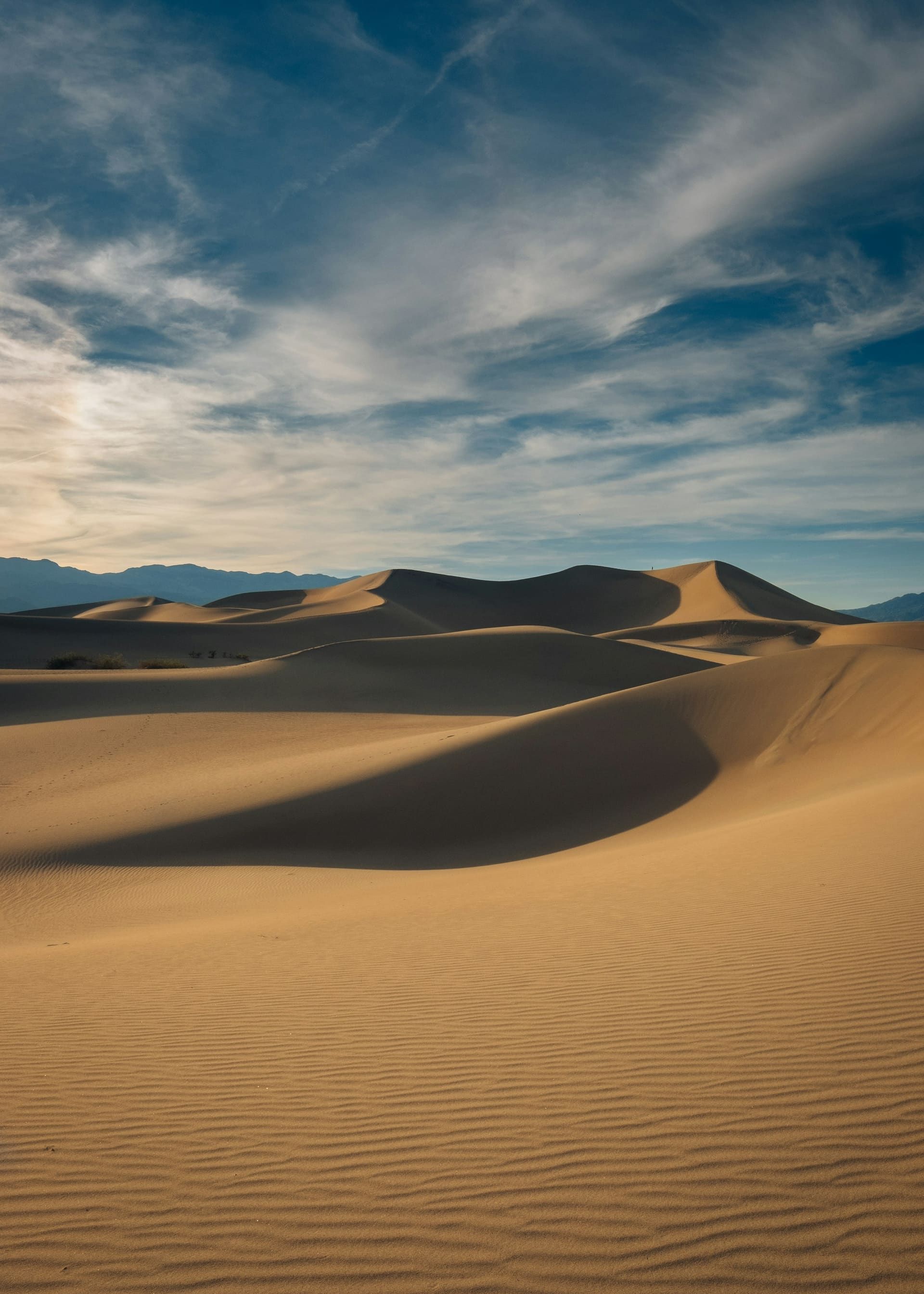
Inside the Dubai Desert Conservation Reserve (DDCR)
The Dubai Desert Conservation Reserve in 30 seconds
The Dubai Desert Conservation Reserve is the only fully conservation-managed desert inside the emirate. The reserve covers 225 square kilometres of dunes, ghaf woodland, and gypsum flats southeast of central Dubai, holding the largest unfenced Arabian oryx population in the country. Entry runs through 6 named operators on a per-head levy that floors the standard price at AED 695. A morning safari delivers oryx almost always; an evening trip delivers them commonly. The reserve is not a place you tour from a public road; it is a place 6 operators take you into under a government-issued permit. That permit requirement is what makes booking a Dubai desert safari the only way in, not a matter of picking between a self-drive day and an operator day.
Where is the DDCR and how is it accessed?
The DDCR sits roughly 65 kilometres southeast of central Dubai, off the E66 Dubai-Al Ain Road, with the main operator entry points spaced along the perimeter between Margham and Al Maha junction. The reserve centre coordinates sit close to 24.817°N, 55.65°E. A standard Marina pickup at 5:30 AM in winter reaches the operator gate by 6:30 AM; an evening pickup at 2:30 PM clears the same gate by 3:30 PM.
Access is permit-only. The reserve is fenced on its public-side boundary, gated at the operator entry points, and patrolled by ranger units that intercept unauthorised entries. Self-drive 4x4s, quad bikes, and motorcycles are prohibited. The 6 licensed operators run on staggered slots so no two convoys share the same dune line for more than 30 minutes, the density cap is the single reason the DDCR delivers a quieter experience than any public desert in Dubai.
Pickup locations span Dubai Marina, Downtown, JBR, Business Bay, and Deira. Drive times run 55 to 65 minutes from Marina, 50 to 60 minutes from Downtown, and 70 to 80 minutes from Deira. Al Maha Resort guests skip the city pickup entirely; the resort property sits inside the reserve perimeter.
The three Dubai desert systems, and who each one suits
Dubai has three named desert systems that the safari industry routes guests into. Each one serves a different traveller profile. The DDCR is the conservation option; the Lahbab desert is the public red-dune option; the Al Marmoom Desert Reserve sits in the middle.
- Lahbab desert, 45 minutes east, public access, iron-oxide red dunes (Big Red 60 to 100 m), AED 99 price floor, falcon-at-camp sightings only. The default for a first Dubai safari.
- Al Marmoom Desert Reserve, 40 minutes south, 10 km² eco-protected zone, tan dunes, AED 350 price floor, Arabian oryx and gazelle sighted often. The mid-range wildlife option.
- Dubai Desert Conservation Reserve, 55 to 65 minutes southeast, 225 km² fully gated, mixed dune-and-gravel terrain, AED 695 price floor, the highest wildlife density and the lowest visitor density in the emirate. The premium conservation option.
The strip below sets the same four claims against each system. Read top-down before booking any option.
Three Dubai dune systems
DDCR vs Lahbab vs Al Marmoom, the safari comparison
Drive time, dune profile, wildlife density, and price change in the same direction as access exclusivity. Pick the system before you pick the operator.
Why DDCR safaris cost AED 695 and up, the conservation fee math
The AED 695 floor on a DDCR safari is the levy-loaded entry, not the operator margin. The Dubai Tourism Department, in partnership with the reserve management, charges every operator a per-head conservation fee that the operator passes through to the visitor. The breakdown below comes from the public tariff sheet plus three operator interviews conducted by the editorial desk in March 2026.
| Cost component | Allocation (AED) | What it funds |
|---|---|---|
| Per-head conservation levy | 180 to 240 | Ranger payroll, fence maintenance, perimeter patrols |
| Oryx programme contribution | 40 to 60 | Oryx tagging, veterinary care, breeding herd management |
| Ghaf-tree reforestation | 20 to 30 | Planting and irrigation of 6,000+ ghaf seedlings annually |
| Vehicle and fuel | 120 to 160 | Land Cruiser or Defender, fuel, insurance, maintenance |
| Guide and ranger time | 140 to 200 | RTA-permitted driver, naturalist guide, optional ranger |
| Camp inclusions (where applicable) | 100 to 180 | Refreshments, falconry display, dinner courses |
| Operator margin | 40 to 80 | Booking, dispatch, after-care, platform fee |
A Lahbab safari pays none of the first three rows because Lahbab is public desert. That is the entire explanation for the AED 99 vs AED 695 difference. The conservation funding is not optional and not negotiable; the levy is the reason an oryx still grazes 50 metres from your Land Cruiser at sunrise. The Dubai desert safari cost breakdown covers this in more depth alongside the other packages.
The 6 licensed operators of the DDCR
Only 6 named operators hold a current DDCR permit. The reserve management caps the count deliberately to protect the ecosystem under the reserve's concession system. The desk reviewed each operator's signature route, vehicle fleet, and pricing in March 2026.
| Operator type | Price (per head) | Signature experience inside the DDCR |
|---|---|---|
| A heritage Land Rover and founding operator | AED 795 to 1,950 | Vintage 1950s Land Rover Heritage Safari; founding operator of the reserve |
| Al Maha, a Luxury Collection Desert Resort | Check current rates | In-reserve overnight stays; private deck plunge pools; falconry; camel trek |
| A sundowner-drive operator | AED 795 to 1,300 | Sundowner camel trek to a private viewpoint; wildlife drive at dusk |
| A group conservation-tour operator | AED 750 to 1,250 | Group conservation drives with a naturalist; cultural-camp dinner |
| A heritage-village-based operator (DDCR-adjacent + permitted route) | AED 850 to 1,400 | Heritage village base; falconry; horseback ride at perimeter |
| A photography-focused operator | AED 725 to 1,150 | Photography-focused morning wildlife drive; ghaf-tree set-up shots |
Sonara Camp hosts its dinner experience inside the reserve, but it is a dining product rather than a wildlife-drive safari route. If a full in-reserve safari is the requirement, choose from the 6 above. The founding heritage operator holds the longest operating history inside the DDCR and the only fleet of vintage Land Rover Defenders authorised on conservation routes.
DDCR wildlife and the odds of seeing each species
The DDCR holds the largest unfenced Arabian oryx population in Dubai and is one of the few places in the UAE where sand gazelle, MacQueen's bustard, and Gordon's wildcat coexist inside one protected ecosystem. The table below shows how sighting frequency varies by species, season, and time of day.
| Species | Morning safari odds | Evening safari odds | Best photography window |
|---|---|---|---|
| Arabian oryx | Almost always | Commonly | 06:15 to 07:30 AM, dawn light on white coat |
| Sand gazelle (rheem) | Sometimes | Commonly | 16:30 to 17:30 PM, low-angle dusk |
| MacQueen's bustard (winter migrant) | Sometimes | Occasionally | Nov to Feb, 06:30 to 08:00 AM on gravel flats |
| Sand fox | Occasionally | Rarely | Dawn, 05:50 to 06:20 AM, dune fringes |
| Gordon's wildcat | Rarely | Rarely | Pre-dawn rangered drive; rare year-round |
| Dabb lizard (spiny-tailed) | Often | Sometimes | 09:00 to 11:00 AM, basking on rocks |
| Falcon (handler-perched) | Almost always | Almost always | Operator camp falconry slot |
The oryx is the headline species. The reserve's unfenced herd ranges across the dunes and ghaf woodland, with morning sightings tracking the herd's overnight grazing line. A ranger briefing before the drive sets expectations on what the herd has been doing in the previous 72 hours. Photographers chasing the wildcat should book the pre-dawn rangered drive and accept that a sighting stays rare even then.
The DDCR on camera
The DDCR in five frames, from the oryx herd to the ghaf trees
Every shot below comes from the Dubai Desert Conservation Reserve or its immediate perimeter.


Ghaf trees and desert ecology, what makes the DDCR unique
The DDCR is built around the ghaf tree (Prosopis cineraria), the UAE's national tree and the keystone species of inland Arabian desert ecology. A mature ghaf drives a taproot 30 metres into the water table, holds sand against the wind, and shelters the small mammals and lizards that feed the larger predators. The reserve's ghaf-tree reforestation programme plants 6,000+ seedlings per year and uses drip irrigation only for the first 18 months, after which the trees survive on groundwater alone.
The reserve terrain is more varied than a typical Dubai dune system. Three habitat zones coexist inside the perimeter: sand dunes (60% of the area), gypsum and gravel flats (25%), and ghaf-woodland savannah (15%). The mixed terrain is why species like the bustard (a gravel-flat bird) and the oryx (a dune-and-savannah grazer) share the same protected area. Public deserts like Lahbab carry the dunes but lack the woodland and gravel flats, which is why Lahbab's wildlife inventory is narrower.
The conservation programme reintroduced the Arabian oryx after near-extinction in the 1970s, lifted the sand gazelle from a residual population to a stable herd, and is the reason MacQueen's bustard still overwinters in Dubai. Every visit funds the next stage.
The founding operator of the DDCR
A founding heritage operator brought conservation tourism inside the DDCR and remains the only operator with a fleet of vintage 1950s Land Rover Defenders authorised on reserve routes. The signature Heritage Safari runs the vintage convoy at dawn, includes a working falconry display with a saker or peregrine, a desert-style breakfast, and a ranger-led wildlife drive. Pricing starts at AED 695 for a shared morning slot and reaches AED 1,950 for the top private package.
What the founding heritage operator offers that the other 5 operators do not: the vintage Land Rover access (no other fleet inside the reserve), the longest serving DDCR rangers on staff, and a private desert camp footprint with no other operator sharing the site. The trade-off is price; this is the top of the standard price band. Travellers chasing the lowest-cost DDCR ticket should compare quotes across the other licensed operators.
Al Maha Resort and overnight stays inside the DDCR
Al Maha, a Luxury Collection Desert Resort is the only accommodation inside the DDCR perimeter. The property holds 42 private desert-style suites, each with a private deck and a temperature-controlled plunge pool that opens directly onto the dunes. Rates vary by season, check current pricing, full board, with two daily activities included from a menu of camel trekking, falconry, wildlife drive, archery, or horseback ride.
Al Maha guests wake already inside the reserve. Morning activities leave straight from the property while day-trip guests are still on the highway, and breakfast overlooks unbroken desert. For the overnight desert safari package, this is the upgrade.
Bab Al Shams Desert Resort sits outside the reserve in the Al Qudra area, and Sonara Camp is a dinner venue rather than a resort. Both deliver excellent desert hospitality, check current nightly rates, but neither offers an overnight stay inside the DDCR perimeter.
Sunrise camel trek, the signature DDCR experience
The DDCR sunrise camel trek is the single most photographed activity inside the reserve. The trek leaves the operator camp at first light, follows a 4-kilometre route through ghaf woodland to a high ridge, and returns by 8:00 AM for breakfast. The camel string holds 8 to 12 animals; pace is walking only, no trotting, no racing. The handler runs the lead camel and stops the convoy for photographs on the ridge.
Why the DDCR sunrise camel trek beats every other dawn-camel option in Dubai: the route stays inside the reserve, oryx sightings happen with the camels still in frame, and the ridgeline at the turn-around point overlooks 8 kilometres of empty desert with no power lines, no buildings, and no other operator convoys. The same activity in Lahbab or Al Awir delivers fine camel photos but a busier horizon.

A morning inside the DDCR
A DDCR morning, 5:30 AM pickup to the 10:15 AM gate exit
A standard 5:30 AM Marina pickup reaches the DDCR operator gate by 6:30 AM. The ranger briefing runs 5 minutes, what the oryx herd is doing, which gravel flat the bustards are using. The Land Cruiser or Land Rover Defender clears the gate at 6:40 AM. Oryx are commonly spotted within the first few dune crests. The vehicle stops at a ghaf grove for the falconry display at 7:10 AM, runs the dune line to the sunrise camel trek pickup at 7:30 AM, and returns to the camp for a desert breakfast at 8:30 AM. The whole route exits the reserve gate at 10:15 AM.
- Hotel pickup Marina 5:30 AM / Downtown 5:45 AM
- DDCR gate 6:30 AM with ranger briefing
- First oryx Commonly seen, first few crests
- Camel trek 7:30 AM, 4 km ghaf-woodland loop
- Camp breakfast 8:30 AM on desert terrace
Photography at the DDCR, what you can and can't shoot
The DDCR rules favour wildlife and disfavour disturbance. Drone photography is prohibited across the entire reserve without a written research permit from the reserve management. Flash photography on wildlife is prohibited; the rule applies to oryx, gazelle, bustard, and fox alike. Tripod use is permitted on operator stops only; setting up a tripod inside the reserve away from a ranger-approved stop draws an operator warning and a route shortening.
What you can shoot: handheld stills and video, including long-lens wildlife work at the ranger-set distance (40 metres minimum from oryx, 25 metres from gazelle, 15 metres from dabb lizards). The morning light between 06:15 and 07:30 AM holds the strongest contrast on the white oryx coat against the amber sand. The evening light between 16:30 and 17:30 PM favours the gazelle and the bustard on the gravel flats. Phone cameras work well from 6:30 AM onward; pre-dawn shots benefit from a body with stronger high-ISO performance.
Best time of year to visit the DDCR
The DDCR is best visited between November and March, the cool dry season, when daytime temperatures sit between 22 and 30 degrees Celsius and the migratory MacQueen's bustard arrives on the gravel flats. Oryx and sand gazelle remain visible year-round, but summer visits (May to September) push surface temperatures past 45 degrees Celsius and operators shift the morning slot earlier to start at 4:45 AM rather than 5:30 AM.
Christmas week, New Year week, and the UAE National Day weekend (early December) sell out 4 to 6 weeks ahead. The 6-operator cap means there is no overflow capacity; if the licensed operators are full, the only fallback is a non-DDCR route. Book early for any winter trip and confirm the operator's permit slot rather than just the booking.
Family safaris in the DDCR, what changes vs Lahbab
Family travellers find the DDCR calmer and quieter than Lahbab, which suits younger children and older parents but reduces the high-energy dune-bashing that some families come to Dubai expecting. Most DDCR routes include no or low-intensity dune driving; the reserve management caps the intensity inside the perimeter to protect the ecosystem. The camel trek, falconry display, and wildlife drive run at family pace.
Age guidance: signature camel trek age 5+, vintage Land Rover Heritage Safari age 3+ with adult, group wildlife drives generally age 4+. The dune-bashing slots inside the DDCR run age 6+ with a low-intensity driving line. For a family wanting both DDCR wildlife and high dune-bashing intensity, the standard recipe is one morning DDCR safari plus a separate evening Lahbab safari on a different day.
Sustainability, what the conservation levy funds
Every DDCR ticket funds a portion of the reserve's operating budget. The published outputs of the conservation programme include the largest unfenced Arabian oryx herd in Dubai, a stable sand gazelle population, a winter habitat for MacQueen's bustard, and 6,000+ ghaf tree seedlings planted annually. The reserve employs 50+ permanent staff including rangers, naturalists, and a veterinary team.
Travellers comparing the AED 695 floor against an AED 99 Lahbab trip should read the levy as a contribution rather than a markup. The same logic applies to safari travel anywhere else in the Gulf, conservation deserts cost more because protection costs money. A back-to-back Lahbab and DDCR booking, common among first-time UAE visitors, delivers both the affordable red-dune evening and the conservation morning at roughly AED 800 combined.
What to wear and bring on a DDCR safari
DDCR routes run in conservation areas, so dress and gear matter more than they do on a public-desert tour. The checklist below covers a morning safari in winter; summer needs add lighter fabrics and double the water.
- Footwear, closed-toe trail runners or canvas shoes. Sandals draw sand and bruise feet on the gravel flats. Boots are overkill.
- Layers, winter mornings sit around 14 degrees Celsius at sunrise. Bring a light fleece for the 06:00 to 08:00 AM window; strip it off by 09:30 AM.
- Sun protection, hat with a brim, sunglasses, SPF 50 sunscreen on every exposed area. UV at the dune surface runs 30% higher than central Dubai.
- Water, 1 litre per person in winter, 2 litres in summer. Operators stock bottled water free with the safari.
- Camera, long lens (200 mm+ for full-frame) for wildlife, a wide for landscapes. Microfibre cloth and a sealed bag against sand. No drones without permit.
- What to leave, flash gear, drones, food (the reserve enforces a no-feed rule), and any glass that could shatter inside the vehicle.
How to book a DDCR safari, WhatsApp the editorial desk
Pick a slot (sunrise wildlife drive, dawn camel trek, or a sunset dinner experience) and message us. We confirm the operator permit slot, your hotel pickup, and route specifics within reply within 10 minutes. DDCR routes on this page are fulfilled by Velari Tourism L.L.C, DET license #1491675, in coordination with the reserve's 6 licensed operators.
Message us on WhatsAppVoices from the DDCR
What guests say after a DDCR visit
The sunrise camel trek at the DDCR was the single best 90 minutes of our UAE trip. Counted 14 oryx before breakfast. No other 4x4 in sight for an hour at a time.
Booked Platinum Heritage for the founding-operator route. The Land Rover Defender, the falconry, the ranger commentary. AED 1,100 felt steep until we saw what we got.
Stayed two nights at Al Maha. Private deck plunge pool looking onto the dunes, an oryx walked past at 6 AM. The conservation levy is worth it, the place is silent.
I asked Desk why DDCR cost 7x more than the Lahbab safari I did last year. The levy breakdown they sent back was useful, paid for the upgrade with a clear conscience.
Photography brief said the ghaf-tree silhouettes at first light. The ranger drove us 20 minutes to a tree that was honestly the best frame I shot in three weeks in the Gulf.

DDCR permit slot, book before it goes
Message us with the date and operator. We confirm permit availability before you pay.
Pick the operator, the route, and the time of day. Permit slot confirmation, hotel pickup, and partner-operator license follow inside one WhatsApp chat.
Frequently asked questions about the Dubai Desert Conservation Reserve
-
Can anyone visit the Dubai Desert Conservation Reserve?
No. The Dubai Desert Conservation Reserve is a permit-only protected area, accessible exclusively through a small set of licensed operators, including Arabian Adventures and Platinum Heritage. Self-drive entry is prohibited and the perimeter is fenced. A standard DDCR safari includes the per-head conservation levy in the price; no separate gate ticket is sold to the public. -
Why are DDCR safaris so much more expensive than Lahbab?
A DDCR safari floors at AED 695 because the price carries a per-head conservation levy that funds the reserve. The Dubai Tourism Department caps daily operator entries to protect the ecosystem, so each ticket subsidises rangers, ghaf-tree planting, and the Arabian oryx reintroduction programme. A Lahbab safari floors at AED 99 because Lahbab is public desert with no levy and unlimited operator capacity. The cost difference is conservation funding, not a luxury markup. -
What is the difference between the DDCR and Al Marmoom?
The DDCR is a 225 km² gated reserve in southeast Dubai (5% of the emirate's land), open only to 6 licensed operators, with the largest unfenced Arabian oryx herd in the country. Al Marmoom Reserve is a 10 km² open eco-protected area south of Dubai with looser access rules, a smaller oryx population, and a standard price floor of AED 350. The DDCR offers higher wildlife density and lower visitor density; Al Marmoom offers a similar palette at a third of the cost. -
What animals will I see in the DDCR?
Arabian oryx are almost always seen on a morning safari and commonly seen on an evening safari; the unfenced herd inside the DDCR is the largest in Dubai. Sand gazelle are commonly seen at dusk and sometimes at dawn. MacQueen's bustard is sometimes seen during winter migration (November to February). Sand fox are occasionally seen, mostly at dawn. Gordon's wildcat, the rarest resident, is rarely seen even with a ranger guide. Falcons and dabb lizards are common year round. -
Can I stay overnight in the DDCR?
Yes. Al Maha, a Luxury Collection Desert Resort, sits inside the reserve and offers 42 private suites with plunge pools, each opening onto unbroken desert. Rates vary by season, check current pricing, and typically include two daily activities (camel trek, falconry, wildlife drive, archery, or horse ride) and full board. Outside Al Maha, no overnight resort stays are available inside the DDCR perimeter; Bab Al Shams sits outside the reserve in the Al Qudra area, and Sonara Camp hosts its dinner experience inside the reserve without resort accommodation. -
Is alcohol served inside the DDCR?
Yes, at the licensed venues. Al Maha Resort holds a full alcohol licence and serves wine, beer, and spirits at the Al Diwaan restaurant, the lobby bar, and via in-suite dining. Sonara Camp's dinner experience inside the reserve sells alcohol at a paid bar. Most day-trip safari routes run dry. Confirm at booking; the licensing differs by operator and route. -
Are children allowed on DDCR safaris?
Yes, on every DDCR operator route except a small handful of high-intensity dune-bashing slots (minimum age 6 on those specific routes). The signature sunrise camel trek runs from age 5 upward; the heritage-fleet operator's vintage Land Rover Heritage Safari takes children from age 5, with younger children requiring a private booking. Al Maha Resort does not take young children; the resort applies a minimum guest age of around 8. Confirm the route-specific age cap at booking, DDCR routes vary more than public-desert routes.