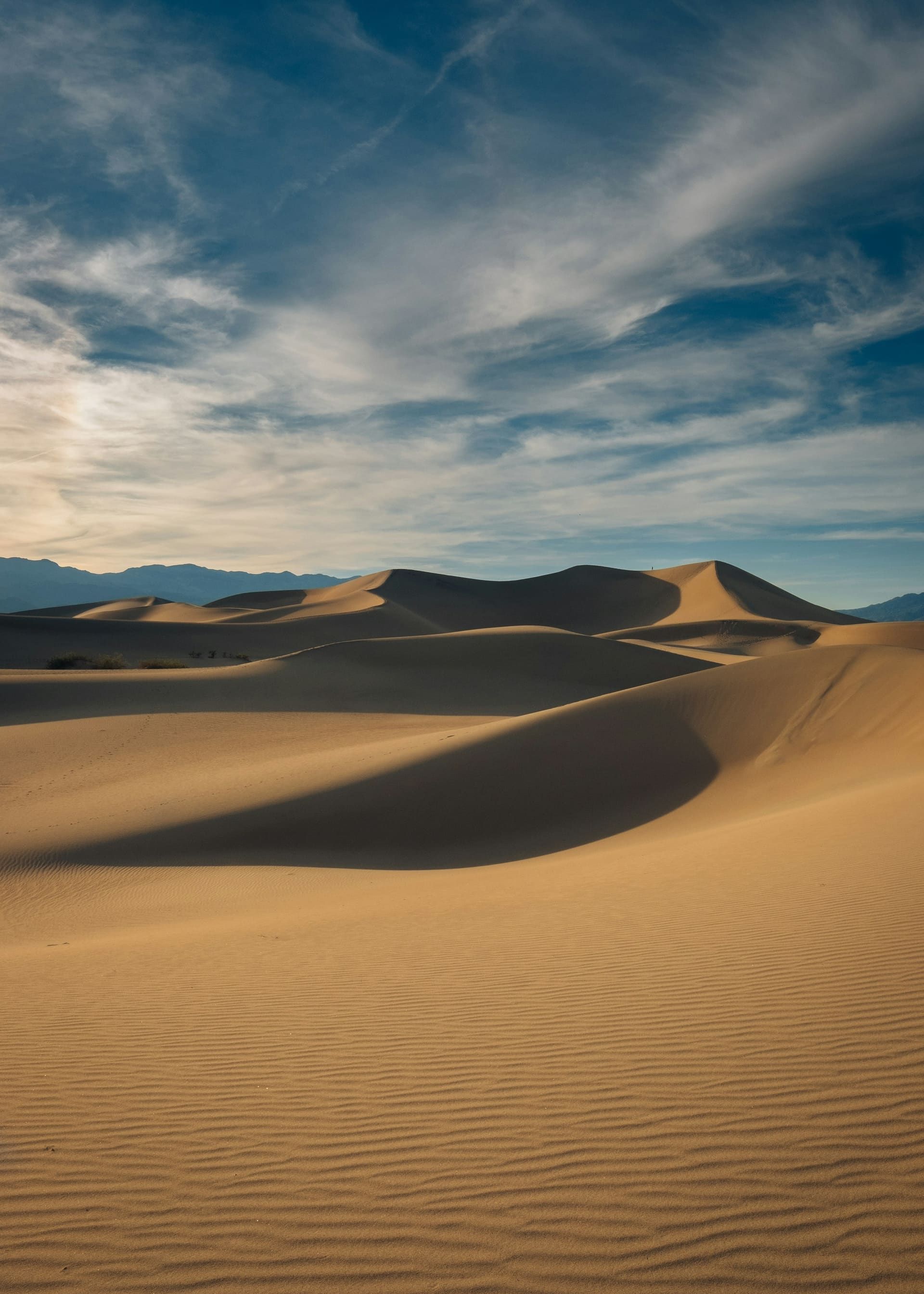
Lahbab vs DDCR safari, Dubai's open dunes vs the permit-only reserve
The 30-second verdict, who books Lahbab and who books the DDCR
The 30-second answer routes by what the trip is for rather than by personal preference. The decision matrix below scores both systems across 7 criteria, but the shortlist of routings covers most bookings.
- You want the iconic red-dune sunset photograph
- Your budget caps below AED 500 per adult
- You came for the BBQ + cultural-show evening
- You booked yesterday and want to go tomorrow
- You came to photograph the Arabian oryx
- You want a chef-plated dinner with a licensed bar
- You travel as a couple and want a small camp
- You're staying inside the desert at Al Maha overnight
Side-by-side spec sheet, Lahbab vs DDCR on 9 attributes
A side-by-side spec sheet covers the nine attributes that move the dune-system decision across the full AED 149 to AED 2,500 price spectrum. Pricing references the 2026 standard package for an evening safari at Lahbab desert and a sunrise conservation route inside the Dubai Desert Conservation Reserve booked through the editorial desk.
| Attribute | Lahbab desert | DDCR |
|---|---|---|
| Drive time from Dubai Marina | 45 minutes east on the E44 | 55 to 65 minutes southeast on the E66 |
| Access status | Open public desert, no eco-rules | 225 km² permit-only protected reserve, fenced and ranger-patrolled |
| Dune profile | Iron-oxide red, 60 to 100 metre crests (Big Red) | Mixed dune-and-ghaf, amber-tan, 20 to 80 metre crests |
| Operators on the system | 6 mainstream DET operators across every price level | 6 licensed luxury operators only (permit-capped) |
| Camp group size | 200 to 300 guests at a standard mainstream camp | 40 to 60 guests at an exclusive conservation camp |
| Vehicle on the dune line | Toyota Land Cruiser at 18 PSI | Vintage 1950s Land Rover (Platinum) or Land Cruiser |
| Wildlife sighting odds (winter) | Falcon at the camp; oryx almost never seen | Oryx almost always morning, gazelle often PM, bustard sometimes |
| Dinner format at the camp | BBQ buffet with lamb, chicken, kebabs, biryani | Chef-plated dinner at Sonara Camp inside the reserve |
| AED price spread 2026 | AED 199 per adult to AED 1,194 per vehicle | AED 695 to AED 2,500+ |
Dubai's iconic desert and Arabia's iconic conservation
Red Lahbab dunes and the DDCR protected reserve
Iron-oxide red Lahbab at sunset, ghaf-tree silhouettes inside the DDCR, a Land Cruiser on Big Red, a vintage 1950s Land Rover on a conservation route, and an Arabian oryx at the dawn feed.


Lahbab vs DDCR · what changes
The 9 attributes that move the dune-system decision
Side-by-side at the standard 2026 package. The dune system you pick changes the photograph, the wildlife, the AED outlay, the vehicle, the camp size, and the dinner format.
The AED 199 to AED 2,500 price spectrum, what each level buys
The AED 199 floor on a Lahbab standard shared evening safari and the AED 2,500 ceiling on a DDCR private day at Al Maha bracket the full Dubai dune-system price spectrum. The five levels between them buy materially different things, not "the same safari, slightly nicer" but a different vehicle, a different camp footprint, a different dinner format, a different wildlife probability, and a different alcohol licensing status. The table below traces what each AED increment actually delivers from the editorial desk's logged 2026 tariff.
| Option | Spend | Increment | What the AED actually buys |
|---|---|---|---|
| AED 199, Lahbab standard shared | AED 199 | Floor | 40-minute dune-bashing run on a shared 6-seat Land Cruiser, 3 PM hotel pickup that catches the Devil's Spine ridge for sunset, sandboarding, a wide buffet (kebab station, fresh salads, baklava) inside a 300-guest mainstream Lahbab camp, included shisha, a Premier-style seat in the front rows for the tanoura, the belly dance, and the fire show, the camel ride, henna, and Arabic coffee. The camp is dry and shared with hundreds of guests. Some Lahbab operators advertise a lower AED 99 headline across the wider market; that floor typically drops the standard Land Cruiser, the wider buffet, and the front-row seat rather than matching this package. |
| AED 695, DDCR Platinum Heritage morning | AED 695 | +AED 496 vs Lahbab floor | Permit slot inside the 225 km² reserve, a vintage 1950s Land Rover on the dune line, strong Arabian oryx sighting odds on the morning drive, the ghaf-tree conservation drive, a working falconry display with a saker or peregrine, a small-group breakfast at Platinum's private camp, and the per-head conservation levy that funds ranger payroll and the oryx programme. |
| AED 1,194, Lahbab private Land Cruiser | AED 1,194 per vehicle | +AED 995 vs floor | Private 6-seat Land Cruiser with a single English-speaking driver routed to your preferred Big Red entry, a chef-curated BBQ inside a smaller VIP camp section, soft-drink and water service on the dune line, a sunset photographer setup on a ridge of your choice, and the option to skip the show for an earlier 8 PM drop-off. This package prices the vehicle rather than the seat: six guests in one car works out at exactly AED 199 a head, matching the shared floor once the vehicle is full. Lahbab tops out here. |
| AED 1,100, Arabian Adventures DDCR sundowner | AED 1,100 | +AED 901 vs Lahbab floor | A sundowner camel trek with a naturalist guide, a wildlife drive at dusk with good sand gazelle sighting odds, a desert-style dinner under canvas, and ranger commentary on the oryx herd movements. |
| AED 2,500, Al Maha or DDCR VIP private | AED 2,500 | +AED 2,301 vs Lahbab floor | An Al Maha day experience inside the reserve: pool access, a three-course lunch at the licensed Al Diwaan restaurant, a guided wildlife activity, and time at the only accommodation footprint inside the DDCR perimeter. |
The decisive step is the jump from the AED 199 Lahbab floor to AED 695 (DDCR Platinum Heritage morning). That AED 496 increment buys the conservation reserve itself, the permit, the levy, the oryx, the small-camp format, the ranger, the vintage Land Rover. Every DDCR step above AED 695 buys depth inside the reserve rather than a new dune system. The AED 1,194 private Land Cruiser sits higher on the spectrum but stays on Lahbab, and it prices a vehicle rather than a head, so it is not a step toward the reserve at all.
Vehicle, Land Cruiser vs vintage 1950s Land Rover
Lahbab safaris run on Toyota Land Cruisers deflated from 35 PSI to 18 PSI at the dune edge, the standard UAE dune-bashing platform across every mainstream operator. The vehicle holds 6 passengers with a driver, carries a roll cage, runs the south face of Big Red on the standard ridgeline route, and drops back to road pressure at the desert camp. Lahbab private bookings (from AED 1,194 per vehicle) replace the shared seating with a dedicated car capped at six guests, but use the same Land Cruiser fleet.
The DDCR runs Land Cruisers on most operator routes; Platinum Heritage, the reserve's founding operator, runs its vintage 1950s Land Rover fleet on the Heritage Safari. The vintage Land Rover is slower, quieter, and rides higher than the Cruiser; the visual signature of a sand-coloured heritage Land Rover on a ghaf-edged dune is the single most photographed vehicle frame inside the reserve. Travellers booking for the vehicle experience specifically (the open-side body, the heritage colour, the engine note) should request Platinum Heritage explicitly at booking.
Dinner, BBQ buffet vs chef-plated in-reserve dining
Lahbab desert camp dinner runs the canonical Dubai BBQ buffet format from 7:30 PM: lamb and chicken kebabs, mixed grills, biryani, hummus, fattoush, fresh salads, baklava and fruit. The standard package serves a 6-station spread; the AED 1,194 private package adds a chef-curated station with shawarma carved to order and a sweet-and-savoury Arabic dessert flight. The format is generous, communal, and inexpensive, the trade-off is the 200 to 300-guest camp footprint and the unlicensed bar.
Inside the reserve, Sonara Camp plates a chef-curated dinner with a licensed paid bar, against open desert instead of a buffet line. The small-camp format and the in-reserve licensed dining are the two structural features Lahbab cannot match regardless of operator. The luxury desert safari page covers the dining differential in more depth.
Group size, 300-guest mass camp vs small exclusive camp
A standard Lahbab mainstream desert camp hosts 200 to 300 guests on a winter weekend evening. Five to seven operators routinely share the camp footprint, each running their own pickup convoy in and their own tanoura and belly-dance slot. The volume keeps the economics functional at AED 149 to AED 199 per adult, the buffet runs continuously, the shows rotate, and the camel ride queues. The trade-off is the noise, the seating density, and the photograph competition on every shared ridge.
DDCR camps run far smaller than the mainstream Lahbab format. Platinum Heritage markets exclusive private camp venues; Al Maha runs its own property-internal dining for resort guests only. The 6-operator concession cap keeps dune-line density low enough that convoys rarely share a ridge. If quiet is the criterion the trip is for, the DDCR delivers it structurally; the Lahbab format cannot deliver quiet at any price point because the camp footprint is shared by design.
Wildlife, none reliable at Lahbab vs oryx almost always on a DDCR morning
Lahbab is an open public desert with no fenced or managed conservation footprint, so wildlife sightings happen by chance rather than design. The species most commonly photographed at Lahbab are the trained Arabian falcon on the operator handler's gloved arm (not a wild sighting), grazing camels at the paddocks on the eastern edge near Al Madam, and occasional Arabian gazelle at the dune fringes at dawn. The Arabian oryx is not present at Lahbab.
The DDCR holds the largest unfenced Arabian oryx population in Dubai. On a winter drive between November and April, Arabian oryx are almost always in frame on a morning permit slot, sand gazelle often at dusk and sometimes at dawn, MacQueen's bustard sometimes on the gravel flats in winter migration, sand fox occasionally at dawn, and Gordon's wildcat rarely year-round. A morning permit slot usually turns up a first oryx sighting within the opening minutes inside the reserve gate. If wildlife is the priority, the DDCR is the only system that delivers it reliably.
Photography, iconic red sunset vs ghaf-tree and oryx portfolio
Lahbab and the DDCR deliver two different kinds of photographs rather than better or worse versions of the same one. Lahbab is the iconic-photograph destination: the warm-tone iron-oxide sunset on Big Red or Devil's Spine, the wind-rippled red ridges, the camel-caravan silhouette against an orange sky, the Land Cruiser cresting a 60-metre lee slope. What it delivers is one frame, repeated across the trip, executed at sunset between 4:50 PM and 5:25 PM in December.
The DDCR delivers a portfolio rather than a single frame. The Arabian oryx at the dawn feed (white coat against amber sand), the ghaf-tree silhouette at first light (the UAE national tree, signature of inland Arabia), the vintage Land Rover on a dune ridge (Platinum Heritage), the MacQueen's bustard called by the ranger on the gravel flats, and a desert breakfast composition at 8:30 AM with the herd in the background. Travellers who want both portfolios from one Dubai trip route a Lahbab evening on day one and a DDCR sunrise on day three.
Conservation access, what the AED 496 levy gap actually funds
The AED 496 gap between the Lahbab AED 199 floor and the DDCR AED 695 floor is not operator margin. The Dubai Tourism Department, in partnership with the reserve management, charges every DDCR operator a per-head conservation levy that the operator passes through to the visitor. The published breakdown allocates roughly AED 180 to AED 240 per head to ranger payroll and fence maintenance, AED 40 to AED 60 to the Arabian oryx programme (tagging, veterinary care, breeding herd management), and AED 20 to AED 30 to the ghaf-tree reforestation programme that plants 6,000+ seedlings annually.
A Lahbab safari funds none of those three line items because Lahbab is public desert with no levy and unlimited operator capacity. The AED 199 versus AED 695 difference is the conservation funding itself rather than a luxury markup. The Dubai desert safari cost breakdown covers the line items in more depth alongside the other packages.
Alcohol, dry camps at Lahbab vs licensed venues inside the reserve
Lahbab desert camps are unlicensed and serve no alcohol. The standard mainstream camp runs the dry-bar Arabic coffee, mint lemonade, soft-drink, and tea setup with the BBQ buffet; no operator on the Lahbab system holds a hospitality alcohol licence inside the camp footprint. Travellers who want a wine with dinner book the evening at a Dubai restaurant before or after the safari rather than at the camp.
The DDCR holds licensed dining at two venues: Al Maha Resort (Al Diwaan restaurant, full alcohol licence with wine, beer, spirits, and in-suite dining service) and Sonara Camp (chef-plated dinner with a paid bar). DDCR day-trip safari routes, Platinum Heritage included, run dry. Confirm the licensing at booking, the alcohol availability differs by venue and by route, not by price alone.
Family-friendliness, Lahbab BBQ format vs DDCR conservation pace
Lahbab suits families on a budget and families who came for the dune-bashing thrill and the cultural-evening lineup. Two adults at the AED 199 standard package and two children at the AED 99 child rate keep a family of four under AED 600 for the evening, the dune-bashing dials down on request for children under 6, and the BBQ camp covers the dinner question. The camel ride at the camp runs 5 to 10 minutes for any child aged 6 and up.
The DDCR runs at a calmer pace by design. The reserve management caps the intensity inside the perimeter to protect the ecosystem; most DDCR routes carry no or low-intensity dune driving. The signature sunrise camel trek runs from age 5 upward; Platinum Heritage's vintage Land Rover Heritage Safari takes children from age 5, with younger children requiring a private booking. The wildlife drive at family pace suits older parents and younger children who would find the Lahbab high-bashing intensity overwhelming. Families that want both run the standard recipe: one DDCR morning, one Lahbab evening on a different day.
The decision matrix, 7 criteria scored out of 10
The decision matrix scores both systems across the 7 criteria the desk logs as the most asked at booking. Lahbab wins price floor, photography results, and accessibility. The DDCR wins group size, wildlife sighting odds, dining format, and vehicle. The overall tally: Lahbab 48 of 70, DDCR 58 of 70. The decision is decisive on the brief, pick by what the trip is for, not by tally alone.
| Criterion | Lahbab | DDCR | Note |
|---|---|---|---|
| Price floor 2026 per adult | 10/10 | 4/10 | Lahbab AED 199 vs DDCR AED 695. The AED 496 gap is the levy + small-group cap + vehicle, not operator margin. |
| Group size at the camp | 3/10 | 10/10 | Mainstream Lahbab camps run 200 to 300 guests; DDCR exclusive camps cap at 40 to 60 guests by reserve rule. |
| Wildlife sighting odds on the route | 2/10 | 10/10 | Lahbab is open public desert where oryx are almost never seen; the DDCR has Arabian oryx almost always in frame on a morning permit slot. |
| Dining format at the camp | 6/10 | 10/10 | BBQ buffet at the Lahbab mainstream camp versus a chef-plated dinner with a licensed bar at Sonara Camp inside the DDCR. |
| Vehicle on the dune line | 7/10 | 10/10 | Toyota Land Cruiser at Lahbab versus a vintage 1950s Land Rover inside the DDCR (Platinum Heritage). |
| Photography results | 10/10 | 9/10 | Lahbab wins the iconic red-dune sunset; DDCR wins the oryx, ghaf-tree silhouette, and vintage Land Rover wide. |
| Accessibility, operators, pickups, midweek slots | 10/10 | 5/10 | Lahbab books across 6 mainstream operators with same-day availability; DDCR is permit-only and sells out 4 to 6 weeks ahead in winter. |
| Total out of 70 | 48 | 58 | Decisive on the brief, not on the tally. |
Lahbab is your only option if these 4 conditions apply
Four traveller conditions route to Lahbab with no DDCR substitute. Each pairs a specific condition with the reason Lahbab wins it structurally, meaning the DDCR cannot deliver the same thing regardless of how the booking is routed.
The iron-oxide red dunes at Lahbab carry the signature warm-tone sunset glow that headlines almost every Dubai desert safari postcard published online. The DDCR delivers a beautiful mixed dune-and-ghaf landscape, but the colour palette reads amber-tan rather than red. If the trip is for the red-dune-at-sunset photograph, Lahbab is the only system that delivers it.
A standard-package Lahbab evening safari prices from AED 149 on the budget shared vehicle and AED 199 on the standard shared. The DDCR floor at AED 695 is a structural minimum, the conservation levy and the 6-operator cap put no lower package on the menu. Below AED 500 per adult, the conservation reserve is not available regardless of how the booking is routed.
Lahbab desert camps run the canonical Dubai evening lineup from 6:30 PM onward: tanoura, belly dance, fire show, henna, falcon photography, the BBQ buffet, and the camel ride. The DDCR runs a quieter conservation programme by design; the reserve management caps mass entertainment to protect the ecosystem. If you flew to Dubai for the cultural-evening show, Lahbab is the route.
Same-day and next-day Lahbab availability runs across all 6 mainstream DET operators. The DDCR permit slots, capped by the 6-operator concession system, sell out 4 to 6 weeks ahead through Christmas, New Year, and UAE National Day weekend. Last-minute bookings inside winter route to Lahbab as a matter of structural availability.
The DDCR is your only option if these 4 conditions apply
Four traveller conditions route to the DDCR with no Lahbab substitute. Each pairs a specific condition with the reason the DDCR wins it structurally, meaning Lahbab cannot deliver the same thing regardless of how the booking is routed.
The DDCR holds the largest unfenced Arabian oryx population in Dubai. Morning permit slots put oryx in frame almost every time; an early sunrise drive usually turns up a first sighting within the opening minutes inside the reserve gate. Lahbab is open public desert and runs no oryx population; the species was reintroduced into managed reserves only after the 1970s near-extinction. If wildlife in the frame is the brief, the DDCR is the only Dubai system that delivers it reliably.
Sonara Camp plates a chef-curated dinner inside the reserve with a licensed paid bar, and Al Maha's Al Diwaan restaurant holds a full alcohol licence. Lahbab desert camps are unlicensed and run the BBQ buffet format only; no wine, no spirits, no fine-dining alternative exists on Lahbab regardless of operator.
DDCR camps run far smaller than the mainstream Lahbab format, and the 6-operator concession cap holds dune-line density low. A Lahbab mainstream camp routinely hosts 200 to 300 guests on a winter weekend. If the trip is a quiet anniversary or a small-group celebration, the DDCR delivers the silence Lahbab structurally cannot.
Al Maha, a Luxury Collection Desert Resort, is the only accommodation inside the DDCR perimeter. The 42 private suites each open onto unbroken desert with a temperature-controlled plunge pool, and morning activities leave straight from the property. Lahbab carries the overnight desert camp option at AED 399 to AED 750 per head, but no other resort stay exists inside the reserve.

The do-both approach
Book Lahbab on day one and the DDCR on day three
A two-or-three-day Dubai trip routes both dune systems inside one booking window without compression. Day one: Lahbab evening safari from a 3:00 PM Marina pickup, sunset photograph on Devil's Spine at 4:50 PM in December, BBQ buffet at the mainstream desert camp, drop-off by 9:30 PM. Day two rests. Day three: DDCR sunrise from a 5:30 AM Marina pickup, reserve gate at 6:30 AM with a ranger briefing, vintage Land Rover on the dune line at 6:40 AM, first oryx sighting on an early crest, falconry display at 7:10 AM, sunrise camel trek at 7:30 AM, desert breakfast at 8:30 AM, drop-off by 10:30 AM. Two completely different deserts, one combined AED outlay running from AED 894 (the AED 199 Lahbab evening plus the AED 695 DDCR floor) to AED 3,095 (the AED 595 Lahbab VIP evening plus the AED 2,500 Al Maha day experience) per adult.
- Day 1 Lahbab evening red-dune sunset, BBQ camp, cultural show
- Day 3 DDCR sunrise Oryx, vintage Land Rover, ghaf-tree drive, sunrise camel
- Combined AED outlay AED 894 to AED 3,095 per adult, both systems
- Routes through one chat editorial desk confirms both inside one WhatsApp thread
Real guests · both dune systems
What guests said after booking Lahbab, the DDCR, or both
Six reviewers across Lahbab evening, DDCR conservation morning, and combined two-trip bookings, pulled from TripAdvisor, Google, and the BookMySafari WhatsApp inbox. Names abbreviated, location preserved.
Did Lahbab on day one because I wanted the postcard red-dune sunset that headlines every Dubai photo. AED 199 covered the dune bashing, the camel, the BBQ, and the show. Got the iconic shot at 5:05 PM on Devil's Spine.
Booked Platinum Heritage in the DDCR at AED 1,750 for the Heritage Dinner Safari. The vintage Land Rover, the 5-course menu with sommelier wine, the falconry display, the oryx 30 metres from the table. Worth every extra dirham above Lahbab.
The desk routed us to Lahbab on Wednesday for the family BBQ-camp evening with the kids (AED 149 morning standard for the kids, AED 199 each for us) and the DDCR on Saturday morning for the wildlife drive. Two completely different deserts, one trip.
Stayed two nights at Al Maha inside the DDCR. The private plunge pool, the butler breakfast on the deck, the silent sunrise from the suite. An oryx walked past the deck at 6 AM. AED 4,500 a night and we would book it again.
Anniversary trip. Asked the desk for the quietest dinner option. They routed us to the DDCR Heritage Dinner Safari at AED 1,750 each, sommelier wine, 40 other guests in the entire camp. We would have got 300 at the Lahbab mainstream tier.
I asked why DDCR cost 7x Lahbab. The desk sent the levy breakdown, ranger payroll, ghaf reforestation, the oryx programme. Paid the AED 695 with a clear conscience. Counted 14 oryx before breakfast.
WhatsApp the editorial desk for a budget-fit booking
Message the BookMySafari booking desk on WhatsApp with the photograph the trip is for, the AED ceiling per adult, the traveller mix, and whether wildlife in the frame is a requirement. We route to the right dune system (Lahbab, the DDCR, or the do-both itinerary), the right package across the AED 149 to AED 2,500 ladder, and confirm the exact pickup time for your hotel zone inside a single chat. Reply within 10 minutes. Bookings on this page are fulfilled by Velari Tourism L.L.C, DET license #1491675, in coordination with the DDCR's 6 licensed operators for any conservation routing.
Message us on WhatsAppFrequently asked questions about Lahbab vs DDCR safaris
-
Is the DDCR worth AED 496 more than Lahbab?
Yes, when wildlife, small-group dining, a vintage 1950s Land Rover ride, or a quiet conservation morning is the brief. The AED 496 gap between the Lahbab AED 199 floor and the DDCR AED 695 floor pays for the per-head conservation levy, the certified ranger, strong Arabian oryx sighting odds, the small-camp format, and the permit access to 225 km² of protected reserve. No, when the brief is the iconic red-dune sunset photograph, the BBQ-camp cultural evening, the under-AED-500 family ceiling, or same-day availability, Lahbab handles those four cases structurally and DDCR cannot. -
Can I see Arabian oryx at Lahbab?
No. Lahbab is open public desert with no oryx population; the species was reintroduced into managed reserves only after the 1970s near-extinction. The oryx populations in Dubai sit inside the two managed conservation areas, the Dubai Desert Conservation Reserve (oryx almost always on a morning permit slot) and Al Marmoom Reserve (oryx usually seen on a winter morning). Operators with a falcon at the Lahbab camp are running a handler-perched bird, not a wild sighting. If oryx in the frame is a hard requirement, the DDCR is the only reliable route. -
Why is the DDCR permit-only?
Because the reserve management caps daily operator entries to protect the ecosystem. Six licensed operators hold current DDCR concessions (Platinum Heritage, Arabian Adventures, and Al Maha Resort among them). The 225 km² protected reserve admits no self-drive 4x4s, quad bikes, or motorcycles, and the perimeter is fenced and ranger-patrolled. The 6-operator cap is the single reason the DDCR delivers a quieter route than any public desert in Dubai, including Lahbab. -
Can children come on a DDCR safari?
Yes, on every DDCR operator route except a small handful of dune-bashing slots that hold a minimum age of 6. The signature sunrise camel trek runs from age 5 upward; Platinum Heritage's vintage Land Rover Heritage Safari takes children from age 5, with younger children requiring a private booking. Al Maha Resort does not take young children; the resort applies a minimum guest age of around 8. By comparison, Lahbab evening safaris accept children of all ages on the camel and the show, and the dune-bashing intensity dials down on request for children under 6. For a family that wants both DDCR wildlife and high dune-bashing intensity, the standard recipe is one DDCR morning plus one Lahbab evening on a different day. -
Is Lahbab better for first-timers to Dubai?
Yes, for 7 out of 10 first-time visitors. Lahbab delivers the canonical Dubai desert experience inside one 6-hour window: the iconic iron-oxide red dunes, the Big Red dune-bashing ridge, the standard desert BBQ camp, the tanoura, the belly dance, the fire show, the camel ride, henna, and falcon photography, all priced from AED 149 on the budget shared package. The DDCR is the right first-time choice when the trip is specifically for wildlife (the oryx, the gazelle, the bustard), a quiet small-group dinner, or an Al Maha overnight stay, and the AED 695 floor is comfortably inside budget. -
Can I do both Lahbab and DDCR on the same Dubai trip?
Yes. A two-or-three-day Dubai trip routes both systems inside one booking window without compression. Day one: Lahbab evening safari from a 3:00 PM Marina pickup, sunset photograph on Devil's Spine at 4:50 PM in December, BBQ buffet at the desert camp, drop-off by 9:30 PM. Day two rests. Day three: DDCR sunrise from a 5:30 AM Marina pickup, reserve gate at 6:30 AM, vintage Land Rover on the dune line, strong oryx sighting odds, desert breakfast at 8:30 AM, drop-off by 10:30 AM. Combined AED outlay runs from AED 894 (the AED 199 Lahbab evening plus the AED 695 DDCR floor) to AED 3,095 (the AED 595 Lahbab VIP evening plus the AED 2,500 Al Maha day experience) per adult. The editorial desk confirms both bookings inside one WhatsApp chat.
