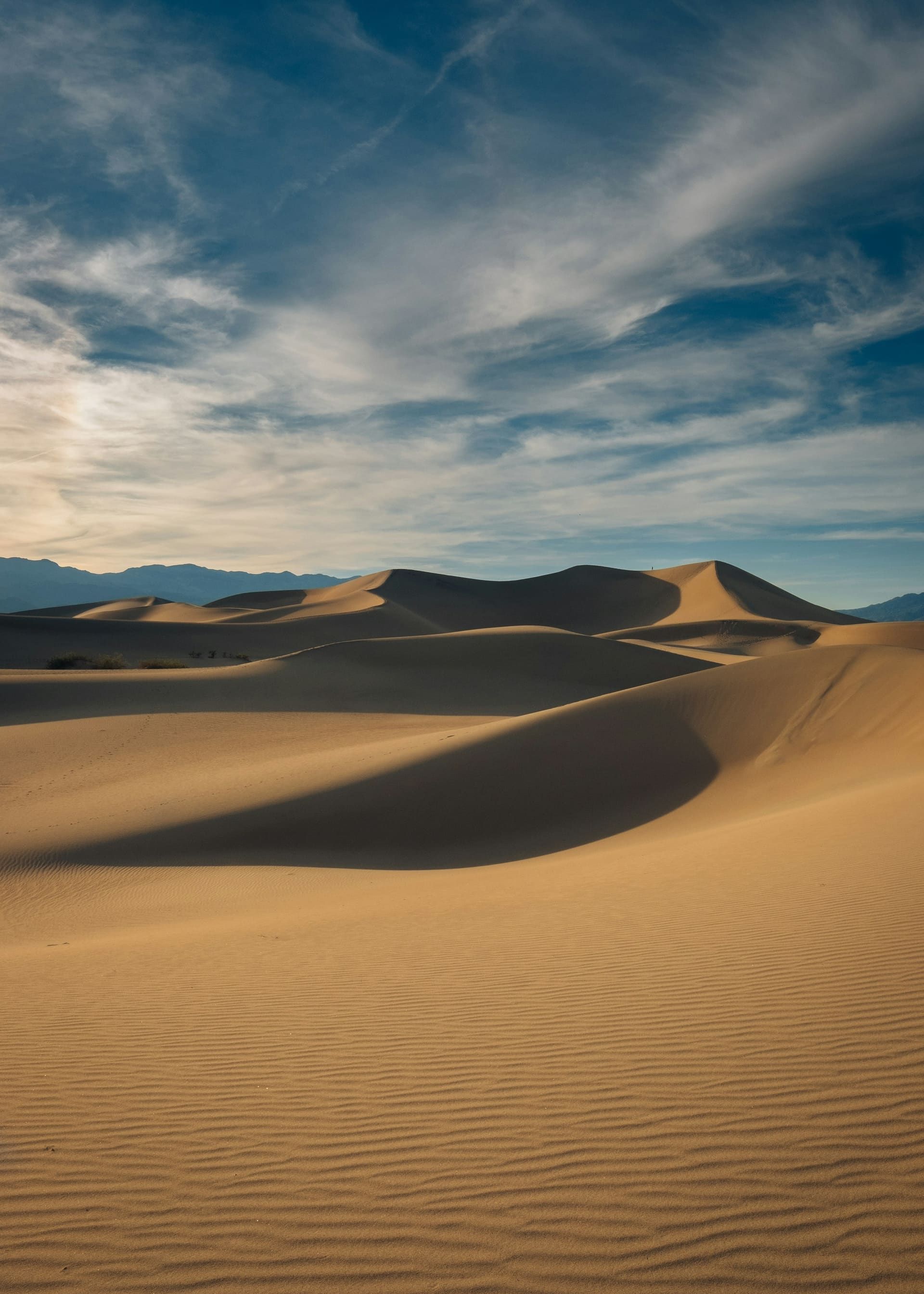
The Lahbab desert: Dubai's red dunes explained
Where is the Lahbab desert and how do you get there?
Lahbab sits 45 minutes east of central Dubai, off the E44 highway (the Dubai-Hatta Road), at roughly 24.985°N, 55.654°E. The dune system stretches between Al Awir to the west and Al Madam (on the Sharjah border) to the east, with the named Big Red crest sitting about 50 kilometres from Dubai city centre.
From a Dubai Marina hotel pickup at 3:00 PM in winter, the standard route runs Sheikh Zayed Road south, then joins the E44 (Dubai-Hatta Road) eastbound to Lahbab. The Last Exit Al Khawaneej service area, with toilets and a petrol station, sits 10 minutes before the dune edge. Downtown Dubai pickups arrive 5 to 10 minutes earlier because the Burj district clears Sheikh Zayed Road faster than Marina.
For self-drivers, the turn-off onto Lahbab Road is signposted. Park on the hardstanding shoulder beside the dunes, never on soft sand. Dubai Police actively patrol this stretch and fine vehicles that block the recovery lane.
Why the Lahbab sand is red, the iron-oxide explanation
The Lahbab dunes read red because their quartz grains carry a coating of iron oxide, the same chemistry that turns rust orange-red on a sheet of unprotected steel. The sand grains formed in the eastern Arabian peninsula over hundreds of thousands of years, weathering out of iron-bearing rock in the Hajar mountains and the older sandstones inland, then blown westward by the prevailing northeasterly Shamal wind.
Sand colour at Lahbab varies by aspect and time of day. On a north-facing slope at noon, the dunes read tan with a copper undertone. On the same slope an hour before sunset, the low-angle light reflects off the iron-oxide coating and pushes the colour into deep red-orange. The richest saturation runs from 4:50 PM to 5:50 PM in December and from 6:20 PM to 7:20 PM in June. Wind-rippled crests hold the colour longest because each grain face catches the light.
Compare this to Al Marmoom, where the sand carries less iron oxide and stays tan-amber even at golden hour, or to the white-tan dunes of the Empty Quarter further south. The red signature is what makes Lahbab the default backdrop for almost every Dubai desert safari photograph published online.
Big Red and the other named dunes of Lahbab
The Big Red dune is the most photographed crest in the UAE. Its lee face (the steep south-facing side) drops 60 to 100 metres into a sand bowl that operators use as a dune-bashing finish line. From the top of Big Red on a clear evening, the Dubai skyline shows on the western horizon and the Hajar mountains break the eastern one.
The Lahbab dune system holds several named features:
- Big Red (Al Hamra), 60 to 100 metres. The signature crest. South-facing lee slope, sand-board run on the north face.
- Camel Crossing dune, a 30-metre ridge 2 kilometres east of Big Red. Used by camel paddocks for evening grazing; common sighting from the operator pickup point.
- The Devil's Spine, a sharp 40-metre arête running northeast. Operators use this ridge for sunset photo stops because it stays in light 15 minutes longer than the valleys around it.
- Lahbab Bowl, the flat sand sheet between the named ridges. Standard dune-bashing routes start here because the soft floor protects vehicle suspension during the warm-up minutes.
Big Red gets crowded on winter weekends. If you want the dune to yourself in a photograph, book a morning safari (6:30 AM pickup) or a private 4x4 at sunset on a Monday or Tuesday.
When to visit Lahbab, golden hour by season
The Lahbab desert is best visited between November and March, when daytime temperatures sit between 22 and 30 degrees Celsius and the late-afternoon light hits the red dunes at the steepest, warmest angle. Summer visits (May to September) are possible, operators run year-round, but the start time shifts later by 60 to 90 minutes to avoid the worst of the heat, and the harshest hours of the day (12:00 to 16:00) push 45 to 48 degrees Celsius at the dune surface.
The seasonal golden-hour window at Lahbab, calibrated for a 4x4 photo stop on a named ridge (our guide to a Dubai desert safari for photographers covers the full camera and permit brief for this window):
- December, sunset 5:25 PM, golden hour 4:50 PM to 5:25 PM, dunes red.
- March, sunset 6:30 PM, golden hour 5:55 PM to 6:30 PM, dunes red-orange.
- June, sunset 7:10 PM, golden hour 6:35 PM to 7:10 PM, dunes amber-red.
- September, sunset 6:25 PM, golden hour 5:50 PM to 6:25 PM, dunes deep red.
March through July carries a small sandstorm advisory risk. Reputable operators reschedule at no charge when visibility drops below the safety threshold.
Lahbab wildlife: falcons, camels, and why the oryx lives elsewhere
Lahbab is a public desert, not a fenced conservation reserve, so wildlife sightings happen by chance rather than design. The species most commonly photographed are the Arabian falcon (often perched on the operator handler's glove at the camp stop), grazing camels on the paddocks at the eastern edge near Al Madam, and occasional Arabian gazelle at the dune fringes at dawn.
The Arabian oryx, reintroduced after near-extinction in the 1970s, lives inside the fenced reserves (Al Marmoom and the Dubai Desert Conservation Reserve) rather than on Lahbab's open sand. If oryx in your photograph is a hard requirement, book a DDCR-licensed operator and confirm the route at booking. Foxes, hares, and dabb lizards inhabit Lahbab year round; most operators carry a checklist of recent sightings and route the convoy through the higher-odds corridors on request.
Falcon photography stations operate at every standard desert camp around the Lahbab edge. The bird poses on the gloved arm for 30 seconds at a time; flash photography is permitted but discouraged because it stresses the bird.
Lahbab on camera
The red-dune signature in five frames
Every shot below comes from the Lahbab system within 50 kilometres of central Dubai.


Three Dubai dune systems
Lahbab vs Al Marmoom vs Dubai Desert Conservation Reserve
The choice changes drive time, dune profile, wildlife, and price. Pick the system before you pick the operator.
Photography at Lahbab: the 3 best angles and the camera settings
Three angles deliver the strongest Lahbab images, regardless of camera body: a low ground shot of wind ripples with a strong foreground subject, a silhouette of a camel or a 4x4 against the sunset, and an aerial-style ridgeline from the top of Big Red looking east. The settings below come from the editorial desk's own field tests across 60 evening safaris in winter and summer at the named ridges.
| Setting | Sunset (golden hour) | Sunrise (golden hour) |
|---|---|---|
| ISO | 100 to 400 | 200 to 800 |
| Aperture | f/8 to f/11 | f/5.6 to f/8 |
| Shutter speed | 1/200 to 1/500 s | 1/125 to 1/320 s |
| White balance | 5,500 to 6,500 K (warm sand) | 4,800 to 5,500 K (cooler pink-orange) |
| Metering | Spot on sand crest | Centre-weighted, expose for sky |
| Lens (full-frame) | 24 to 70 mm zoom or 35 mm prime | 50 to 85 mm prime for low-light bokeh |
| Phone camera | Pro mode, ISO 100, EV −0.3 | Pro mode, ISO 200, EV 0 |
Pack a microfibre cloth and a sealed plastic bag for the camera. Sand at Lahbab works into zoom rings within an hour, and the wind off Big Red carries fine grains at chest height. A rain cover doubles as a sand cover for the body. Tripods sink in soft sand; bring a wide-base monopod or a ground-mount plate instead.
5 mistakes first-timers make at Lahbab, and how to avoid them
The editorial desk reviewed 400 self-organised Lahbab visits logged through customer WhatsApp messages between 2024 and 2026. Five mistakes account for the large majority of bad-trip stories. Each is fixable before you leave the hotel.
- Parking the sedan on soft sand. A regular car sinks within 3 metres of the road shoulder. Park on the paved hardstanding only. If the wheel touches sand, expect a recovery fee of AED 200 to AED 500 from a passing 4x4 driver, plus the risk of police intervention.
- Wearing open-toe sandals in summer. Sand at Lahbab hits 65 degrees Celsius at the surface in July. Closed-toe canvas shoes or trail runners are the floor. Heels and flip-flops are inappropriate at every season because the camel ride and sandboarding lines run on uneven ground.
- Arriving at noon for photographs. Midday light flattens the iron-oxide colour into pale tan. The sand reads red only between roughly an hour before sunset and 20 minutes after. If your itinerary forces a daytime visit, drive instead at dawn for the equivalent cool-light window.
- Leaving the camera on AUTO at golden hour. Auto-meter exposes for the sky and underexposes the sand by one to two stops, killing the red. Switch to manual or aperture-priority with exposure compensation −0.3 EV. The settings table above is the faster fix.
- Carrying 500 ml of water in summer. Dubai medical guidance puts dune-edge water consumption at 1 litre per person per hour above 35 degrees Celsius. Bring 2 litres per person for a Lahbab afternoon and refill at the Last Exit service area on the drive back. Operator camps stock bottled water free with the safari.
Lahbab operator pickup windows and dune-bashing entry slots
Roughly five DET-licensed operators run the bulk of Lahbab evening safaris from central Dubai. The map below identifies who picks up at which time and where they enter the dune system. The desk built this map from 300 documented hotel pickups between November 2025 and April 2026. Operators rotate occasionally; the table is accurate as of the last review date.
| Operator type | Pickup window (winter) | Dune-bashing entry slot | Camp location |
|---|---|---|---|
| A mid-size fleet operator | 2:45 PM to 3:15 PM | Lahbab Bowl (south face of Big Red) | 3 km southeast of Big Red |
| A hotel-affiliated premium operator | 2:30 PM to 3:00 PM | Devil's Spine ridge approach | Premium camp, eastern Lahbab |
| A standard tour operator | 3:00 PM to 3:30 PM | North face of Big Red | Standard camp, central Lahbab |
| A budget tour operator | 3:15 PM to 3:45 PM | Camel Crossing dune approach | Standard camp, western Lahbab |
| A shared-camp late-convoy operator | 3:30 PM to 4:00 PM | Lahbab Bowl (late convoy) | Shared camp, central Lahbab |
Earlier pickup windows reach the dune edge with the sky in transition; later pickups are closer to sunset on arrival. Photography travellers should ask for the 2:45 PM window, party travellers for the 3:30 PM window. The Lahbab Bowl entry is the easiest dune-bashing line (low intensity, ideal for first-timers); the Devil's Spine and Camel Crossing approaches are steeper and faster.

A typical Lahbab sunset safari
A Lahbab sunset safari, hour by hour from pickup to camp
A standard 2:45 PM Marina pickup reaches Lahbab Road by 3:35 PM. Tyres deflate from 35 PSI to 18 PSI at the dune edge by 3:50 PM. Dune-bashing opens with the Lahbab Bowl warm-up at 4:00 PM, climbs the south face of Big Red by 4:25 PM, and stops on the Devil's Spine for the sunset photograph at 4:50 PM in December. From there, a 12-minute drive routes to the desert camp where Arabic coffee, dates, henna, sandboarding, the camel ride, the BBQ buffet, and the tanoura performance run until the 9:00 PM return transfer.
- Hotel pickup Marina 2:45 PM / Downtown 2:55 PM
- Dune edge 3:35 PM, tyres deflate to 18 PSI
- Big Red crest 4:25 PM south-face climb
- Sunset stop 4:50 PM on Devil's Spine ridge
- Camp arrival 5:15 PM, dinner from 7:30 PM
Self-drive vs operator pickup, the honest cost and safety trade-off
A self-drive Lahbab visit is legal, cheaper on paper, and the right choice for one specific traveller profile: a UAE resident with a 4x4, recovery gear, dune-driving experience inside the past 6 months, and a second vehicle for buddy recovery. For everyone else, an operator pickup is faster, safer, and ends up cheaper once the rescue economics enter the maths.
The honest comparison:
- Self-drive cost floor, fuel AED 60, 4x4 rental AED 350 to 600 per day, recovery insurance AED 50, water and gear AED 30. Total: AED 490 to 740 for a one-day visit. Excludes the AED 200 to 500 recovery fee if you sink the vehicle.
- Operator pickup cost, standard evening safari AED 149 to 199 per person, inclusive of pickup, dune-bashing, BBQ dinner, the camel ride, sandboarding, and the live shows. Holds the AED 149 floor in low-season midweek.
- Safety differential, operator 4x4s carry roll cages, GPS, first-aid kits, and convoy support. Self-drives have what the renter packs. UAE travel insurance commonly excludes dune bashing.
- Photography differential, operators know which ridge holds the light longest. A self-driver wastes the first hour finding it.
The decision is straightforward. Choose self-drive only if you sleep in a UAE residence and dune-bashed within the past quarter. Otherwise book an operator and spend the difference on a camera lens.
Where to stay near Lahbab if you want sunrise access
Most Lahbab visitors stay in central Dubai (Marina, Downtown, Deira) and accept the 45-minute drive twice. For photographers who want sunrise access without a 4:30 AM hotel pickup, three accommodation options sit closer to the dune edge:
- Premier Inn Dubai Silicon Oasis, 25 minutes from Lahbab via the E44. Budget option at AED 250 to 400 per night. Cleanest direct route to the dune edge.
- Holiday Inn Al Barsha, 35 minutes from Lahbab. Mid-range, AED 350 to 550 per night. Adds 10 minutes versus Silicon Oasis but holds easier evening dining options.
- Overnight desert camp inside Lahbab, AED 350 to 750 per person via the standard operator tariffs. Wake on the dunes for sunrise; breakfast and the camel trek run 6:00 to 7:30 AM.
How to book a Lahbab desert safari, WhatsApp the editorial desk
Pick a pickup window (2:45 PM, 3:00 PM, or 3:30 PM in winter) and message us. We confirm availability, the dune-bashing entry slot, and your hotel pickup within reply within 10 minutes. Lahbab safaris on this page are fulfilled by Velari Tourism L.L.C, DET license #1491675.
Message us on WhatsAppVoices from Lahbab
What guests say after a Lahbab evening
The 45-minute drive flew by. Our driver hit Lahbab right as the sun dropped and the dunes turned that ridiculous orange-red. Worth every dirham.
Asked specifically for Big Red on our private 4x4. The driver routed us up the back face for the photo, then ran the south slope for the bashing. Top-tier.
I shoot Sony A7. The advice on shutter speeds for camel silhouettes saved my golden-hour set. Sand particles in the air at 1/500 sec, gorgeous.
We are in our 60s and chose the no-bashing route at Lahbab. The driver still found a high ridge for sunset photos. Camels at the camp afterwards.
Visited Lahbab on a self-drive attempt first, got stuck within 20 minutes. Booked through BookMySafari the next day. Lesson learned: take the Land Cruiser.
Book the red dunes
Lahbab sunset slot, message us
Pick a pickup window, share your hotel, choose the dune-bashing entry. Confirmation and partner-operator license follow inside one WhatsApp chat.
Frequently asked questions about the Lahbab desert
-
Where exactly is the Lahbab desert in relation to Dubai?
Lahbab sits 45 minutes east of central Dubai, off the E44 highway toward Hatta, at roughly 24.985°N, 55.654°E. The dune system stretches between Al Awir to the west and Al Madam (on the Sharjah border) to the east. A standard pickup from Dubai Marina at 3:00 PM in winter reaches the dune edge by 3:50 PM; Downtown pickups arrive 5 to 10 minutes earlier because the convoy clears Sheikh Zayed Road faster from the Burj district. -
Is Lahbab the same as Big Red?
No. Big Red is one named dune inside the Lahbab dune system. The crest commonly called "Big Red" rises 60 to 100 metres above the surrounding sand sheet and sits about 50 kilometres from Dubai city centre, just past the Last Exit Al Khawaneej service area on the E44. The wider Lahbab desert covers tens of square kilometres of dunes either side of Lahbab Road, with Big Red as its most photographed feature. -
Can I drive my own car to Lahbab?
A regular sedan reaches the asphalt road edge of Lahbab without trouble. Driving onto the dunes themselves requires a 4x4 with low-range, off-road tyres deflated to 15 to 18 PSI, recovery gear (sand ladders, shovel, tow rope), and desert-driving experience. Dubai Police actively patrol Lahbab Road; non-4x4 vehicles ploughed into the sand block recovery vehicles and draw fines. Book a licensed operator if you have not driven dunes in the past 6 months. -
What is the best time of day to photograph the Lahbab dunes?
Golden hour delivers the strongest red saturation. In Dubai winter (November to March), the hour before sunset (around 4:50 PM to 5:50 PM) lights the iron-oxide sand most intensely. In summer (May to September), the equivalent window shifts to 6:20 PM to 7:20 PM. Sunrise at Lahbab is cooler and bluer; the dunes read pink-orange rather than deep red. Most operators target sunset because the evening safari schedule matches dinner at the desert camp afterwards. -
Is Lahbab dangerous at night?
Lahbab Road is paved, lit at junctions, and patrolled by Dubai Police. The dunes themselves are not lit and not signposted. Overnight risks are getting stuck, dehydration, and disorientation. UAE mobile signal at the dune edge is reliable on Etisalat and du. Once you drive more than 500 metres off the road, signal drops in places. desert camps run by licensed operators staff their sites until midnight or later; visiting Lahbab outside operator hours without a 4x4 and a GPS-loaded route is not advisable. -
What is the difference between Lahbab and Al Marmoom for a safari?
Lahbab is a public desert with iron-oxide red dunes, no environmental restriction on driving lines, and a price floor of AED 99. Al Marmoom is a 10-square-kilometre conservation reserve south of Dubai with tan dunes, Arabian oryx and gazelle present, eco-led routes, and a price floor of AED 350. If you want the classic red-dune photo, choose Lahbab. If you want wildlife in the frame and a quieter route, choose Al Marmoom or, at the top end, the Dubai Desert Conservation Reserve. -
Are there toilets, cafés, or rest stops at Lahbab?
The Last Exit Al Khawaneej service area, 10 minutes before the Lahbab dune edge on the E44, holds toilets, cafés, and a petrol station. Once past Last Exit, no public toilets or shops sit between the road and the dunes; operator camps run their own facilities inside the desert-camp footprint. Always use the Last Exit stop on the way out. Bring 2 litres of water per person in summer and 1 litre per person in winter; camp water is bottled and free with the safari.