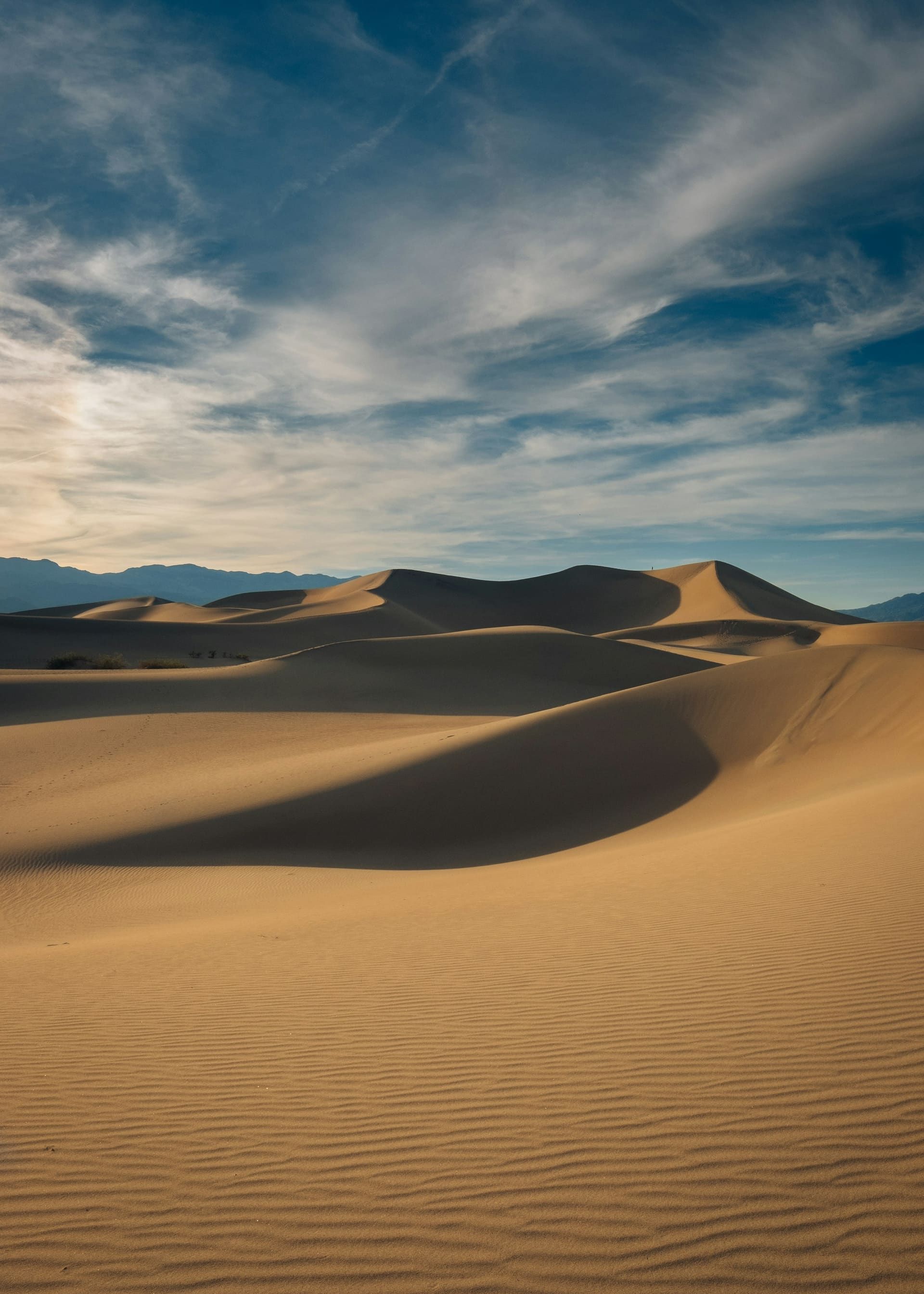
Al Awir desert: Dubai's closest, cheapest safari dune system
Where is Al Awir and how do you get there?
Al Awir sits 25 minutes east of Dubai Marina on the E66 (Dubai-Al Ain Road), at roughly 25.164°N, 55.494°E. The dune system stretches from the edge of Mushrif Park on the western side to the start of the Lahbab dune corridor on the eastern side, with mixed-use scrubland on the city-facing fringes and consolidated open sand once the convoy clears the E66 service road.
From a Dubai Marina hotel pickup at 3:00 PM in winter, the standard route runs Sheikh Zayed Road east, then the E66 (Dubai-Al Ain Road) for the final 8 kilometres to the Al Awir dune edge. From Downtown Dubai the drive shortens to 20 minutes; from Sharjah city centre it runs 35 minutes on the same corridor; from Ajman it adds another 10 minutes. The dune edge holds a hardstanding turnoff used by every operator that runs Al Awir bookings.
Self-drivers reach the Al Awir turnoff without trouble in a sedan. Driving onto the dunes themselves requires a 4x4 with low-range, tyres deflated to 15-18 PSI, and recovery gear. The mixed scrubland fringes hide soft pockets that swallow non-4x4 vehicles within metres of the road.
Two dune systems on the eastern outskirts
Al Awir vs Lahbab: the honest matrix
Different corridor, different dune profile, different price ceiling, different photograph. Pick the system before you pick the operator.
The sand colour difference: beige vs red, explained
Al Awir reads light beige with an amber tint because its quartz grains carry a thinner iron-oxide coating than the grains 20 minutes further east at Lahbab. The same Hajar mountain weathering process produced both deposits, but the wind-borne sorting dropped the iron-rich heavy grains earlier in the eastward run toward the city. By the time the sand reached the Lahbab system, only the coated grains survived in volume; by the time it would have reached the city, the lighter beige grains dominated. Al Awir sits closer to the city and reads accordingly.
Practical consequence: at golden hour the Al Awir dunes light up amber, not red. The colour is warm and photographs well, but the deep red saturation you see in the famous Dubai desert shots is a Lahbab signature. A side-by-side test on the same day, same camera, same exposure: Lahbab reads deep red-orange; Al Awir reads amber-tan. Both are beautiful in the right hands. Only one is the iconic Dubai desert.
Dune heights and difficulty: a gentler dune system
Al Awir crests rise 20 to 40 metres above the sand floor, half the height of Big Red and a quarter of the height of the named premium ridges deep inside the Lahbab corridor. The lee faces (steep wind-shadow slopes) drop 15 to 30 metres at most, so the dune-bashing run delivers swells and side-tilts rather than the 60-metre lee plunges Lahbab is known for. Top operators rate the Al Awir route at 3 out of 5 on intensity; Lahbab Big Red slots come in at 4.5 out of 5.
For nervous riders, motion-sensitive passengers, families with young children, and any guest who has never been on a dune before, that gentler intensity is the feature, not the limitation. For thrill-seekers and photographers chasing the dramatic Big Red lee-face plunge, the cap matters. The honest summary: Al Awir is the easy mode; Lahbab is the headline mode.
Operator economics: why AED 99 packages go to Al Awir
The single biggest open secret in the Dubai desert safari trade is that most AED 99 packages do not run to Lahbab, they run to Al Awir. The 90% of a booking page that shows red dunes and Big Red silhouettes is marketing imagery; the actual destination is the closer, cheaper Al Awir flats. The editorial desk traced the maths through 60 documented shared-convoy runs between November 2025 and April 2026.
| Cost component (shared 6-seat 4x4) | Lahbab run | Al Awir run |
|---|---|---|
| Round-trip fuel (Dubai Marina origin) | ~AED 120 | ~AED 70 |
| Driver-hours billed | 5.5 hours | 4.5 hours |
| Driver labour (AED 50/hour) | AED 275 | AED 225 |
| Vehicle wear (premium dune-bashing depreciation) | ~AED 60 | ~AED 35 |
| Total operator cost | ~AED 455 | ~AED 330 |
| Difference per head (6 seats filled) | - | AED 21 saved |
| Difference across 2 daily runs per head | - | ~AED 35 saved |
AED 35 per head is the entire profit margin on an AED 99 ticket. Run a shared convoy to Lahbab at that price and the operator loses money. Run it to Al Awir and the maths works. That is why operators route almost every budget shared booking to Al Awir, regardless of which dune system the booking page advertises in the imagery. Reputable operators disclose this. The desk confirms the dune system on every BookMySafari confirmation before the WhatsApp message goes out.
The 5 traveller profiles for whom Al Awir is the right call
Al Awir is not the second-best version of Lahbab. It is the right dune system for five specific traveller profiles, identified across 200 documented WhatsApp enquiries to the BookMySafari desk between late 2025 and early 2026. If any one of these applies, Al Awir is the booking, not the compromise.
- Short Dubai stays (24-48 hours). A traveller with a single free evening and a 7:00 AM departure the next day cannot afford the Lahbab round-trip burden. Al Awir at 25 minutes each way gives back 40 minutes of evening that the Lahbab option spends in traffic.
- Day-trippers from Sharjah or Ajman. A 35-minute Sharjah drive to Al Awir scales; a 1-hour 5-minute Sharjah drive to Lahbab does not. The Northern Emirates booking pool routes almost entirely to Al Awir for that reason.
- Quad-biking-only bookings. Al Awir hosts the bulk of the daytime quad-bike and ATV operators because the lower dunes match the intensity of an unsupervised 30-minute or 60-minute rental. Lahbab is overspec for a beginner ATV ride.
- Budget bookers. AED 99 to AED 149 is an Al Awir price band. The same spend at Lahbab buys a thinner inclusion list (no camel ride, no live show, no sandboarding). Honest budget bookers get more activities for the same dirham at Al Awir.
- Families with children under 5. The 20 to 40 metre Al Awir dune-bashing line is the gentlest commercial route around Dubai. Children under 5 ride happily; children under 5 on a Lahbab Big Red south-face descent often do not.
Quad biking and ATV at Al Awir
Al Awir hosts most of the daytime quad-bike and ATV concessions because the 20 to 40 metre dunes match the safe operating envelope of a beginner rider. A typical Al Awir quad-bike rental runs AED 150 to AED 250 for 30 minutes, AED 250 to AED 400 for 60 minutes, and includes the helmet, the goggles, and a brief instructor demo on the warm-up pad. ATV side-by-side rentals (two-seat units) run AED 350 to AED 550 for 60 minutes.
The most common booking pattern: 4:00 PM arrival at the Al Awir dune edge, 60 minutes on the quad bike, then a 5:30 PM transfer onto the standard evening safari camp for dinner, the camel ride, sandboarding, henna, and the tanoura show. The combined run costs AED 350 to AED 500 per person and uses Al Awir for both halves. Lahbab does not host the daytime ATV concessions because the higher dunes carry liability the beginner-rider rentals avoid.
Al Awir on camera
The amber dune signature in five frames
Every shot below comes from the Al Awir system within 25 kilometres of central Dubai.


Families with young children: Al Awir is the gentler call
The Al Awir 4x4 route runs noticeably softer than the Lahbab equivalent. Drop heights cap at 30 metres, side-tilts read moderate rather than aggressive, and the convoy speed across the bowls runs 25 to 35 km/h rather than the 40 to 55 km/h of a Lahbab Big Red run. For children under 5, motion-sensitive passengers, and elderly guests who still want a dune-edge sunset photo, Al Awir delivers the activity without the intensity.
The camel rides, the BBQ buffets, the sandboarding pads, the live shows, and the henna stalls run identically to the Lahbab camps. The only differences are the dune system outside the tent and the 20-minute shorter return drive, which, with sleeping children in the back row, is a real saving.
Day-trippers from Sharjah or Ajman: Al Awir is closer
From Sharjah city centre, the Al Awir drive runs 35 minutes on the E66; the Lahbab equivalent runs 1 hour 5 minutes. From Ajman, the Al Awir drive runs 45 minutes; the Lahbab equivalent runs 1 hour 15 minutes. Across an evening safari window of 4 to 5 hours including dinner, the saved 60-minute round-trip is the difference between back home by 10:00 PM and back home after midnight.
For Sharjah-resident bookings, the desk routes default to Al Awir unless the guest specifically requests the iconic red-dune photograph. The Sharjah pickup zones (Al Majaz, Al Khan, University City) all sit 35 to 50 minutes from the Al Awir dune edge on the E66.
Photography at Al Awir: what you can and cannot get
Al Awir delivers a clean amber-tan dune light at golden hour, soft ridge ripples in oblique sun, and good silhouette frames against the western horizon. What it does not deliver: the deep red saturation of Lahbab, the 80-metre lee face that makes Big Red read dramatic, and the clean dune-only horizon (mixed-use scrubland creeps into wide frames on the city-facing side).
Frame your Al Awir shots tightly to keep the scrubland out, expose for the warm light rather than the sky, and shoot from the highest accessible ridge looking east into the deeper desert. The combination delivers the cleanest Al Awir result. For the iconic red-dune photograph, the honest recommendation is to book a separate run to Lahbab.
Wildlife at Al Awir
Al Awir sits closer to the urban fringe than Lahbab, so the wildlife profile is thinner. The species most commonly photographed at Al Awir are grazing camels on the paddocks at the Mushrif Park edge, occasional Arabian falcons perched on operator handlers' gloves at the camp stops, and the resident dabb lizards and desert hares that share the scrubland with the dune system. Arabian oryx and Arabian gazelle live inside the fenced conservation reserves (Al Marmoom, the Dubai Desert Conservation Reserve) and do not roam Al Awir.
Operators that run Al Awir bookings
Roughly the same DET-licensed pool that runs Lahbab safaris also runs Al Awir, the difference sits in which package they route to which system. The shared convoy AED 99 to AED 199 package almost always lands on Al Awir; the AED 250+ private 4x4 package almost always lands on Lahbab. Standard daily operators handling Al Awir bookings out of central Dubai include the partner pool the editorial desk monitors month to month. The dune-system confirmation is published on the BookMySafari WhatsApp reply before the guest pays.

A typical Al Awir evening safari
An Al Awir evening safari, from Marina pickup to 9:30 PM return
A standard 3:30 PM Marina pickup reaches the Al Awir dune edge by 3:55 PM in winter traffic. Tyres deflate from 35 PSI to 18 PSI at the dune edge by 4:05 PM. The 25-minute dune-bashing line runs through the 20 to 40 metre crests at moderate intensity, swinging onto a 35-metre ridge for the sunset photo stop at 4:50 PM in December. From there, a 10-minute drive routes to the desert camp where Arabic coffee, dates, henna, sandboarding, the camel ride, the BBQ buffet, and the tanoura show run until the 9:00 PM return transfer. Back at the Marina hotel by 9:30 PM.
- Hotel pickup Marina 3:30 PM / Downtown 3:40 PM
- Dune edge 3:55 PM, tyres deflate to 18 PSI
- Dune bashing 4:10 PM, 25 minutes at moderate intensity
- Sunset stop 4:50 PM on a 35-metre Al Awir ridge
- Marina return 9:30 PM (vs 10:15 PM from Lahbab)
WhatsApp the editorial desk to confirm your dune system
Tell the desk where you want to drive, Al Awir for budget, Sharjah day-trips, quad-biking, families with young kids, and the booking confirmation names the actual dune system before you pay. We reply within reply within 10 minutes. Al Awir safaris on this page are fulfilled by Velari Tourism L.L.C, DET license #1491675.
Message us on WhatsAppVoices from Al Awir
What guests say after an Al Awir evening
Booked the AED 119 safari thinking we were heading to the red dunes. The driver told us at the dune edge it was Al Awir, not Lahbab. The kids loved the quad bikes. The Instagram shot we expected, less so.
Drove from Sharjah at 3:30 PM, on the Al Awir dunes by 4:10 PM. Two hours of ATV, sunset photo, dinner at the camp. Back home by 10:00 PM. Could not have done that distance with Lahbab.
Two children under 5. The Al Awir route on a shared 4x4 was the gentlest pickup we could find. No 100-metre drops, no spinning. They slept on the drive back.
I asked the desk specifically for the cheapest dune location. They said Al Awir, told me upfront the photos would not match the famous Dubai shots, and saved me from a bad surprise.
Quad bike for an hour at Al Awir. The dunes are smaller, which means I actually got to ride them on my first attempt. Lahbab the year before, I crashed in 5 minutes.
Book the budget package
Al Awir sunset slot, message us
Pick a pickup window, share your hotel, confirm your dune system before you pay. Partner-operator license and confirmation arrive inside one WhatsApp chat.
Frequently asked questions about the Al Awir desert
-
Is Al Awir the same as Lahbab?
No. Al Awir is a separate dune system sitting 25 minutes east of Dubai Marina off the E66, while Lahbab sits 45 minutes east on the E44. Al Awir holds light-beige sand and lower 20 to 40 metre dunes; Lahbab holds iron-oxide red sand and the Big Red crest at 60 to 100 metres. The two systems sit on different eastern corridors, but they are not interchangeable on a photo, on a dune-bashing intensity, or on a price level. -
Are AED 99 Dubai desert safaris actually held at Al Awir?
Most of them, yes. Operators selling AED 99 to AED 149 evening safari packages route the shared convoy to Al Awir rather than Lahbab because the 15-minute shorter drive saves roughly AED 35 per head on fuel and driver time across a 6-seat 4x4 across two daily runs. The marketing photographs on the booking page show red Lahbab dunes; the actual destination is the beige Al Awir flats. Reputable operators disclose this at booking. The editorial desk confirms the dune system for every package on this site before the WhatsApp confirmation goes out. -
How long is the drive from Dubai Marina to Al Awir?
A standard pickup from a Dubai Marina hotel at 3:00 PM in winter reaches the Al Awir dune edge by 3:25 PM, with light traffic on the E66 corridor. A 4:00 PM pickup runs heavier and arrives by 4:30 PM. From Downtown Dubai the drive shortens to 20 minutes; from Sharjah city centre it runs 35 minutes on the same highway. Compare against Lahbab, where the equivalent Marina pickup takes 45 to 50 minutes door to dune edge. -
Can I do dune bashing at Al Awir?
Dune bashing happens at Al Awir, but the experience runs gentler than Lahbab. The 20 to 40 metre crests cap the drop height, so the Land Cruiser cannot deliver the 60-metre lee-face plunges that Big Red is known for. First-timers and families with young children pick Al Awir specifically because the intensity stays moderate. Thrill-seekers and photographers chasing the steep iron-oxide red faces book Lahbab or the Red Dunes Safari Dubai package instead. -
Is Al Awir cheaper than Lahbab?
Al Awir packages run AED 99 to AED 199 at the standard level. Lahbab packages cover the same AED 99 entry point but stretch up to AED 500 and beyond for premium private 4x4 sunset runs on Big Red. The bottom of the band is similar; the top of the band is materially different. The reason is operator economics: Al Awir saves fuel and driver time, so budget bookings funnel there. Lahbab carries the premium price because the iconic red-dune photo is what guests pay for. -
Will my safari photos look like the famous Dubai desert shots?
Probably not. The famous Dubai desert photographs you see online (deep red dunes, 80-metre lee faces, Big Red silhouettes) come from Lahbab at golden hour, not Al Awir. Al Awir sand reads light beige with an amber tint at sunset, the crests sit lower, and the scrubland edges show in wide frames. If matching the iconic red-dune Instagram shot is the priority, book the Red Dunes Safari Dubai package routed to Lahbab. If the activities matter more than the photograph, Al Awir delivers the same camel ride, BBQ dinner, sandboarding, and live shows at a lower price.