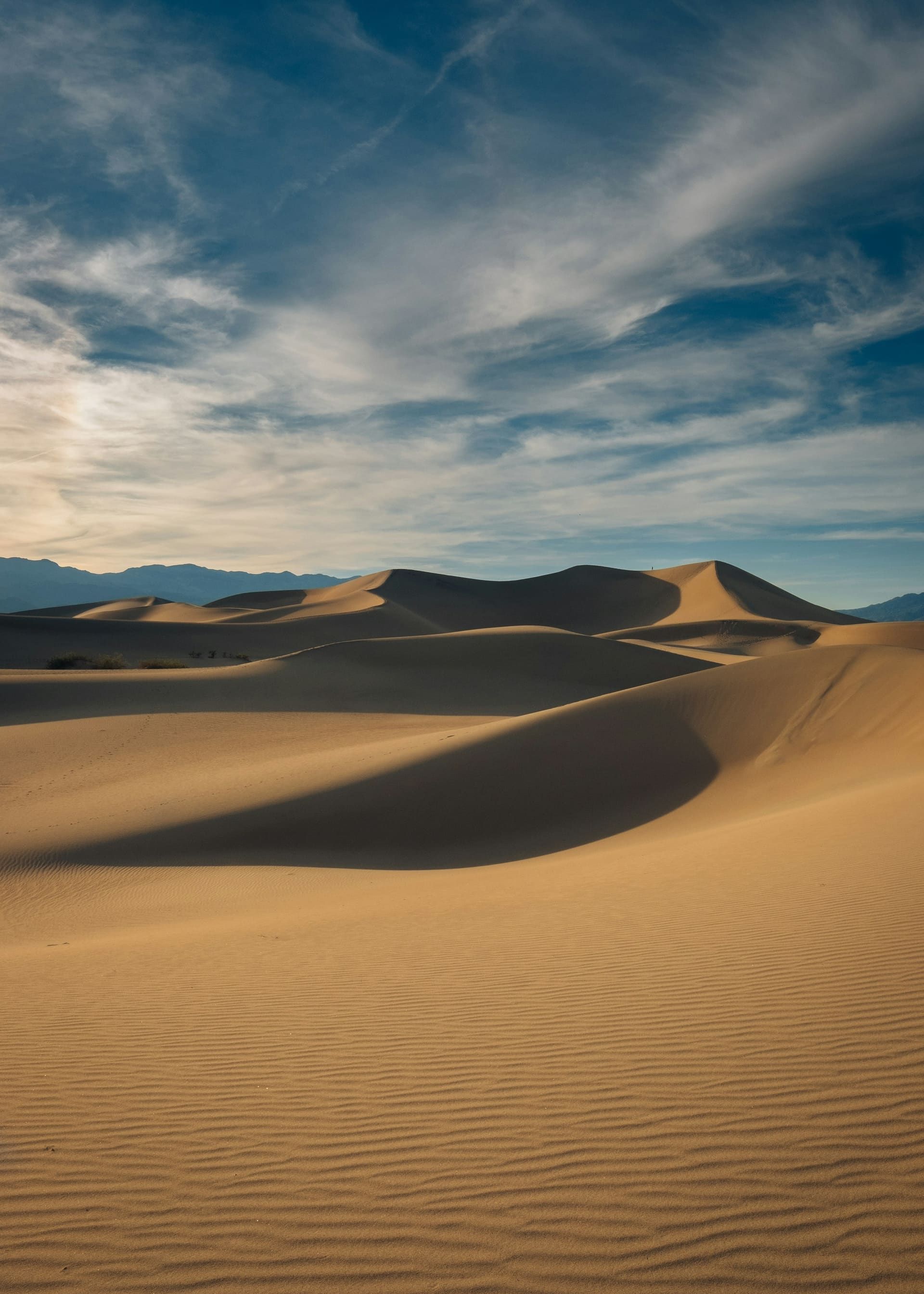
What to wear on a Dubai desert safari
Cotton shirt + jacket
18 to 26 °CDaytime 22 to 26 °C, night drops to 11 to 16 °C on the dune ridge. Pack a packable fleece or denim jacket for the camp dinner.
Long-sleeve linen
25 to 35 °CHot afternoons, comfortable evenings. A long-sleeve linen shirt blocks ultraviolet and still breathes at the camp. Jacket optional after 9:00 PM in April.
Loose cotton, no jacket
38 to 45 °CPickup shifts to 4:30 PM. UV index hits 11 on the Lahbab ridge in July. Long-sleeve cotton, wide-brim hat, refillable water bottle.
The outfit in three temperature bands, winter to summer
The outfit for a Dubai desert safari changes meaningfully across three temperature bands. The winter window runs November through March, the shoulder months sit in April and October, and the summer band stretches May through September. Each band reshapes the layer count, the fabric weight, and the daypack contents you carry from hotel pickup to camp drop-off.
Winter, November to March, 18 to 26 °C daytime
Winter is the peak booking window because daytime temperatures sit between 18 and 26 °C. A short-sleeve cotton shirt under a denim or linen overshirt covers the afternoon pickup. The dune ridge at 5:30 PM drops to 16 °C inside an hour; by 8:00 PM at the desert camp, the air falls to 11 to 14 °C. A packable fleece, a thin puffer, or a wool-blend cardigan handles the gap. Closed-toe canvas sneakers stay comfortable across the temperature swing; full-leather boots overheat during the 25-minute dune-bashing segment.
Shoulder, April and October, 25 to 35 °C daytime
April and October sit in the comfortable transition window. A single long-sleeve linen shirt over loose linen trousers carries the entire day. Late April afternoons push toward 35 °C, so the long-sleeve choice surprises first-time visitors; the fabric blocks ultraviolet better than bare skin sweating under sunscreen alone. October evenings hold 22 to 26 °C at dinner, comfortable without a jacket. Sandstorm risk peaks in March through July, so a scarf to wrap nose and mouth becomes a daypack staple in April.
Summer, May to September, 38 to 45 °C daytime
Summer reverses the intuition. Long sleeves outperform tank tops in 42 °C heat because the fabric reflects ultraviolet and channels sweat off the skin. The pickup window slides to 4:30 PM rather than 3:00 PM to skip the worst hour of sun. A wide-brim cotton hat shades the face during sunset photography; a thin cotton bandana over the neck protects the collarbone from grit. Closed-toe trainers replace open sandals because surface sand still holds 60 to 65 °C in late afternoon, down from a 75 °C midsummer peak. A 1-litre water bottle inside the daypack matters more in summer than any other piece of gear.
Tops: cotton, linen, and the 3 fabrics that fail in the dunes
The top decides comfort across the dune ride, the sunset photo, the camel mount, and the camp dinner. Cotton, linen, and cotton-modal blends carry every segment without issue. Three common fabrics fail across heat, friction, or dust.
| Fabric | Summer 42 °C | Winter 16 °C night | Sandboarding | Verdict |
|---|---|---|---|---|
| Cotton | Breathes, sweat wicks | Layered easily | Withstands friction | Primary choice |
| Linen | Best at heat dump | Needs an overlayer | Rips on the dune slope | Tops yes, board no |
| Cotton-modal blend | Soft, drapes well | Pairs with fleece | Holds under friction | Camp-friendly |
| Polyester | Traps heat against skin | Static cling with dust | Melts at friction points | Avoid |
| Rayon | Clings when sweat-soaked | Loses shape at low temps | Shreds under sand abrasion | Avoid |
| Nylon athleisure | Hot, glares in photos | Slick layering | Burns at slide speed | Avoid |
The fabric pick interacts with the photograph. Cotton and linen catch the golden-hour light without sheen, while polyester and nylon reflect a hard glare that ruins a portrait. The Lahbab red dunes also stain pale fabric within a single sandboarding run; a kaffiyeh or cotton scarf in earth tone covers wind, dust, and the photograph at once.
Bottoms: full-length or shorts, and why most guides get this wrong
Most packing guides default to "wear shorts in the heat" and miss the four moments that punish bare legs: the dune-bashing seatbelt grip, the camel-mount swing, the sunset photo on the windward ridge, and the open-fire dinner area where embers carry on the breeze. Loose linen trousers or wide-leg cotton chinos cover all four without overheating.
- Linen trousers, the summer default. Wide-leg cut allows the camel-mount swing, breathes through the dune-bashing segment, and looks finished in camp photographs.
- Cotton chinos, the winter default. Sturdier than linen against the camp seating-mat sand. Pair with a cotton shirt and a denim overshirt for the post-sunset drop.
- Maxi skirt, works at the camp, hampers the camel ride. If you choose a maxi, pack a pair of leggings underneath for the camel segment.
- Mid-thigh shorts, acceptable on the 4x4 ride, awkward at the camp, painful on the camel saddle. Skip if your booking includes the camel segment.
- Denim jeans, too heavy in summer (above 35 °C), fine in winter, hot for sandboarding. Avoid black denim in dust; the abrasion shows.
A practical compromise sits at "loose trousers always, shorts under the trousers if you want them on the dune ride." The trousers come off at the camp once dinner is plated; the shorts underneath stay cool through the BBQ buffet and the live tanoura performance.
Footwear: closed-toe is the rule, and the 1 exception
Closed-toe footwear is non-negotiable during dune bashing, sandboarding, the camel mount, and the walk between the parking area and the camp gate. DET-licensed operators in Dubai treat the rule as a safety floor, and the driver flags open-toe footwear before tyres deflate at the dune edge. Sand temperatures on the surface peak at 75 °C in midsummer, hold 60 to 65 °C into the late afternoon, and reach 35 to 40 °C in winter midday; flip-flops leave the foot exposed to contact burns and grit abrasion at the first sandboarding step.
- Canvas sneakers, the most cited primary choice. Light, breathable, ankle mobility for the camel mount, and easy to empty out after sandboarding.
- Mesh trail trainers, second-best. Faster sand drainage than canvas, more arch support, slightly hotter inside the Land Cruiser cabin.
- Closed-toe sport sandals (Keen, Teva closed-toe), acceptable, less common. The closed-toe design holds against the dune-bashing seatbelt grip.
- Hiking boots, overkill. Heavy, slow to empty of sand, hot through the 25-minute dune segment.
The single exception is the seated dinner period at a desert camp. Most guests slip off sneakers at the dinner mat and switch to a light cotton slipper or a flat sandal for the meal. The swap is comfort, not rule; you can stay in trainers across the entire evening. Pack the camp slipper in the daypack rather than leaving it in the 4x4, since the vehicles are sometimes parked 100 metres from the dining area.
Headwear and sun protection, four pieces for the dune ridge
Sun protection on a Dubai desert safari runs on four pieces: a cotton scarf or kaffiyeh, a wide-brim hat, wraparound sunglasses, and SPF 50 sunscreen reapplied at the camp. The dune-ridge ultraviolet index reaches 11 in July and 7 in February; both burn unprotected skin inside 30 minutes.
- Cotton scarf or kaffiyeh, covers wind, dust, sandstorm grit, and doubles as a head wrap during the sunset photograph. Earth-tone or ivory reads best on camera.
- Wide-brim cotton hat, shades the face and the ears during the afternoon pickup walk. A drawstring keeps the hat on during the camel ride.
- Wraparound sunglasses, block sand from reaching the eye perimeter at the sandboarding descent. Polarised lenses cut the glare reflected from the dune face.
- SPF 50 sunscreen, reapply at the camp before the camel ride. The dune ridge reflects ultraviolet upward, so the underside of the chin and the ears burn first.
What guests wore
Five outfits, dune ridge to camp seating
Real outfit examples across summer linen, winter cotton, and the scarf-and-hat combination.


What to wear at the desert camp: modesty norms explained honestly
The desert camp dress code covers shoulders and knees as a courtesy. UAE federal modesty rules govern government buildings and the souks, not a private safari camp, yet the staff and the heritage performers appreciate the gesture. A long-sleeve cotton shirt, loose trousers or a maxi skirt, and a light scarf cover the brief for any gender. Inside the Dubai Desert Conservation Reserve and at heritage operators like Platinum Heritage and Bab Al Shams, the cultural-etiquette norm sits higher than at a standard Lahbab camp.
Specific norms reduce ambiguity. Bikini-style tops and transparent fabric land outside the register. Shorts cut above mid-thigh feel awkward at the dinner mat. A backless dress works at the camp lounge yet draws attention during the tanoura performance, where guests and performers share a small ring of seating. Religious-text imagery on a T-shirt is read seriously across the GCC; choose a plain or graphic-neutral top instead. BookMySafari writes the specific norms into the booking note so first-time visitors arrive correctly dressed.
Winter layering, three pieces against the night drop
A winter desert safari outfit layers three pieces against the 10-to-15-degree night drop. The base is a cotton shirt, the middle is a denim or linen overshirt, and the outer is a packable fleece or a thin puffer jacket. The Land Cruiser cabin runs at 22 °C from air conditioning, the dune ridge holds 19 to 22 °C at 4:30 PM, and the camp at 8:00 PM falls to 11 to 14 °C. The three layers cover the gradient without overheating during the dune-bashing segment.
A winter daypack carries one extra item the summer pack skips: a thin pair of cotton gloves. The camp seating area on a January evening hits 8 to 10 °C with wind chill, and warm hands matter more than warm legs for camera operation. The gloves weigh under 50 grams and fit inside a jacket pocket; pack them rather than regret skipping them.
The winter footwear pick stays the same as summer: closed-toe canvas trainers. Boots overheat during the dune-bashing segment because the cabin runs warm; lightweight trainers carry both ends of the temperature range. Cotton socks in winter beat synthetic athletic socks; cotton holds warmth when the night cools while synthetics cling unpleasantly to sweat-cooled feet.
10 to 15 °C
The desert night drop below the afternoon high
Enough to turn a cotton shirt at pickup into a packable fleece by the camp dinner.
Summer layering, why long sleeves beat short sleeves
A summer desert safari outfit reverses the layer logic: long sleeves to block ultraviolet, breathable cotton to channel sweat, and a wide-brim cotton hat to shade the face. The afternoon pickup shifts to 4:30 PM rather than 3:00 PM in July and August to skip the worst hour of sun. By the sunset stop at 6:50 PM in June, the ridge holds 38 to 41 °C with low humidity. By 9:00 PM at the camp, the temperature falls to 30 to 33 °C, still warm enough that a jacket is unnecessary.
Hydration matters more in summer than any garment. A 1-litre refillable water bottle inside the daypack covers the gap between the pickup and the camp welcome drink. Operators stock chilled bottled water in the Land Cruiser, yet the camp BBQ buffet rolls 90 minutes before the dessert flight; a personal bottle bridges the gap. Electrolyte tablets (AED 25 a tube at any Boots or Aster pharmacy in Dubai) cover the salt loss across a 6-hour summer evening.
Avoid dark colours under summer sun. Black absorbs heat and shows the dust film by the second hour; navy and charcoal photograph muddy against the red dunes. Ivory, sand, sage, and dusty pink read clean in the golden hour and stay visibly cooler underneath. The standard-package ticket buys 25 minutes of dune bashing inside an air-conditioned cabin, so the heat burden lands during the sunset photo and the camp arrival rather than the drive.
What to wear if you are sandboarding or quad biking
Sandboarding adds friction to the outfit calculation. Skin contact with the dune face at slide speed leaves friction burns on bare arms, elbows, and ankles within one run. The fabric brief shifts from "breathable" to "abrasion-resistant breathable." Mid-weight cotton or cotton-blend chinos handle the slide; thin linen rips on the second descent. Closed-toe trainers stay essential because the lower foot drags through the sand at the end of every run.
Quad biking on the standard closed circuit adds a different problem: airborne dust. The 15-minute ride raises a continuous plume that finds the nose, the mouth, and the eyes. A buff or bandana over the lower face filters most of the grit; wraparound sunglasses or the operator-issued goggles cover the eyes. Long sleeves and full-length trousers cover the limbs against grit-impact on the open desert circuit.
The quad-bike tariff sits at from AED 120 extra on most operator pricing, beyond the base ticket. The fabric brief sits identical to sandboarding: cotton or cotton-blend mid-weight, closed-toe trainer, scarf for the neck, wraparound eye protection.
Plus-size and pregnancy comfort: what changes
Plus-size and pregnancy comfort reshape the outfit pick around two pressure points: the dune-bashing seatbelt and the Land Cruiser seat width. A stretch-cotton tunic over linen trousers keeps the lap belt sitting flat across the abdomen, where a fitted polyester top rides up and bunches. Loose, structured fabric reduces hot-spot pressure across a 25- minute dune segment.
Pregnancy beyond the first trimester rules out the dune-bashing segment under operator safety policy. The standard alternative is a no-dune-bashing evening safari at the AED 99-to-249 price band; the route skips the dunes and travels straight to the camp via the access road. Pregnant guests benefit from full-length cotton trousers, breathable long-sleeve cotton tops, and supportive closed-toe trainers; flip-flops compound balance risk on uneven sand. A maxi dress works at the camp dinner but hampers the camel mount; choose a long tunic and trousers if the camel ride is on the itinerary.
Children's safari outfit: what to dress kids 4 to 11 in
A child's desert safari outfit follows the adult brief at smaller scale, with two additions. First, closed-toe trainers for any child old enough to walk; sand at 60 °C in summer afternoons burns small feet faster than adult feet. Second, a wide-brim sun hat with a drawstring, since standard-size hats blow off on the dune ridge. Cotton long-sleeve tops over loose cotton trousers cover the body. A small zip-up fleece in winter covers the night drop.
Sunscreen application matters more for children than adults because the dune ridge reflects ultraviolet upward into the face. SPF 50 mineral-based sunscreen (zinc-oxide formulas under brands like Banana Boat, Nivea Kids, and Aveeno Baby) sits well on small skin. Stock from any Boots or Spinneys outlet in Dubai costs AED 35 to 65 a tube; the operator does not supply child-grade sunscreen. A wet wipe pack in the daypack handles the post-camel-ride cleanup before the BBQ buffet plate.
Children aged 4 to 11 travel at the operator child rate; AED 99 on the standard evening package. The clothing pick is parent-led; brief children before the trip on the camp etiquette (shoulders and knees covered at the dinner mat) so the dress code does not surprise them at the camp gate.
Photography: the 5 outfit colours that ruin a desert photo
Five outfit colours reliably ruin a Dubai desert safari photograph. The golden hour at Lahbab runs 5 to 25 minutes before sunset, when the iron-oxide red sand reflects warm orange light across every surface. The colour pairing decides whether the photograph reads as a heritage frame or a flat snapshot.
Dark navy
Reads as a dark cutout against the red dunes. The skin tones go grey because the lens meters off the dark fabric. Switch to camel, beige, or ivory for the same silhouette.
Pure white
Stains red within one sandboarding run and reflects so much light at sunset that the face under-exposes. Off-white and ivory hold cleaner across the evening.
Neon synthetics
Neon pink, electric green, and high-vis orange clash with every dune photograph. The polyester fabric also glares against the golden hour, ruining the warm-light tonality.
Mirror sequins
Sequins reflect hot points across the frame and trap sand in every gap. The photograph reads chaotic, the post-camp cleanup takes a full hour, and the lap belt snags fibres.
Dense black
Black absorbs the warm orange light and reads as a void at sunset. Black also shows the dust film by the second hour, marking the fabric for the rest of the evening.
Reliable colours that read clean on the Lahbab red dunes are camel, sand, ivory, dusty pink, sage green, soft terracotta, and rich navy in stiff fabric (not soft cotton). The pairing with the kaffiyeh or scarf locks the photograph into a heritage palette.
The 12-item pre-pickup packing checklist
The 12-item pre-pickup packing checklist below covers a single evening Dubai desert safari for one adult, from hotel pickup to camp drop-off. Each item carries the typical AED price if you buy it in Dubai the morning before the trip.
Where to buy each item in Dubai, with AED bands
- 1 Cotton long-sleeve shirt (Carrefour, H&M Mall of the Emirates) AED 45 to 120
- 2 Loose linen trousers (Splash, Max Fashion, Centrepoint) AED 60 to 150
- 3 Closed-toe canvas trainers (Sun & Sand Sports, Carrefour) AED 95 to 250
- 4 Cotton scarf or kaffiyeh (Karama souk, Spinneys home aisle) AED 25 to 75
- 5 Wide-brim sun hat with drawstring (Decathlon, Sharaf DG) AED 40 to 90
- 6 Wraparound sunglasses (Lifestyle, optical shops in Dubai Mall) AED 35 to 250
- 7 SPF 50 sunscreen (Boots Pharmacy, Aster, Life) AED 35 to 95
- 8 1-litre refillable water bottle (Carrefour, Decathlon) AED 20 to 60
- 9 Packable fleece or denim overshirt (Nov to Mar only) AED 75 to 200
- 10 Lip balm with SPF (Boots, Aster, Life) AED 18 to 45
- 11 Wet wipes 25-pack (Spinneys, Carrefour) AED 7 to 18
- 12 Passport or Emirates ID for the waiver, plus phone power bank AED 35 to 150
A full kit assembled fresh in Dubai sits at AED 490 to 1,500 depending on brand choice. A minimum-viable kit at Carrefour, Splash, and the Karama scarf stalls comes in under AED 400. The list assumes no checked luggage; cotton, linen, and a single fleece pack down to fit a single carry-on.
5 things every guest forgets, and where to buy them in Dubai
Five items are the ones guests most often leave at home. The same five are buyable at named Dubai retailers within a 30-minute window, so a quick stop on the way to pickup covers the gap.
1. SPF 50 sunscreen
The most-forgotten item across summer bookings. Buy at Boots Pharmacy (Dubai Mall, Mall of the Emirates), Aster Pharmacy (community branches across the emirate), or Life Pharmacy. AED 35 to 95 for a 200 ml tube; mineral zinc-oxide formulas for sensitive skin sit at the upper end.
Boots, Aster, Life · AED 35 to 952. A cotton scarf or kaffiyeh
Forgotten by guests from cooler climates who never thought to wrap a head. Karama scarf stalls and Meena Bazaar (Bur Dubai) carry cotton scarves at AED 25 to 60. Spinneys and Carrefour home-textile aisles stock plain cotton scarves at the same price. Heritage kaffiyeh at the Souk Madinat Jumeirah costs AED 80 to 150 for tourist-grade cotton.
Karama souk, Spinneys, Carrefour · AED 25 to 1503. Closed-toe shoes
Sandals-only travellers find out at the dune edge. Sun & Sand Sports (Mall of the Emirates), Decathlon (multiple locations), and the Sharaf DG sport corners stock canvas trainers at AED 95 to 250. Carrefour hypermarkets carry no-brand trainers from AED 65. The driver pauses pickups to swing past Carrefour Mall of the Emirates if you message ahead.
Sun & Sand, Decathlon, Carrefour · AED 65 to 2504. Refillable water bottle
Operators carry bottled water in the cabin, yet the camp BBQ buffet runs 90 minutes before the dessert flight. A personal 1-litre bottle bridges the gap. Carrefour, Spinneys, and Decathlon stock stainless or BPA-free plastic bottles at AED 20 to 60.
Carrefour, Spinneys, Decathlon · AED 20 to 605. Wet wipes
The most under-rated item. Sand reaches every glove-box gap, the camel-handler chat leaves a fine grit film on the hands, and the BBQ buffet runs ten minutes after the sandboarding descent. Spinneys and Carrefour stock a 25-pack at AED 7 to 18. Worth packing two.
Spinneys, Carrefour, ADCB Carrefour · AED 7 to 18What NOT to wear on a Dubai desert safari: 6 specific bans
Six clothing choices fail across one or more segments of the safari. The list is specific; the underlying logic is friction, heat, modesty, or photograph quality.
- High heels The sand swallows the heel at the first step. The camel-mount swing is impossible. Pack flats or trainers and leave the heels at the hotel.
- Bikini top as outerwear Out of register at the desert camp and uncomfortable on the lap belt during dune bashing. A cotton overlayer covers the camp segment without losing the underneath swim.
- Polyester athleisure Traps sweat against the skin in 42 °C heat, melts at sandboarding-slide friction points, and glares in golden-hour photographs. Cotton or cotton blends replace it cleanly.
- Tight denim in summer Too hot above 35 °C, restricts the camel mount, and shows every dust mark. Light cotton chinos or linen carry the same look without the heat penalty.
- Pure-white outfits Stain red within one sandboarding run, reflect harsh light into the camera, and look grubby across the second hour. Ivory and off-white hold cleaner.
- Open-toe sandals during dune bashing Sand burns at 60 °C in summer afternoons; grit reaches the toe seam at sandboarding speed. Closed-toe trainers are non-negotiable for the active segments.
Ready to book
Book your Dubai desert safari on WhatsApp.
Message us with your dates and hotel, and we will confirm your evening safari, pickup time, and the AED price in one chat.
Frequently asked questions about Dubai desert safari clothing
-
Can I wear shorts on a Dubai desert safari?
Shorts are allowed inside the 4x4 and during sandboarding, yet long trousers serve you better at the desert camp. The camp staff and most fellow guests dress modestly from the knee upward, and exposed legs catch wind-blown sand on the dune ridge during sunset photography. A practical compromise is loose linen trousers in summer and dark cotton chinos in winter; both let air circulate and pack down small in a daypack. Shorts cut above mid-thigh feel out of register at a heritage camp, particularly inside Al Marmoom or the Dubai Desert Conservation Reserve. -
Do I need to dress modestly at the desert camp?
Modest dress at the camp covers shoulders and knees as a courtesy, not a legal rule. UAE federal dress code applies to government buildings and the souks, not to a private safari camp, yet the Bedouin staff appreciate the gesture. Loose linen trousers, a cotton shirt or kurta, and a light scarf cover the brief for any gender. Bikini-style tops, transparent fabric, and shorts above mid-thigh land outside the cultural register at the camp; the dune ride itself is unwatched. BookMySafari writes the specific norms into the booking confirmation so first-time visitors arrive correctly dressed. -
Are sandals or flip-flops allowed on a Dubai desert safari?
Sandals and flip-flops are not allowed during dune bashing or sandboarding, and they make poor camp shoes after sunset. Sand reaches 60 °C in summer afternoons and 35 °C even in February daytime; bare toes burn or chafe inside two minutes on the ridge. Every Dubai operator under DET rules requires closed-toe footwear for the active segments. The one exception is the seated dinner period at a desert camp, where a light sandal worked over the dinner mat is acceptable. Pack canvas sneakers or breathable trainers as the primary shoe and a sandal as the camp swap if you prefer. -
What should women wear on a Dubai desert safari?
A practical female safari outfit is a long-sleeve cotton shirt or kurta, loose linen trousers or a maxi skirt, closed-toe canvas trainers, a cotton scarf for the sunset wind, and a light jacket between November and March. The fabric matters more than the silhouette. Linen and cotton breathe; rayon and polyester trap sweat against the skin in summer. A maxi dress works at the camp yet hampers the camel mount; loose trousers handle both the 4x4 segment and the camel ride. Sunscreen on the décolletage and ears matters because the dune ridge reflects ultraviolet upward. -
How cold does the Dubai desert get at night?
A Dubai desert night drops 10 to 15 °C below the daytime high. A 26 °C December afternoon falls to 11 to 16 °C at the dinner ridge by 8:00 PM. January nights inside the Lahbab dune system have recorded 8 °C with wind chill. The drop is fastest between 4:30 PM and 6:30 PM, the same window covering sunset photography and the camel ride. A packable fleece, a denim jacket, or a lightweight puffer covers the gap. Summer nights stay warm; a June dune ridge holds 30 °C at 9:00 PM, so a jacket is not needed between May and September. -
Do I need a jacket in summer on a Dubai desert safari?
A jacket is unnecessary between May and September because nighttime temperatures on the dune ridge stay between 28 and 34 °C. The summer brief is the reverse: a long-sleeve breathable shirt to block ultraviolet during the afternoon pickup, a wide-brim cotton hat at the camp, and a refillable water bottle in the daypack. UV index on the Lahbab ridge reaches 11 in July; exposed forearms burn within 25 minutes without SPF 50. The cabin of the Land Cruiser sits at 22 °C from air conditioning, so a thin cotton overlayer is helpful in the vehicle and shrugged off at the camp. -
What should I wear if I am sandboarding?
Sandboarding outfit is a long-sleeve cotton top, full-length trousers, and closed-toe trainers. Light linen rips on the dune slope under board friction; mid-weight cotton or a cotton-blend chino survives the run. Skin contact with the sand at speed leaves friction burns on bare arms and ankles. A cotton scarf around the neck stops grit reaching the collarbone on a face-down descent. Avoid white or pale cream because the iron-oxide sand at Lahbab stains pale fabric within one run. Quad-bike riders follow the same brief plus a buff or bandana for nose-and-mouth dust filtering on the open desert circuit. -
Can I wear contact lenses in the dunes?
Contact lenses in the Dubai dunes carry a real risk of grit irritation during sandboarding, dune-bashing window-down moments, and any wind above 25 km/h. Fine dust slips behind a soft lens within 10 minutes on an exposed ridge. The safer choice is prescription glasses paired with wraparound sunglasses on top; the wraparound design seals the eye perimeter against blown sand. A sealed lens case with saline and a backup pair of glasses in the daypack covers the worst case. Pharmacy chains in Dubai (Boots, Aster, Life) stock saline at AED 20 to 35 if you arrive without.