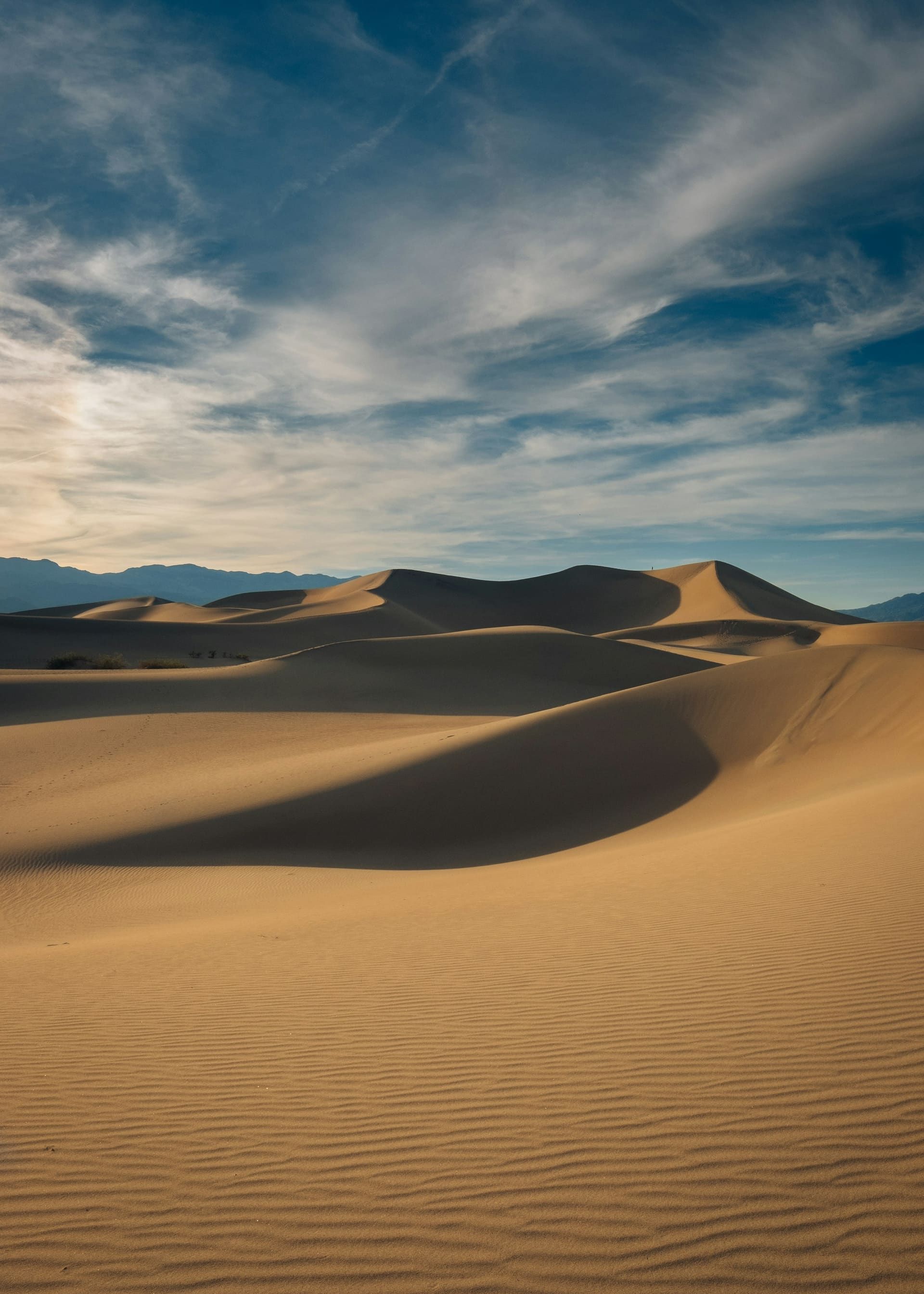
Dubai desert safari in summer, May to September
Is a summer desert safari worth it, and who should move to the morning slot
Summer is worth it for three traveller profiles. Budget-led travellers gain a 40 to 60 percent discount against the December peak, with the same Land Cruiser, the same Lahbab dunes, and the same six-activity inclusion set. Photographers gain a thinner convoy at the camp, roughly half the November-to-March nightly volume, and a compressed late-evening shadow line on the dunes that earlier-season visitors rarely see. Heat-tolerant guests on a flexible schedule gain the calmest version of the dunes available across the calendar, with stargazing visibility through July outperforming every winter month. Travellers who want to book a desert safari in Dubai at the year's lowest rate typically start here; the shoulder-season pricing climbs back once October arrives.
Summer is the wrong call for four profiles. Under-6 children, travellers over 65, anyone past the first trimester of pregnancy, and any guest on cardiac, blood-pressure, or beta-blocker medication move to the morning slot regardless of price. The Best time for a Dubai desert safari master guide carries the full month-by-month rank across the year; this seasonal page goes deeper on May through September specifically.
Summer month by month, conditions and prices from May to September
Five summer months track distinct conditions. The table below maps each month against average daytime temperature, the evening pickup time, the dune-bashing window, sandstorm risk, and the standard evening AED floor. The data references the National Centre of Meteorology UAE summer climate normals and the BookMySafari editorial desk's quarterly operator-tariff sweep.
| Month | Day (°C) | Pickup | Sandstorm risk | Evening AED floor | Note |
|---|---|---|---|---|---|
| May | 34 to 40 (avg 39) | 4:00 PM | Moderate to high | 149 | Shoulder, last comfortable evening |
| June | 38 to 43 (avg 42) | 5:00 PM | High (shamal peak) | 149 | Off-peak floor opens |
| July | 41 to 45 (avg 44) | 5:00 PM | High, calming late month | 149 | Lowest demand of the year |
| August | 40 to 44 (avg 44) | 5:00 PM | Moderate | 149 | School-holiday spike weekends |
| September | 36 to 41 (avg 38) | 4:00 PM | Low | 149 | Shoulder opens, convoy thins |
Two patterns fall out. First, the AED 149 off-peak floor holds across the core summer window (mid-June to early September), well below the AED 199 winter standard but never the AED 99 headline that operator pages dangle and then quietly walk back at checkout. Second, the pickup time tracks the dune-surface temperature curve more than the calendar itself; May and September run a 4:00 PM hybrid, the three core months run 5:00 PM.
May, 39 °C average and the AED 149 floor
May runs as the last shoulder month before the core summer window. Daytime temperatures sit at 34 to 40 degrees Celsius with a 39 degree monthly average, against a 28 degree dune-surface temperature in the evening shadow. The 4:00 PM pickup splits the difference between the winter 3:00 PM and the high-summer 5:00 PM, and the sunset window holds at 6:55 PM by mid-month. The AED 149 evening floor sits 25 percent below the April rate and 25 percent above the June rate.
Sandstorm risk runs moderate to high across May because the shamal wind season carries through to the early-June peak. The National Centre of Meteorology advisory portal opens three to five times across the month on yellow-level alerts. The Lahbab dunes recover inside 24 hours after a major event; the DDCR routes recover inside 36 hours. May 2026 carries a partial Ramadan overlap depending on the lunar calendar, though the 2026 window closes on March 19; check the Dubai desert safari during Ramadan page for the timing logic that applies when Ramadan slides later in subsequent years.
June, 42 °C and the off-peak floor opens
June opens the core summer window. The 42 degree monthly average pushes the dune surface past 50 degrees at noon, which forces every credible operator to shift evening pickup to 5:00 PM. The dune-bashing slot opens at 5:30 PM once the surface temperature has fallen to 38 degrees, and the sunset stop runs at 7:08 PM, the latest of the calendar year. Camp arrival lands at 7:15 PM, the BBQ opens at 7:30 PM, the tanoura performance finishes by 9:30 PM, and the return transfer leaves at 9:45 PM.
The AED 149 off-peak floor opens in early June across the shared 4x4 evening package. The price holds on a six-guest Land Cruiser, with three 1.5 litre bottles of cold water per adult and a chilled-towel station at the camp entrance. The pickup-zone supplement adds AED 30 to 50 from Jumeirah, AED 60 to 80 from Sharjah. Eid Al Adha sometimes lands in June, which adds a plus 15 percent surcharge across every package for the three-day weekend. Confirm the all-in figure on WhatsApp before paying.
July, 44 °C and the lowest demand of the year
July runs the hottest weather of the calendar and, paradoxically, the calmest dunes. The 44 degree monthly average peaks at 45 to 46 degrees on the worst afternoons, with dune surface temperatures of 50 to 54 degrees at noon. The Lahbab convoy drops to 50 to 65 vehicles a night against the December peak of 180. The BBQ queue stays under three minutes, the camel-ride wait stays under five minutes, and the henna station opens with no queue across most July evenings.
The 5:00 PM pickup pushes the dune-bashing window to 5:30 PM. The sunset stop runs at 7:05 PM mid-month, which gives the evening safari a 90-minute on-dune activity window. The stargazing visibility through July outperforms every winter month because the atmospheric humidity falls below 50 percent on the dune-edge sky reading, against the 65 to 75 percent winter humidity. Heat-acclimatised drivers (typically 15-plus years in the trade) hold steady through the conditions; first-year drivers occasionally cut the dune-bashing sequence short on the worst afternoons.
August, 44 °C with the school-holiday spike
August holds the same 44 degree daytime average as July with a different demand profile. UAE school holidays cluster around the last three weeks of August, which pushes resident-family demand back into the evening market. The Lahbab convoy rises to 95 to 110 vehicles on Friday and Saturday nights, against a 50 to 70 vehicle weekday baseline. Pricing holds at the AED 149 off-peak floor through to mid-August, then firms toward the AED 199 standard in the final two weeks as the school-return demand peaks.
The single cheapest week of the year falls in mid-August, where the AED 149 off-peak floor holds against the AED 199 winter standard and the camp runs at its thinnest. The reason is twofold. UAE residents travel out of the country in mid-August because school resumes in the first week of September, and inbound tourism from Europe and India sits at its annual low because of the heat. Book Wednesday or Thursday across August to hold the off-peak density and the off-peak rate together.
September, 38 °C and the shoulder season begins
September opens the shoulder return. The 38 degree monthly average eases by 6 degrees across the four weeks, from 41 degrees in the first week to 35 degrees in the final week. The 4:00 PM pickup returns in mid-September, sandstorm risk falls to low, and the convoy thins to roughly 45 vehicles a night, the lowest of the year. The AED 149 evening floor rises to AED 169 in the final week as the October shoulder-pricing curve begins.
September carries the cleanest mix of summer pricing and post-shamal-season dune-surface conditions on the calendar. The light angle steepens roughly four degrees across the month as the autumn equinox approaches, which extends the golden-hour duration from the 15 minutes of July to 25 minutes by the end of September. Photographers chasing the shoulder-light window without paying the October premium book the third and fourth weeks of September.
Why the summer pickup moves from 3:00 PM to 5:00 PM
Summer evening pickup shifts from 3:00 PM (winter) to 5:00 PM through June, July, and August for one operational reason. The dune-surface temperature at 3:00 PM in July reads 50 to 54 degrees Celsius on the operator's infrared thermometer. The Land Cruiser tyres hold; the guests do not. A 3:00 PM dune-edge stop in July generates one heat-stroke presentation per 60 to 80 guests on the operator's incident log, against fewer than one per 5,000 guests in January.
The 5:00 PM pickup pushes the activity window past the dune-surface temperature inflection. By 5:30 PM, the western face of the Lahbab ridge shades to a 38-degree surface temperature, low enough for the standard dune-bashing sequence to run safely. The trade-off compresses the camp itinerary. Camp arrival shifts from 6:30 PM to 7:00 PM, the BBQ window compresses to 7:00 PM to 9:00 PM rather than the winter 7:00 PM to 9:30 PM, and the tanoura performance finishes by 9:30 PM rather than the winter 9:00 PM. The return transfer lands at 10:15 PM rather than 9:30 PM. Plan the next-day morning around the later finish, and skip the 8:00 AM hotel breakfast slot if you booked the safari for the night before.
Hydration protocol, 3 litres per adult per day
Hydration protocol on a summer Dubai desert safari runs on three principles. Three 1.5 litre bottles of cold water per adult travel in the cabin chiller from the hotel pickup onward. Two electrolyte sachets per adult (typically a UAE-pharmacy oral rehydration salt mix) sit in the door pocket for use at the camp arrival and again after the dune-bashing sequence. The chilled-towel station at the camp entrance opens from the first vehicle arrival, refreshed every 20 minutes through the BBQ window.
Children under 12 follow the same 3-litre baseline scaled to body weight, typically 1.5 to 2 litres across the evening window. Hot tea and coffee at the camp do not count toward the hydration target; they shift fluid balance the wrong way under heat stress. Alcohol does not count toward hydration, and the camp serves alcohol only at the licensed luxury and DDCR-licensed packages outside Ramadan. Read the what to bring on a Dubai desert safari checklist for the full packing list; the summer column lists a wide-brim hat, UV-rated sunglasses, and a cotton scarf as the three single-summer additions.
Heat-stroke prevention, what the driver watches for
Heat-stroke prevention on a summer safari runs on the driver's monitoring as much as the guest's behaviour. Five early signs cue the driver to pause the activity sequence. A guest who stops sweating in 40-degree heat is the single most reliable indicator. Confusion or disorientation on simple questions, cramping in the calf or thigh, headache that intensifies on standing, and skin that reads dry and hot to touch each prompt a return to the air-conditioned cabin within five minutes.
The operator's first-aid kit carries oral rehydration salts, ice packs, and a cooling spray. The camp medical post sits inside a 90-second walk of the BBQ pavilion and holds an IV-saline-capable nurse across the peak July and August window. RTA-certified drivers carry a heat-stroke escalation protocol in the cabin glovebox, with the Rashid Hospital Dubai Health Authority emergency line on speed dial. Three pre-conditions disqualify a guest from the standard summer evening package: uncontrolled hypertension, active cardiac medication regime, and pregnancy past the first trimester. The morning safari covers all three categories cleanly through every summer month.
The Land Cruiser AC cabin advantage
The Land Cruiser AC cabin reads 4 degrees Celsius cooler than outside across the pickup-to-camp transit through summer. A 44 degree exterior reading on the operator's dashboard thermometer holds a 24 to 26 degree cabin reading on the same vehicle, measured at the back-row vent. The 70-Series Land Cruiser carries a dual-zone climate system that holds the second row independently of the front, useful with under-6 children sitting adjacent to the driver-side window.
The cabin chiller (a separate compressor-driven box inside the cargo bay) holds water bottles at 6 to 8 degrees across a four-hour evening transit. The factory cabin air alone does not chill bottled water to that level under a 44 degree summer load; the dedicated chiller is the difference between a useful and a token water provision. Operators running first-generation chillers occasionally substitute soft-side cooler bags, which hold ice for roughly 90 minutes against the four-hour required window. Confirm the chiller provision on WhatsApp before the deposit if heat sensitivity is a concern.
Sandstorm risk, March through July window
Sandstorm season carries through to mid-July with two distinct peaks. The first peak runs late March through April, driven by the shamal wind that pulls sand and dust from the Saudi empty quarter to the south. The second peak runs late May into June, the same shamal mechanism reinforced by pre-monsoon atmospheric instability. Visibility falls below 500 metres for two to six hours during a major event, and the dune-bashing operation pauses entirely.
The National Centre of Meteorology UAE publishes morning-of advisories that operators read by 9:00 AM each day. A red-level advisory cancels the evening safari outright. A yellow-level advisory delays the pickup by one to two hours and routes the convoy to a sheltered alternative dune system, typically the Al Marmoom reserve where the dune lines sit lower and the shamal exposure is reduced. BookMySafari holds the partner operator to a 14-day reschedule window at zero fee on a sandstorm cancellation. Three to five storms per year reach the strength that suspends operations; they cluster around the spring equinox and the early-June solstice approach.
Ramadan overlap, the May to June risk window
Ramadan dates shift roughly 11 days earlier each Gregorian year, which means the holy month touches the May-to-June summer window across multi-year cycles. The 2026 Ramadan window closes on March 19, well before the summer window opens. The 2027 window runs February 6 through March 7. By 2030, Ramadan slides into early February. The risk window for a summer-Ramadan overlap returns around 2031 to 2033 when the lunar calendar drifts back into May.
When Ramadan overlaps a summer booking, the schedule shifts in three ways. Pickup moves to 6:15 PM rather than the standard summer 5:00 PM to align camp arrival with iftar at sunset. The opening spread runs dates, laban, water, and Arabic coffee before the BBQ buffet opens at 7:30 PM. Alcohol comes off the menu at every camp inside the UAE through Ramadan under federal licensing rules. Non-Muslim guests are welcome to eat and drink water inside the AC Land Cruiser cabin during the daytime transit, simply not in public view. Read the dedicated Dubai desert safari during Ramadan guide for the iftar-shifted itinerary.
The 3 cases where summer wins over winter
Three specific traveller profiles get a better experience in summer than in winter, even accounting for the heat. The cases are narrow, the evidence on each is concrete.
- The AED 149 off-peak floor. The same Land Cruiser, the same Lahbab dunes, the same six-activity inclusion set, against the AED 249 December peak. A budget-led family of four saves AED 400 on a single evening booking by shifting the date from December to July, which funds an extra night at a beach hotel or two restaurant dinners at the Marina.
- Half the convoy density at the camp. 50 to 70 vehicles a night through June, July, and August, against 110 to 180 in November through February. Shorter BBQ queues, shorter camel-ride waits, henna and tanoura with no queue at all. The camp feels half-empty in July relative to the December crush.
- Deep-night stargazing windows. The atmospheric humidity falls below 50 percent on the dune-edge sky reading through July and early August, against 65 to 75 percent through the winter. The Milky Way reads visible by 9:00 PM on a moonless July night from the DDCR luxury heritage camp, and roughly 11 minutes earlier each subsequent night across the month. The winter equivalent runs hazier and starts later.
The cases all carry asterisks. The AED 149 floor assumes the central pickup zone. The half-density camp assumes a weekday booking in July, not a Friday in mid-August. The stargazing window assumes a moonless-week booking confirmed against the lunar calendar at the time of reservation. Confirm each on WhatsApp before the deposit.
Five summer moments
Inside a summer evening, from the compressed golden hour to the lantern-lit camp
The dune does not look the same in July and September. Light angle, surface temperature, convoy density, and shadow length shift across the summer itself. Five frames mapped to five distinct summer-month moments on the Lahbab face.


Photography, the compressed summer golden hour
The summer golden hour compresses to 15 minutes in June and July, against the 40-minute window in December and January. The sun drops steeper through the western ridge angle because it sits higher in the sky at sunset, which collapses the soft-light period to a single five-minute usable window for ridge-portrait photography. The compensation arrives in the shadow lines. The compressed golden hour produces a deeper saturation on the dune face because the iron-oxide sand holds the late-day heat differently than the cool-evening equivalent.
For drone photography under the DCAA licensing regime, summer holds the cleanest window of the calendar. The convoy on the ridge runs half the winter density, which leaves clean foreground frames for the licensed drone operator. The post-sunset blue-hour window opens at 7:25 PM in late June and closes at 7:50 PM, a 25-minute usable window for high-altitude dune-pattern shots. Heat affects drone batteries, however; the operator carries two additional charged batteries against the winter single-spare standard.
Family travel in summer, the morning slot wins
Families with under-12 children move to the morning safari across every summer month. The 5:00 AM pickup lands at the dunes by 5:35 AM, with the ridge at 28 to 32 degrees Celsius. Sandboarding, a 15-minute camel ride, and the dune-edge photography stop complete before 7:30 AM. Hot breakfast at the camp opens at 7:45 AM, and the return transfer lands at the hotel by 10:30 AM. The schedule clears the rest of the day for a hotel-pool afternoon, which clears the evening for an early dinner and a 7:30 PM bedtime, two recurring requests on every family WhatsApp thread we field.
The morning rate runs AED 149 to AED 199 across the summer months, level with the evening AED 149 floor at the bottom and AED 50 above it at the top. The small premium pays for materially better heat management for children and grandparents. The DDCR luxury heritage morning package holds at AED 695, a special-occasion booking rather than a default, with a falconry handler trained on under-10 interaction and a slower-pace itinerary that fits a multi-generational booking. The standard summer evening remains the right call for tween and teenage children who prefer the dune-bashing intensity and the post-dinner cultural set.

Summer evening versus summer morning
Why the 5:00 AM morning safari beats the compressed summer evening
The morning safari at 5:00 AM holds at 28 to 32 °C on the ridge through July and August. The same hotel pickup, the same Land Cruiser, the same Lahbab red dunes, with breakfast at the camp at 7:45 AM. The trade-off the summer evening compresses, the summer morning takes. June through August, the morning at 5:00 AM is the heat-safe answer; May and September keep both slots in play.
- May & September Either slot, 4:00 PM hybrid pickup
- June, July, August Morning at 5:00 AM for heat-sensitive guests
- Family default Morning slot every month above 38 °C
Summer-specific operational promises
The BookMySafari summer guarantee versus the typical operator
Six promises the BookMySafari editorial desk holds the partner operator to across May through September. Each line resolves a recurring Tripadvisor complaint about summer-season Dubai desert safari handling.
What summer guests say
Six summer bookings, from a June evening to an August morning safari
Verified reviewers across the full summer window. Each quote ties to the month booked and the AED price paid.
June 12, the AED 149 evening tier from the Marina. The driver waited at the dune edge until 5:30 PM, then ran the dune bashing in the shade of the ridge. The sunset hit at 6:55 PM, the BBQ opened at 7:30 PM, the tanoura finished by 9:15 PM. The convoy was half what my friends saw in December.
August 8 morning safari with two boys aged 5 and 9. AED 149 from JBR pickup, on the dunes by 6:30 AM, 32 °C on the ridge. Hot breakfast at the camp at 8:00 AM, back at the hotel pool by 11:00 AM. The evening tour would have melted them both.
July 22, the AED 149 floor held even on a Friday. The Land Cruiser cabin read 24 °C while the dune outside read 44 °C on the operator thermometer. Three bottles of cold water and an electrolyte sachet at pickup. I was sceptical going in, the schedule worked.
May 28 sunrise option, AED 169 with the Sharjah supplement. We left the hotel at 5:00 AM, on the dunes by 5:35 AM, sandboarding before the heat. The stargazing host came back for a short astronomy set the night before at the camp, on the same booking. Twin-experience pricing.
September 4 evening, AED 149 from Downtown. The sunset stop was at 6:20 PM, a softer light than the July version. Camp at 7:00 PM, BBQ at 7:30 PM, full tanoura set ran to 9:30 PM, back at the hotel by 10:15 PM. The shoulder rate held, the convoy was thin, the heat was bearable.
July 4 with two grandparents in their late sixties. Booked the morning slot on the editorial desk recommendation, AED 169 each. 31 °C at 7:00 AM, breakfast at 8:15 AM, off the dunes by 9:30 AM. The evening would have been a heat-stroke risk for them. Honest counsel saved the trip.
WhatsApp the desk for a summer booking
Tell us your travel dates and your hotel zone. The editorial desk confirms availability, the AED 149 off-peak floor for your specific week, the 5:00 PM pickup confirmation, the AC-cabin chiller provision, the hydration kit, and the sandstorm reschedule policy inside one chat, within reply within 10 minutes. Bookings on this page are fulfilled by Velari Tourism L.L.C, DET license #1491675.
WhatsApp the editorial desk for a summer-date quoteFrequently asked questions about a summer Dubai desert safari
-
Is it too hot to do a desert safari in July or August?
July and August are hot, not unsafe. Daytime temperatures peak at 41 to 45 degrees Celsius in the shade and 50 degrees on the dune surface itself. Operators shift evening pickup from 3:00 PM to 5:00 PM through both months, so the dune-bashing window opens after 5:30 PM once the surface temperature has fallen to 38 degrees. The Land Cruiser cabin holds at 24 to 26 degrees, roughly 4 degrees cooler than outside, across the entire pickup-to-camp transit. Three 1.5 litre bottles of cold water travel with each adult, two electrolyte sachets sit in the cabin, and the camp keeps a chilled-towel station at the entrance. The morning safari at 6:00 AM is the alternative for under-12 children, pregnant travellers, and any guest on cardiac or blood-pressure medication, where the ridge sits at 30 to 33 degrees. -
How cheap does the summer evening safari get?
The AED 149 evening safari floor holds across the summer months on the shared 4x4 package, with up to six guests per Land Cruiser. That is the genuine off-peak rate, against the AED 199 winter standard. Operators that advertise an AED 99 summer headline almost always strip pickup, the BBQ buffet, or both out of that number and add them back at checkout, so the real all-in lands well above AED 149 once the supplements settle. Pickup-zone supplements apply outside the central Dubai zone (Marina, Downtown, JBR, Business Bay, Deira), typically AED 30 to 50 from Jumeirah, AED 60 to 80 from Sharjah, AED 80 to 100 from Abu Dhabi. Always confirm the all-in figure in writing before paying the deposit. -
What time does the summer evening safari actually start?
Summer evening pickup runs at 5:00 PM through June, July, and August, against the winter 3:00 PM standard. The schedule pushes the dune-bashing window past the 38-degree dune-surface threshold, which sits at roughly 5:30 PM once the sun drops below the western ridge angle. The sunset stop runs at 6:50 PM in late June, 7:05 PM in mid-July, and eases back to 6:45 PM by the end of August. Camp arrival lands at 7:00 PM rather than 6:30 PM, the BBQ opens at 7:30 PM, the cultural set runs from 8:00 PM to 9:30 PM, and the return transfer leaves the camp at 9:30 PM for a 10:15 PM hotel drop. May and September hold a hybrid 4:00 PM pickup that splits the difference. -
Should I do a sunrise safari in summer instead?
Sunrise safari is the better summer option for under-12 children, anyone over 65, pregnant travellers past the first trimester, and any guest on cardiac or blood-pressure medication. The 5:00 AM hotel pickup lands at the Lahbab dunes by 5:35 AM, with the ridge at 28 to 32 degrees Celsius. Sandboarding, a 15-minute camel ride, and the dune-edge photography stop all complete before 7:30 AM, after which hot breakfast at the camp runs from 7:45 AM to 8:45 AM. The return transfer arrives at the hotel by 10:30 AM, which clears the day for a pool afternoon. The summer sunrise rate sits at AED 149 to AED 199 against the evening AED 149 floor, a small premium for materially better heat management. -
What if there is a sandstorm during my booking?
Sandstorm risk runs March through July with two peaks, the spring equinox in late March and the late-May to mid-June shamal-wind window. The National Centre of Meteorology UAE publishes morning-of advisories by 9:00 AM each day. A red-level advisory cancels the evening safari outright. A yellow-level advisory delays the pickup by one to two hours and routes the convoy to a sheltered alternative dune system. BookMySafari holds the partner operator to a 14-day reschedule window at zero fee on any sandstorm-day cancellation, with written confirmation on WhatsApp. Budget operators occasionally retain deposits on weather cancellations, which is the single most consistent Tripadvisor complaint in the AED 99 bracket through May and June. Build a one-day flex into a summer itinerary. -
Will the camp be crowded in summer?
Summer camp density runs roughly half the winter peak. The Lahbab convoy holds 50 to 70 vehicles a night across June, July, and August, against the November-to-March 110 to 180 vehicle nightly average. The BBQ queue stays under 4 minutes, the camel-ride wait stays under 6 minutes, and the henna station opens with no queue through July. The single exception is the second and third weeks of August, when UAE school holidays peak and resident-family demand pushes the convoy back to 95 to 110 vehicles on weekend nights. Book Wednesday or Thursday across August to hold the off-peak density. September opens the shoulder return at the lowest convoy of the year, roughly 45 vehicles a night across the month. -
Is summer safer than winter for any traveller?
Summer is operationally safer than winter for two narrow guest categories. First, photographers and astronomy guests: the lower convoy density, the compressed but cleaner late-evening shadow lines on the dunes, and the deeper night-sky visibility through July make the experience itself easier to capture without other tour groups in frame. Second, travellers on a tight budget where the AED 149 summer floor materially changes the trip economics: the same Land Cruiser, the same Lahbab dunes, the same six-activity inclusion set, well below the December peak. The trade-off is heat exposure during the transit window, which the AC cabin and the 5:00 PM pickup mitigate but do not eliminate. The morning slot remains the recommendation for any heat-sensitive guest profile through every month above 38 degrees.