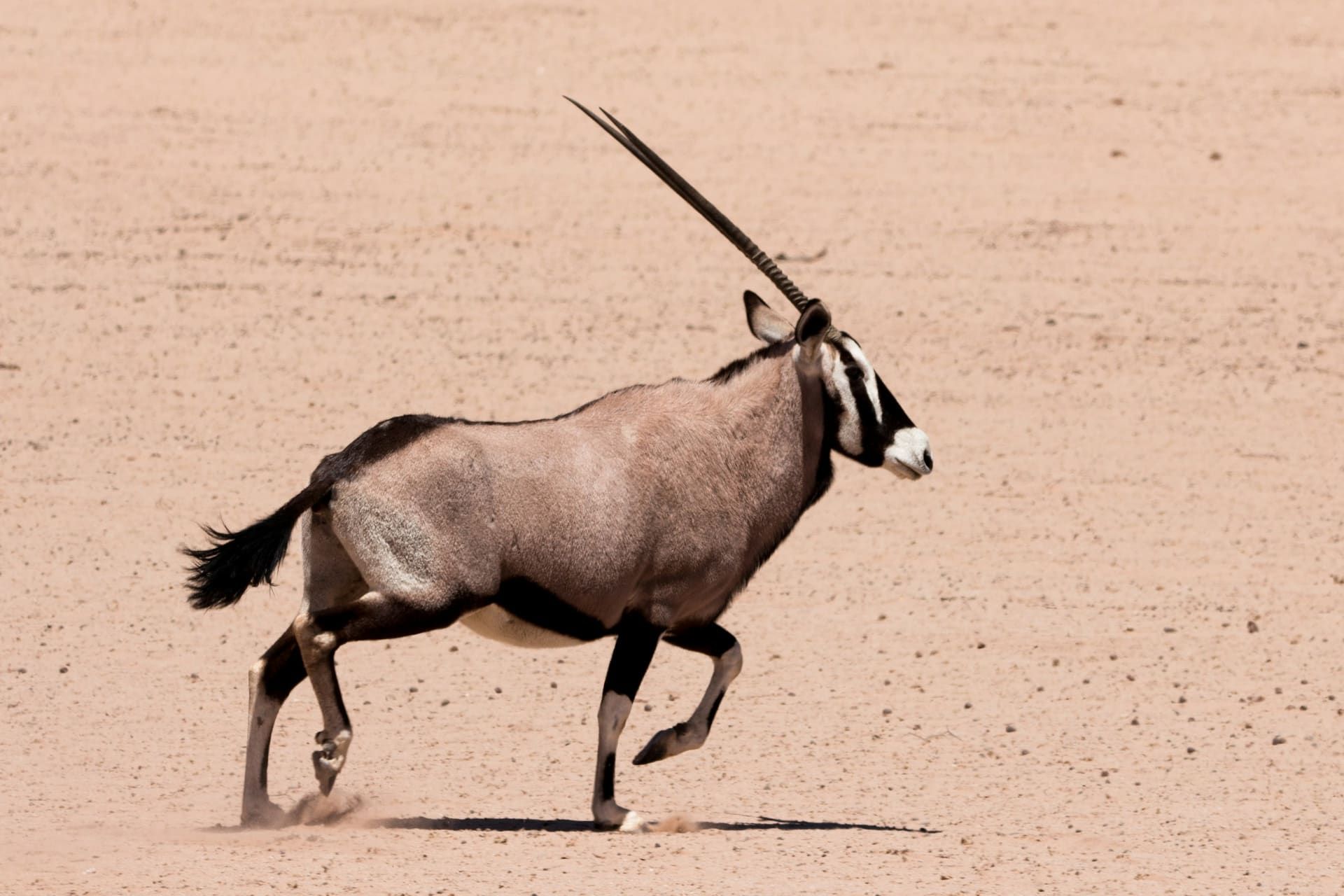
Al Qudra Lakes, the solar-pumped oasis inside Al Marmoom
Where are Al Qudra Lakes and how to reach them
Al Qudra Lakes sit 40 minutes south of Dubai Marina, signposted off Al Qudra Road at roughly 24.815°N, 55.331°E. The lakes form the functional centre of the Al Marmoom Desert Reserve, the open conservation desert that covers 10% of Dubai's land area. Drivers exit Sheikh Mohammed Bin Zayed Road at Junction 24, then follow Al Qudra Road south past the cycling-track marker for 7 kilometres until the Family Lake car park.
A regular sedan reaches every public area of the lakes without trouble. The paved approach, the main car park, the BBQ-pit cluster at Family Lake, and the cycling-track start all sit on asphalt or hardstanding gravel. Off-track driving onto the dune sheet beyond the marked perimeter is prohibited; only the four Mohammed Bin Rashid Al Maktoum Centre-certified eco-tour operators hold permits for that. Visitors arriving by ride-hail face a return-trip problem in the early hours; most overnight stays book a round-trip car through the editorial desk.
The lakes operate as a 24-hour public space, but practical visiting hours track daylight: 5:00 AM in winter, 4:30 AM in summer, through to 30 minutes after sunset. The Trek Bicycle Store kiosk at the entrance opens 5:00 AM in winter and 4:30 AM in summer to align with the cooler riding window. BBQ pits operate daylight hours only.
The solar-pumped lakes story, what the engineering actually does
Al Qudra is a single piece of conservation engineering, not a natural feature. The Mohammed Bin Rashid Al Maktoum Centre for Wildlife excavated the first lake basin in 2014, expanded the network through 2019 to 14 named bodies of water, and connected the fill system to a solar-array pumping station near the western perimeter. Treated water from the Dubai Municipality network plus aquifer water arrives at the basins by gravity feed once the solar pumps lift it to the holding reservoirs at the dune crest.
Native fish stock arrived in season two; native grasses along the banks followed in seasons three and four. Migratory birds picked the lakes as a stopover by season three, and by season five the 158-species checklist reached its current count. Resident species colonised the banks within two years of the fill. The hydrology balance holds because the basins sit on a clay liner that limits seepage into the underlying sand.
The named features at Al Qudra: Love Lakes (twin heart-shaped basins on the western edge, visible only from the air), Family Lake (the broadest day-use picnic basin with BBQ pits and shaded seating), Heart Lake (the 3.2 kilometre family-cycling loop), Expo Lake (the open-water section, 1.4 kilometres across), and 10 smaller basins along the eastern margin used primarily by the bird programme. All sit within the cycling-track perimeter.
The 158 bird species at Al Qudra, what to expect by season
Al Qudra Lakes anchor the bird life of the Al Marmoom Reserve. The 158-species checklist splits into year-round residents (about 60 species) and seasonal migrants (about 98 species), with most migrants arriving on the Africa-Eurasia flyway between November and March. The editorial desk logged 18 ranger-led counts across the 2025 to 2026 season; the table below records the seasonal pattern.
| Species | Status | Peak window | Best lake |
|---|---|---|---|
| Greater flamingo | Winter migrant | Nov to Mar | Expo Lake shallows |
| White stork | Winter migrant | Dec to Feb | Family Lake margin |
| Glossy ibis | Winter migrant | Nov to Apr | Eastern bird-hide basin |
| Common teal | Winter migrant | Dec to Mar | Heart Lake |
| Pintail and shoveler | Winter migrant | Nov to Mar | Expo Lake open water |
| Steppe eagle | Rare migrant | Jan to Feb | Dune-edge perches |
| MacQueen's bustard | Resident lek | Year round | Sand margin north |
| Greater hoopoe-lark | Resident | Year round | Dune fringe |
| Desert wheatear | Resident | Year round | Track-side scrub |
| Brown-necked raven | Resident | Year round | Car-park edge |
| Pharaoh eagle owl | Resident, nocturnal | Year round, dusk | Rocky outcrop east |
Sunrise on a winter morning at the eastern bird-hide basin lands the highest count of the year. The desk's 2026-01-12 ranger-led visit logged 31 species inside 90 minutes, including a confirmed greater flamingo flock of 14 birds and a single white stork on the northern shallows. A 400 mm telephoto lens with a beanbag at the hide window covers almost every photo opportunity. The full Wildlife of the UAE desert guide details every species in the regional context.
The Love Lakes heart-shape, how to actually see it
The Love Lakes are two interlocking heart-shaped basins on the western edge of the Al Qudra system. The outline reads as twin hearts only from the air; ground visitors arriving by car see two ordinary-looking water bodies framed by palm planting, a wooden welcome gate, and a series of stone benches. The signposting from Al Qudra Road is small. Park at the eastern lay-by 200 metres before the gate.
The aerial view is the entire point of the visit. Three legal routes exist, and one common mistake.
- Drone with an MBRC permit. The Mohammed Bin Rashid Al Maktoum Centre for Wildlife issues drone permits for the Al Qudra airspace on a case-by-case basis, processing 5 to 10 working days. The permit fee runs AED 250 to 500 depending on the project category (private hobby, commercial, editorial). Unpermitted drone activity carries fines from AED 1,000 plus drone confiscation.
- Helicopter charter routing past the lakes. Standard scheduled helicopter tours from Atlantis or the Marina Mall heliport do not fly over Love Lakes because the permitted Schweizer 222 corridor runs along the coast, not over the reserve interior. Private helicopter charter (45-minute Bell 407, AED 8,500 to 12,000 per group of up to 4) can include an Al Qudra fly-over on the southbound return leg with operator clearance. The desk arranges this routing through partner operator contacts at Falcon Aviation.
- The MBRC aerial photography commission. Approved photographers with a commercial portfolio submit a brief and receive a guided aerial flight slot, with images licensed back to the Centre. The pathway is slow (8 to 12 weeks) and limited to working photographers.
The common mistake: assuming drones fly without paperwork inside Al Qudra because the area is open public. The reserve eco-rules treat the airspace as protected and enforce the rule with bird-strike risk as the basis. Casual visitors who want the heart-shape shot fastest book the helicopter charter on a Friday or Saturday afternoon return leg from a downtown pickup.
Cycling the 86 km Al Qudra Track: routes, rentals, and ride windows
The Al Qudra Cycling Track is the most-used non-motorised loop in the UAE outside the Hatta mountain trails. The full outer loop measures 86 kilometres on compact gravel and tarmac, circling the entire Al Marmoom perimeter and passing every named lake on the system. Inner loops at 10 kilometres (Love Lake circuit) and 3.2 kilometres (Heart Lake family loop) suit day-trip riders.
Rental rates at the Trek Bicycle Store kiosk near the entrance:
- Standard road bike, AED 50 per hour.
- Mountain bike, AED 70 per hour.
- Fat-bike (gravel and sand sections), AED 90 per hour.
- E-bike, AED 120 per hour.
- Children's bike (ages 6 to 10), AED 40 per hour.
- Tandem bike, AED 100 per hour.
Helmets are issued free; reflective vests are required after sunset on the outer loop. The kiosk stocks water bottles at AED 5, energy gels, basic repair tools, and clip-in pedals on the road-bike fleet on request. The ride window for the outer loop in summer tracks 4:30 AM to 8:00 AM; in winter, 5:00 AM to 10:00 AM and 3:30 PM to sunset are both rideable. The inner family loop runs comfortably 7:00 AM to 6:00 PM in November to March.
The cycling-and-safari combo, the desk's most-booked Al Qudra pairing
The cycling-and-safari combo is the editorial desk's most-booked Al Qudra package. The format pairs a 10 kilometre Love Lake cycling segment at 4:30 PM with a desert dinner camp on the eastern dune side at 6:30 PM, with operator transport between the two. The pairing on this page runs through Velari Tourism L.L.C (the BookMySafari fulfilment partner, DET #1491675).
| Operator | Cycle segment | Camp inclusions | Price (per adult) |
|---|---|---|---|
| Velari Tourism L.L.C | 10 km Love Lake loop, hybrid bike | BBQ buffet, tanoura, henna, 1 soft drink | AED 350 |
| Self-arranged (combo equivalent) | Rental at Trek kiosk separately | Independent dinner camp ticket | AED 280 to 360 |
Bookings on this page route through Velari Tourism L.L.C, DET license #1491675. The combo confirms pickup, bike size, helmet, and a marked Love Lake start point inside reply within 10 minutes over WhatsApp.
BBQ pits and picnic logistics at Family Lake
The Family Lake day-use zone holds 18 BBQ pits across two clusters, with fixed metal grills, stone surrounds, and adjacent picnic tables. Charcoal, lighter fluid, and ready-marinated meat are sold at the small kiosk on the southern car-park edge from 7:00 AM to 6:00 PM; visitors otherwise bring everything from Dubai. Bin facilities handle bagged household waste; the published rule packs out anything the bins cannot accept, including single-use plastics and food packaging.
The peak picnic window runs Friday and Saturday late-afternoon during November to March. Arrive before 3:00 PM to claim a pit on the lake-front row; the inland rows fill last. Bonfire pits are separate from BBQ pits and require a fire permit from the management office (AED 75 for the standard 2-hour slot). Music is permitted at low volume; the reserve treats sound that disturbs wildlife as a breach. Alcohol is prohibited inside the reserve perimeter.
Bird-watching hides, where to position the lens
Al Qudra has two fixed bird-watching hides on the eastern lake margin and a third pop-up hide that opens on the western Expo Lake shore from November to March. The eastern hides take 4 photographers at a time and operate on a booking schedule held at the reserve management office; the pop-up hide is first-come walk-up access. Each hide carries a 4-hour session limit at AED 250 per seat in the eastern enclosures and free access at the western pop-up.
The desk's positioning notes from 18 ranger-led sessions:
- Hide A (Eastern North), best for migratory waterfowl in winter. Face west toward the open water at 6:00 AM; the rising sun fills the shallows.
- Hide B (Eastern South), best for waders and ibises. Face north toward the reed margin at 7:00 AM; the side-light defines feather detail.
- Expo Lake pop-up hide, best for flamingo flocks and stork sightings during the November to March peak. Face south-east at sunset for back-lit silhouettes.
A 400 mm telephoto handles every species except the MacQueen's bustard at sand-margin distance, where 600 mm or a 2x teleconverter performs better. Beanbags outperform tripods inside the hide windows; both require the photography permit if the work is commercial.
Al Qudra on camera
The lake network in five frames
Solar-pumped basin, cycling track, flamingo flock, aerial heart-shape, family BBQ pit. Every frame inside the reserve perimeter.


Photography at Al Qudra: permit rules, gear, and golden hour
Casual phone and camera photography is permitted across the Al Qudra Lakes without paperwork, including tripods on the cycling-track shoulder and beanbags inside the bird-hide windows. Three categories require a permit issued at the reserve management office: commercial photography (paid wedding, fashion, any image licensed for resale), drone aerial work, and large-set tripod placements inside the bird hides. Processing runs 5 to 10 working days, with fees ranging AED 250 to 500 by category.
Gear notes from the desk's field tests at Al Qudra: lake-edge sand is heavier and damper than the open Lahbab dunes, so zoom rings hold up longer; bring a microfibre cloth for spray off the cycling track. Warm white-balance settings between 5,500 and 6,500 K hold the morning light on the tan dunes better than the colder presets. A polariser cuts the surface glare on the lake water from 9:00 AM onward and saturates the green of the bank grasses. The cycling track shoulders the lake on the southern margin; sunset silhouettes work best from this side.
Golden hour at Al Qudra in December: 5:50 AM to 6:25 AM at sunrise, 4:55 PM to 5:30 PM at sunset. Sunrise favours the wildlife frame; sunset favours the cycling and lake reflection frames.
Drone rules and the MBRC permit pathway
Drone flying inside the Al Qudra Lakes airspace and over the broader Al Marmoom Reserve carries the strictest enforcement of any Dubai outdoor zone. The Mohammed Bin Rashid Al Maktoum Centre for Wildlife treats the airspace as protected and the 158-species bird population as a strike-risk constraint. Casual flights without a permit attract fines from AED 1,000 plus drone confiscation by ranger patrols.
The MBRC permit pathway: submit a project brief and pilot credentials to the management office at the Al Qudra entrance; processing runs 5 to 10 working days; the issued permit covers a defined window, airframe, and altitude ceiling. Hobby permits run AED 250 per flight session; commercial permits AED 500. The permit does not authorise night flying or flight inside 50 metres of any active bird hide.
Visitors who want the Love Lakes aerial without the wait route through the helicopter charter option detailed above. The desk's combo guide for charter routing and Love Lakes fly-over slots through Falcon Aviation operates on 72-hour notice.
Family logistics at Al Qudra, from bathrooms to the pet rule
Al Qudra Lakes is the most family-accessible water feature inside the Al Marmoom Reserve. The activity mix favours observation and easy cycling over adrenaline; the 3.2 kilometre Heart Lake loop suits children aged 6 and up on a hybrid bike. BBQ pits, picnic tables, and the open Family Lake car park sit within 200 metres of clean toilets. The kiosk sells bottled water at AED 5, sunscreen at AED 35, and basic snacks. The desert-safari-for-families guide covers the broader family planning context.
Family-policy points to know before the drive:
- Pets. Dogs and other pets are prohibited inside the Al Qudra Lakes day-use area, the cycling track, and the bird-hide perimeter. The wildlife corridor and the 158-bird population are the basis. Service animals are exempt with paperwork.
- Bathrooms. Cleaned public toilets sit at the Family Lake car park, the cycling-track kiosk, and the Expo Lake parking area. The Love Lakes lay-by has no facilities.
- Strollers. All-terrain strollers handle the cycling-track shoulders and the BBQ-pit cluster well. Standard urban strollers struggle in sand-edge sections.
- Water. Bring 2 litres per person in winter, 3 litres in summer. The kiosk runs out on busy Saturdays after 3:00 PM.
- Shade. Limited at the kiosk and the picnic tables. Bring a small beach umbrella for the lake shore.
Best time of day and season to visit Al Qudra Lakes
The first 90 minutes after sunrise is the peak window for bird activity and the only comfortable summer cycling slot. Winter sunset is the second-best window, with cooler air, softer light on the lake reflections, and a return of waterfowl to the open shallows. Mid-day from 10:00 AM to 3:00 PM is the weakest window across every category except picnics, which run all day in winter.
Seasonal anchors from a Marina pickup:
- December, pickup 5:00 AM, sunrise 6:55 AM, BBQ window 11:00 AM to 4:30 PM, sunset 5:25 PM.
- March, pickup 5:00 AM, sunrise 6:25 AM, bird counts peak in the first two weeks, cycling stays viable until 10:30 AM.
- June, pickup 4:00 AM, sunrise 5:30 AM, lakes only viable until 8:00 AM, BBQ closes mid-afternoon for heat.
- September, pickup 4:30 AM, sunrise 5:55 AM, lakes viable until 9:00 AM, sunset returns to a comfortable visiting window.

A typical Al Qudra cycling and dinner combo
An Al Qudra cycling and dinner evening, 4:00 PM pickup to 10:15 PM return
A 4:00 PM Marina pickup reaches the Trek kiosk at Al Qudra by 4:45 PM. Bike sizing and helmet at 4:50 PM, then a 10 km Love Lake loop on the inner gravel track from 5:00 PM. Flamingos and stork sightings cluster on the Expo Lake margin from 5:30 PM. The cycle ends back at the kiosk at 5:55 PM; transfer to the desert dinner camp by 6:15 PM. BBQ buffet, tanoura performance, and henna run 7:00 PM to 9:30 PM. Return to Marina by 10:15 PM.
- Hotel pickup Marina 4:00 PM / Downtown 4:05 PM
- Trek kiosk 4:45 PM, hybrid bike + helmet
- Love Lake ride 5:00 PM, 10 km on the inner loop
- Sunset bird count 5:30 PM at Expo Lake shallows
- desert dinner 7:00 PM, BBQ + tanoura + henna
WhatsApp the desk for a combo booking
Pick the cycling-and-safari combo (AED 350), a sunrise bird-watching slot at the eastern hide, or a helicopter charter routed past the Love Lakes, and message us. We confirm operator capacity, bike size, hide booking, and your hotel pickup within reply within 10 minutes. Combo bookings on this page route through Velari Tourism L.L.C, DET license #1491675.
Message us on WhatsAppVoices from Al Qudra
What guests say after an Al Qudra visit
Drove out at 4:30 AM, parked at the Family Lake car park, walked the cycling track until the flamingos lifted off the shallows. 200 mm lens just barely reached. No fee at the gate.
Booked the cycling-and-safari combo through the desk. 10 km along Love Lake at 5:30 PM, then dinner at the desert camp on the dune side. AED 395. Easier than I expected.
I came for the heart-shape. The drone got denied without an MBRC permit. The desk arranged a helicopter charter that routed past the lakes on the return leg. Worth it for the aerial.
Family of five with three kids under 10. BBQ pit at Family Lake, swimsuits stayed in the car (no swimming, we missed that rule), bikes hired at the kiosk. Saturday morning, well-organised.
Sunrise bird walk at the eastern hide. Counted 22 species in 90 minutes including the MacQueen bustard. Brought our own tripod, no permit needed because we were not selling the shots.

Book the Al Qudra combo
Cycling, birds, desert dinner, message us
Pick the cycle slot, share your hotel, choose the operator package. Bike size, helmet, hide booking, and partner-operator license follow inside one WhatsApp chat.
Frequently asked questions about Al Qudra Lakes
-
Are Al Qudra Lakes natural?
No. The Al Qudra Lakes are an artificial freshwater network excavated from the desert floor and filled with treated water pumped through solar arrays from underground aquifers. The first lake basin opened in 2014, then expanded to 14 named bodies of water through 2019. The system stocks native fish and grasses on the banks, which seeded a migratory-bird stopover within two seasons. The lakes sit inside the Al Marmoom Desert Reserve, 40 minutes south of central Dubai. -
Can you swim in Al Qudra Lakes?
No. Swimming and wading in any Al Qudra lake basin is prohibited under the Mohammed Bin Rashid Al Maktoum Centre for Wildlife conservation rules. The bank line is a documented wildlife corridor used by 158 bird species, sand foxes, and visiting oryx; human water contact disrupts the feeding pattern. Fishing requires a free permit issued at the reserve management office. Picnicking, BBQ at marked pits, cycling, walking, and bird-watching are the permitted lake-side activities. -
Where are the heart-shaped Love Lakes?
The Love Lakes are two interlocking heart-shaped basins on the western edge of the Al Qudra system, signposted off Al Qudra Road roughly 2 km past the main Family Lake car park. The heart outline is only visible from the air. Drone aerial photography over the basins requires a Mohammed Bin Rashid Al Maktoum Centre permit (5 to 10 working days processing); ground-level visitors see two ordinary-looking water bodies with seating, palm planting, and a wooden gate that frames the entrance. Helicopter charter tours routed by the editorial desk pass the Love Lakes on the southbound leg for the aerial shot. -
How long is the Al Qudra cycling track?
The outer Al Qudra cycling track measures 86 kilometres on compact gravel and paved tarmac, looping the entire Al Marmoom Reserve perimeter past every named lake. The inner Love Lakes circuit measures 10 kilometres; the family loop at Heart Lake measures 3.2 kilometres. Standard road bikes rent at AED 50 per hour at the Trek Bicycle Store kiosk near the entrance; mountain bikes AED 70; fat-bikes AED 90; e-bikes AED 120. Helmets are issued free. -
Can I bring a drone to Al Qudra?
No, not without a permit. Drone flying anywhere inside the Al Marmoom Reserve, including all Al Qudra lake basins and the Love Lakes heart-shape zone, requires a permit issued by the Mohammed Bin Rashid Al Maktoum Centre for Wildlife. Processing runs 5 to 10 working days. Unpermitted drone activity carries fines from AED 1,000 upward, plus possible drone confiscation. The bird-strike risk to the 158 documented species drives the rule. Helicopter charter is the practical legal alternative for an aerial shot of Love Lakes. -
Are Al Qudra Lakes free to visit?
Yes. Entry to the Al Qudra Lakes day-use area is free, parking is free, and the cycling track has no admission fee. The reserve runs on Mohammed Bin Rashid Al Maktoum Centre funding rather than gate revenue. Costs apply only to bike rental (AED 50 to 120 per hour), photography permits for commercial work, BBQ supplies brought in, and any guided programme. Public access runs 24 hours on the perimeter roads; the Trek rental kiosk and the BBQ pits operate daylight hours only.