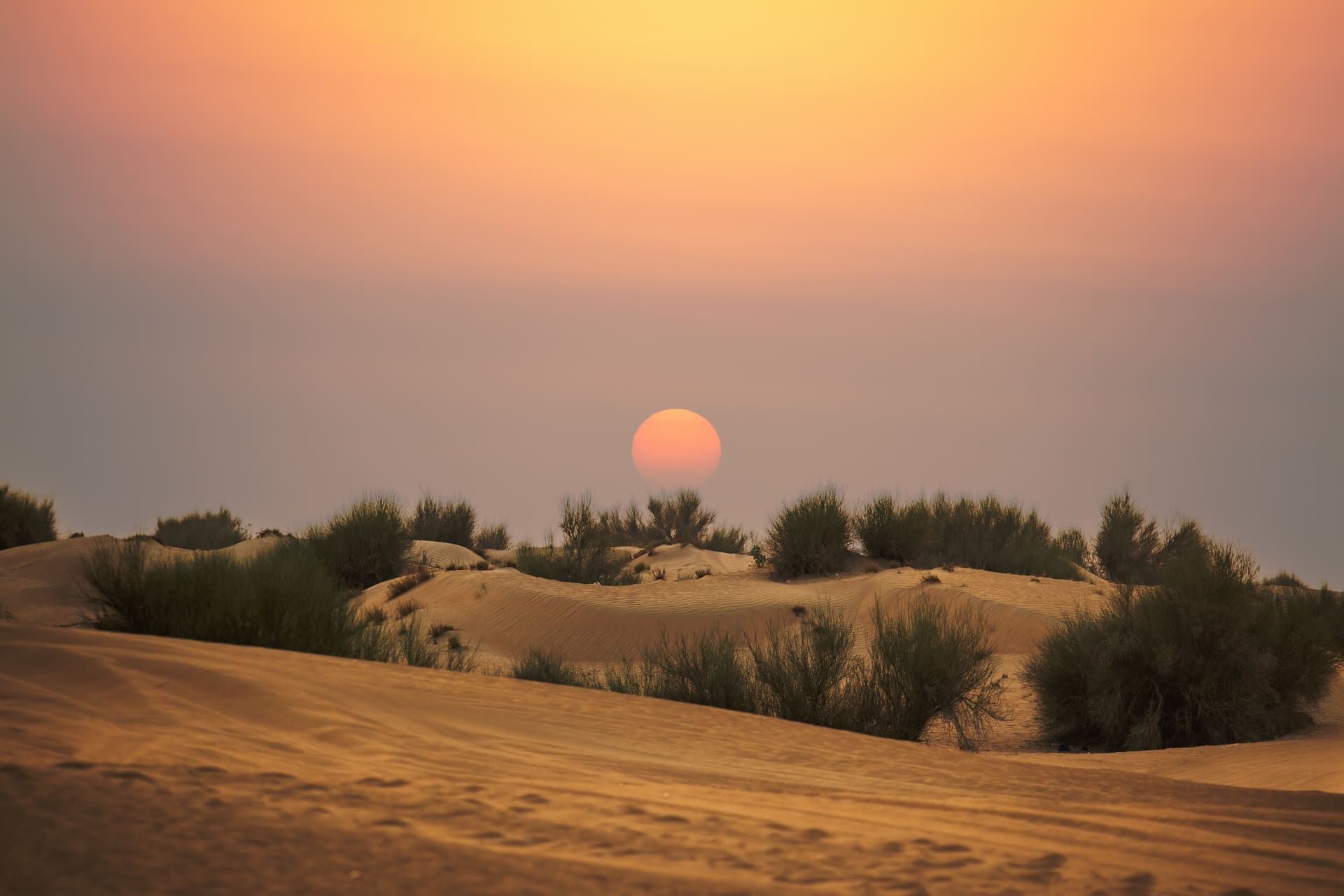
Dubai desert safari during Ramadan, what changes
Should you book a desert safari during Ramadan?
Book during Ramadan if cultural immersion ranks higher than fire shows and free-flow bar service. The iftar safari format produces the single most authentic camp dinner of the year: traditional Emirati Ramadan menu, the Maghrib prayer break, slower Qur'an recitation in place of the tanoura set, and a family-mode atmosphere rather than the peak-tourist evening register. Pricing also softens, with AED 199-260 shared deals standard for the month. Ramadan-month desert safari Dubai tickets hold that band through the month, which rewards booking early rather than waiting on a last-minute deal.
Skip Ramadan if your priorities include a licensed bar, a full tanoura-plus-belly-dance performance set, and a hot daytime BBQ lunch break in the city earlier the same day. Skip Eid Al Fitr week if budget is the deciding factor; GCC visitor demand pushes prices 30 to 50% above the Ramadan rate for three to four days.
Six timing and format shifts that separate a Ramadan safari from a standard evening
Six shifts separate a Ramadan safari from the standard evening tour. Each one traces back to the dawn-to-sunset fast and the cultural register that wraps it.
- Pickup time moves later. Standard evening pickup is 3 PM; Ramadan pickup is 4 PM, timed so dune bashing finishes by 5:45 PM and the camp serves dates at the Maghrib call (~6:35 PM in April-May 2026).
- The menu opens with iftar staples. Three dates and laban or water hit the table first; Vimto, samboosa, harees, and ouzi follow. The order is fixed by custom, not by the chef's preference.
- Alcohol is removed across the board, even at camps that hold licenses outside Ramadan. The replacement beverage line covers Vimto, laban, juices, gahwa, and cardamom tea.
- Live entertainment compresses. Belly dance is removed; tanoura is removed or replaced with an oud or qanun set; fire shows pause. Henna, falcon, camel, and sandboarding continue.
- The Maghrib prayer is observed. Muslim guests and staff step into the prayer area for four to six minutes after the azan. Non-Muslim guests wait quietly or take dates and water at the table.
- Modest dress register tightens. Sleeveless tops, very short skirts, and beachwear move out of register both at the camp and in the city earlier the same day.
The iftar safari format (4 PM to 10 PM)
The iftar safari runs six hours end-to-end. The timing slides daily by one to two minutes across Ramadan as the Maghrib window shifts.
- 16:00, pickup. Land Cruiser collects from your hotel or Dubai address. Standard pickup zones (Downtown, Marina, JBR, Deira, Bur Dubai) carry no surcharge; Palm Jumeirah and Jumeirah Village Circle add AED 30 to 50.
- 16:45, Lahbab dune-belt arrival. Tyre pressure dropped to about 18 psi for dune work. Dune bashing covers 25 minutes across the Lahbab red-sand ridges.
- 17:30, desert camp arrival. Sandboarding, camel ride, henna, falcon photography, and gahwa station open. The bonfire is lit early.
- 18:35 (varies), Maghrib azan, iftar opens. Dates and Vimto on every table; soup and samboosa within minutes; harees and ouzi follow at the buffet.
- 19:30, buffet runs. Grills, biryani, mezze, vegetable platters, Arabic sweets. Service is slower than the peak-tourist months, which suits the register.
- 20:15, acoustic music and storytelling. Oud or qanun set replaces tanoura; Qur'an recitation in the opening minutes for camps that schedule it.
- 21:30, return drive. Drop-off at your hotel by 22:00 to 22:30.
The iftar menu, six fixtures that appear at every camp
The Ramadan-only menu at a Dubai desert safari camp differs from the standard evening BBQ in opening, structure, and dish weight. Six fixtures appear every iftar regardless of price level.
- Dates and laban, the prophetic-tradition opener. Three Khalas dates and a small glass of laban or water; everyone at the table takes the same three-bite opener regardless of fasting status.
- Vimto, the Gulf-iftar fixture. A British cordial that became a Ramadan staple across Saudi Arabia, UAE, Kuwait, and Qatar from the 1920s onward. Served diluted, very cold, often alongside fresh apricot or tamr-hindi.
- Samboosa, small triangular pastries filled with spiced lamb, chicken, or potato. Fried just before service. Three to four per guest is standard.
- Harees, slow-cooked wheat and lamb porridge. Earthy, savoury, traditionally served with a drizzle of ghee. A camp signature for Ramadan.
- Ouzi, whole roasted lamb on saffron rice, garnished with toasted almonds, raisins, and pine nuts. Carved tableside at premium camps; pre-portioned at standard camps.
- Arabic sweets, luqaimat (fried dough drizzled with date syrup), kunafa, basbousa, and umm ali. Served with cardamom gahwa and the karak tea pour.
Salads, mezze, grills, and biryani fill the buffet middle. The dish weight skews toward the rich and the comforting, the camp menu is engineered to refuel a fasting day, not to perform a culinary set piece.
The traditional dates-and-water breaking-fast moment
The opening minute of iftar is the single most-respected moment of a Ramadan camp dinner. The Maghrib azan plays through the camp speakers; conversation drops; every table holds three Khalas dates and a small cup of water or laban.
The custom traces to the prophetic tradition of breaking fast with dates and water before the Maghrib prayer, then returning for the full meal after praying. The dates spike blood sugar fast after the long fast; the water rehydrates the throat. Three dates is the traditional count, though one or five is acceptable depending on household custom.
Non-Muslim guests join the dates-and-water opener at every camp. The gesture reads as courtesy rather than religious observance; the dates are good, and the moment is the camp's emotional anchor for the evening.
Maghrib prayer at the camp, guest etiquette
Standard and premium camps run a designated prayer area during Ramadan: a partitioned carpeted space with a qibla arrow pointing toward Mecca, prayer mats, and shoes left outside. The Maghrib prayer runs three rakat and lasts four to six minutes.
Muslim guests and camp staff step into the prayer area immediately after the dates-and- water opener. Non-Muslim guests have three reasonable options:
- Stay at the table with the dates and the cardamom tea. The most common choice and the easiest one.
- Observe from a respectful distance, outside the carpet, without photography. The prayer is not a performance; phones stay in pockets.
- Step away to the dune ridge for the four-minute window. The light at 18:40 in March 2026 is the photo of the trip.
Cross-cultural cues here: do not walk in front of someone praying; do not eat in view of the prayer area during the four minutes; lower the voice if conversation continues at the table. The buffet line stays closed until the prayer ends.
Suhoor safari, the rare premium pre-dawn option
A small number of premium operators package a suhoor safari during Ramadan: a pre-dawn desert visit timed against the Fajr prayer rather than Maghrib. Pickup runs 02:30 to 03:00; the camp serves the suhoor meal under lantern light; return is by sunrise around 06:00.
The suhoor menu is lighter than iftar, flatbreads, foul medames, balaleet (vermicelli with cardamom and rose), labneh, fresh fruit, Arabic coffee. The atmosphere is silent and slow; this is the most contemplative format the camp runs all year. Pricing starts AED 350 per person and runs to AED 600 for private vehicle bookings.
Availability is narrow. Two or three operators publish a suhoor safari calendar; bookings require three to seven days lead time. The desk lists active suhoor camps on request. Most years the format runs only on Friday-Saturday-Sunday nights inside Ramadan.
Five Ramadan moments at the camp
Inside a Ramadan camp, from the iftar lanterns to the pre-dawn suhoor
Ramadan reshapes the standard evening into a quieter, more cultural register. Lanterns at the camp tables, ouzi served alongside harees and samboosa, the rare pre-dawn suhoor with foul medames and balaleet, an oud musician replacing the tanoura set, and the Maghrib sunset on a Lahbab ridge timed to the daily azan.


Iftar safari versus a generic Dubai evening
6 promises the editorial desk holds the partner operator to across Ramadan
Same Lahbab dune, same Toyota Land Cruiser, same six-activity safari. What changes during Ramadan is the timing, the menu, the alcohol policy, the entertainment, the dress brief, and the daytime fasting etiquette the desk surfaces before the pickup.
The Maghrib azan, the dates-and-water minute
The opening minute of iftar, when conversation stops across the camp
The single most-respected moment of a Ramadan camp dinner is the Maghrib azan call. Conversation drops across the camp floor. Three Khalas dates and a small cup of water or laban sit on every table. Fasting and non-fasting guests take the same three-bite opener. The buffet stays closed until the Maghrib prayer ends four to six minutes later. The custom traces to the prophetic tradition of breaking fast with dates and water before prayer, then returning for the full meal. The dates spike blood sugar after the day-long fast; the laban rehydrates the throat. Non-Muslim guests join the dates-and-water opener at every camp; the gesture reads as courtesy rather than religious observance.
- Three dates and laban the prophetic-tradition opener at every table
- Maghrib azan at 6:35 PM camp speakers carry the call, conversation drops
- Buffet opens after prayer 4 to 6 minute pause while staff and guests step away
- Non-Muslim guests welcome dates-and-water opener taken by every guest at the table
Modest dress, what tightens during Ramadan
The formal dress code at a Dubai desert safari camp does not change during Ramadan. The cultural register tightens, and the gap between "tolerated" and "right" widens.
- Knees and shoulders covered for both men and women. Long loose trousers, a maxi dress, or a midi skirt with a sleeved top. Linen and cotton breathe best in 28 to 34 °C Ramadan-month afternoons.
- Light scarf for the evening drop. Doubles as a shoulder cover at dinner, a wind cover during dune bashing, and a head wrap for the camel ride.
- Closed-toe shoes. Sand temperatures sit at 35 to 42 °C in the late afternoon during March-April 2026; closed shoes protect against burns and grit. The henna applicator works on hands, so footwear does not constrain the cultural set.
- Avoid sleeveless tops, short skirts, and beachwear. Tolerated at standard camps in other months; out of register during Ramadan and at heritage camps year-round.
The same register applies to the city earlier the same day. Mall staff, hotel concierges, and metro officers signal politely when dress falls outside the Ramadan floor. See What to wear on a Dubai desert safari for the year-round outfit guide and seasonal adjustments.
Five gestures that mark a courteous visitor during Ramadan fasting hours
The federal decriminalisation of public daytime eating in 2022 removed the legal risk; the cultural ask remains in force. Five gestures separate a courteous visitor from a tourist who has not done the homework.
- Do not eat or drink in public during fasting hours (Fajr to Maghrib, roughly 05:30 to 18:35 in Ramadan 2026). The metro, the taxi, the street, the open- air mall, and the beach all count. Hotel restaurants, food courts with screens, and in-room dining are fine.
- Sip water discreetly if the heat demands it. Many cafes hand water in opaque cups during daytime; outdoor visible bottle-drinking still reads as out of register. The dune-bashing drive includes water bottles in the vehicle.
- Refuse food before iftar with a hand on the heart and "thank you, I am fasting" or "thank you, after Maghrib". Local hosts often offer food to test etiquette; the polite refusal lands better than the acceptance.
- Skip smoking and vaping in public during fasting hours. Designated smoking areas at hotels and airports remain open; visible street smoking does not.
- Lower the volume. Loud music, public laughter, and street-side video calls move out of register. Mall background music drops to a lower volume across the month.
These gestures cost nothing and signal that the visitor has noticed the calendar. The shorthand line for the whole month is: behave as if you are a guest at a friend's house. The Bedouin culture in the UAE guide covers the year-round hospitality register.
Alcohol policy, emirate-wide pause
Alcohol is unavailable across Dubai during Ramadan daytime hours and substantially curtailed for the full month. Three concrete shifts apply.
- Hotel bars do not serve before Maghrib. Licensed venues resume service for non-Muslim guests after sunset; the daytime pause covers every licensed venue in the emirate.
- Desert safari camps run dry. Even camps that hold liquor licenses outside Ramadan stop alcohol service for the month. The replacement line covers Vimto, laban, juices, gahwa, and cardamom tea, a complete iftar beverage spread.
- MMI and African + Eastern off-licenses run reduced hours. Home- consumption alcohol purchase remains available for non-Muslim residents with a license, but daytime visibility is muted.
For travellers who plan a wine pairing with dinner, the cleanest book is outside Ramadan. The week immediately after Eid Al Fitr returns the bar service to normal operating hours.
Live entertainment during Ramadan, from the removed tanoura to the oud set
The cultural performance set is the most visibly different element of a Ramadan camp. Four shifts apply across operator packages.
- Belly dance is removed across the board for the full month. Standard camps drop the act; premium camps replace it with an acoustic music set or a storytelling round.
- Tanoura is removed or replaced. The swirling Sufi-origin dance reads as too festive for the Ramadan register. An oud or qanun player covers the slot; occasionally a calligraphy or henna-master demonstration replaces it.
- Fire shows pause. Pyrotechnics and fire-staff performances drop for the month. The bonfire continues, with seated conversation rather than performance ringing it.
- Qur'an recitation opens the evening at heritage and premium camps. Three to five minutes of recitation immediately after the iftar opener; the buffet queue starts after the recitation concludes.
Henna application, falcon photography, camel rides, sandboarding, and the gahwa station continue unchanged. The cultural core stays intact; the performance set shifts toward the contemplative end.
The cultural-immersion case, why Ramadan wins on authenticity
Ramadan is the single best month of the year to experience an authentic Dubai desert camp. The reasons are structural rather than marketing-led.
- The menu is the traditional menu. Outside Ramadan the camp serves a mid-range hotel BBQ adapted for the desert setting. During Ramadan the kitchen runs harees, ouzi, samboosa, and the date-and-Vimto opener that has anchored Gulf hospitality for a century.
- The atmosphere is family-mode, not peak-tourist. Tour groups thin out across February-March 2026 (the forecast Ramadan window); GCC visitors fill the gap. The buffet line, the bonfire, and the gahwa station hold a quieter, more conversational register.
- The Maghrib azan plays through the speakers. The call to prayer at sunset is the camp's emotional centre during Ramadan. Conversation drops; tables share dates; the desert holds quiet for four minutes.
- The cultural anchors carry more weight. Without the belly dance and fire-show distractions, the gahwa, the falcon, the sadu-woven cushions, the ghaf tree sightlines, and the oud set read more clearly. The Ramadan camp is closer to a working majlis than a stage show.
- Hospitality goes longer. The Iftar safari runs to 22:30; outside Ramadan the standard evening finishes at 21:30. The extra hour at the camp is the single most valuable upgrade the format offers.
The cultural-immersion case sells itself once it is named. The Best time desert safari Dubai guide covers the full 12-month calendar; Ramadan ranks third on weather and first on authenticity.
The rare suhoor safari, the pre-dawn cousin
The suhoor safari, a 2:30 AM pickup and sunrise on the ridge
A small number of premium operators run a suhoor safari during Ramadan: a pre-dawn desert visit timed against the Fajr prayer rather than Maghrib. Pickup runs 2:30 to 3:00 AM, the camp serves the suhoor meal under lantern light, return is by sunrise around 6:00 AM. The menu is lighter than iftar. Flatbreads, foul medames, balaleet, labneh, fresh fruit, Arabic coffee. The atmosphere is silent and slow. This is the most contemplative format the camp runs all year. Two or three operators publish a suhoor calendar; bookings require three to seven days lead time. Most years the format runs only on Friday, Saturday, and Sunday nights inside Ramadan.
- 2:30 AM pickup pre-dawn route to the camp under lantern light
- Suhoor menu foul medames, balaleet, labneh, fresh fruit, gahwa
- Sunrise on the ridge first-light dune walk before the hotel transfer
- AED 350 to 600 per head private vehicle add-on layers on the headline rate
Real Ramadan bookings, every package
What guests said after the iftar safari and the rare suhoor run
Six bookings across the AED 199 shared, AED 350 private vehicle, AED 450 DDCR heritage, and the rare suhoor safari. Names abbreviated, location preserved. Mix of Muslim and non-Muslim travellers.
Booked the AED 199 shared iftar safari for our first Ramadan in Dubai. The 4:00 PM pickup from Bur Dubai dropped us at the Lahbab camp by 5:15 PM. The dates and a small laban landed at the table at 6:34 PM when the Maghrib azan played through the camp speakers. The whole floor went quiet for four minutes. Easily the most affecting opener of any camp dinner I have done across three Gulf trips.
AED 450 DDCR heritage iftar for our family of five. Modest dress note printed on the voucher meant my teenage daughter had the right outfit packed before we left the hotel. Qur’an recitation opened the evening, the buffet stayed closed until the prayer ended at 6:42 PM, and the harees and ouzi spread was the deepest cultural register I have seen at a Dubai camp. No fire show, no belly dance, no missing them.
AED 350 private vehicle iftar from JBR with two business colleagues. The driver brought us out at 4:00 PM with our own Land Cruiser, dune bashing finished by 5:30, we were at the camp watching the bonfire by 5:50 PM. Three Khalas dates and a chilled Vimto when the azan played at 6:36 PM. The oud player replaced the tanoura, which was the right register for the meeting and a much better story for the post-trip dinner.
Rare suhoor safari booking, AED 450 with the private vehicle add-on. 2:45 AM pickup from Downtown, lantern-lit camp by 3:30 AM, the suhoor menu landed on the table by 3:50 AM. Foul medames, balaleet, labneh, fresh fruit, two pots of Arabic coffee. Watched the sunrise from the dune ridge at 5:55 AM, hotel by 7:00 AM. The most contemplative night I have spent in Dubai across four trips.
Family iftar safari during the second week of Ramadan, AED 260 premium shared. The desk briefed us on the daytime fasting etiquette before we left the hotel; my partner kept the water bottle in his bag until we were inside the cabin. The traditional menu at the camp covered everything my Pakistani in-laws wanted, including the harees that my mother-in-law had not tasted outside Lahore. She still talks about it.
Non-Muslim travellers on our first Ramadan trip to Dubai, AED 199 shared. The desk surfaced the dress register, the no-eating-in-public daytime rule, and the "thank you, after Maghrib" line for refusing food before iftar. Wore a maxi dress and a scarf for the camp. The dates-and-Vimto opener was emotional in a way I did not expect. Will choose Ramadan again over the December peak. Authentic, not staged.
Ramadan pricing, four bands 15 to 25 percent below the December peak
Inbound tourism softens during Ramadan, which pushes operator pricing 15 to 25% below the December-January peak. Four price bands cover the month.
- AED 199, shared iftar safari. The entry-level band. Shared Land Cruiser (six guests), Lahbab dunes, full iftar buffet, dates-and-Vimto opener, henna, camel ride, gahwa. The single best value in the Ramadan calendar.
- AED 260, premium shared iftar. Newer vehicle, slightly elevated menu (additional grills, fresh juice variety), priority buffet access, raised seating at the camp.
- AED 350, private vehicle iftar. Your own Land Cruiser, custom pickup window, private table at the camp, ouzi-carving tableside, optional Al Marmoom routing instead of Lahbab.
- AED 450, DDCR or heritage iftar. Inside the Dubai Desert Conservation Reserve or at a heritage-level camp. Limited cap (60 to 80 guests), slower service, Qur'an recitation, Ayyala troupe on weekends.
Pickup-zone surcharges (Palm Jumeirah, JVC, JLT, Mirdif) add AED 30 to 50 per booking. See Evening Desert Safari Dubai for the year-round price floor and inclusion list.
When is Ramadan in 2026?
Ramadan 2026 runs an estimated 18 February to 19 March 2026. The exact start and end dates depend on the official UAE moonsighting committee announcement; forecast and actual diverge by up to one day either way.
- First fast, 18 February 2026 (estimated). Maghrib sunset around 18:18 in Dubai.
- Mid-Ramadan, Laylat al-Qadr search falls in the last 10 nights, most commonly 21st, 23rd, 25th, 27th, or 29th of the month. Mosque attendance peaks; some camps run Qiyam-themed evening programs.
- Last fast, 19 March 2026 (estimated). Maghrib around 18:32.
- Eid Al Fitr, 20 March 2026 (estimated). Three-day public holiday; regional GCC visitor demand spikes; desert safari prices rise 30 to 50% for three to four days.
The Maghrib window during Ramadan 2026 sits between 18:15 and 18:35; iftar safari pickup runs 4 PM across the month so dune bashing lands in the 4:45 to 5:30 slot and the camp serves dates at the daily azan.
Eid Al Fitr, the day-after spike
The three-day Eid Al Fitr holiday immediately after Ramadan reverses the Ramadan discount sharply. Regional GCC visitors travel into Dubai for the long weekend; airline inbound capacity fills 10 to 14 days in advance; desert safari prices climb 30 to 50% above the standard winter rate for three to four days.
The Eid camp dinner is festive rather than contemplative. Belly dance, tanoura, and fire shows return; alcohol service resumes at licensed camps; the buffet runs a celebration menu (mansaf, machboos, full ouzi service, festival sweets). The atmosphere is closer to the December peak than to Ramadan.
Three booking notes for Eid:
- Book three weeks ahead for shared Eid safaris. Premium private slots fill four to six weeks out.
- Expect AED 299-399 entry pricing for shared Eid evening packages.
- Confirm pickup-zone surcharges. Several operators raise the surcharge band by 10 to 20 AED across the Eid weekend.
WhatsApp the desk for an iftar safari booking
Message the desk for an iftar safari brief tailored to your Ramadan dates and dress register. Reply within 10 minutes. Bookings on this page are fulfilled by Velari Tourism L.L.C, DET license #1491675.
Message us on WhatsAppFrequently asked questions about Ramadan desert safaris
-
Can non-Muslims do a Dubai desert safari during Ramadan?
Non-Muslim travellers book Dubai desert safaris during Ramadan without restriction. Camps run an iftar format adapted for the fasting calendar: pickup around 4 PM, arrival at the desert camp by 5 PM, dune bashing slot, and the buffet opens at the Maghrib call to prayer (~6:35 PM in February-March 2026). Standard non-fasting guests join the same buffet at sunset. The etiquette ask is modest dress, no eating during the daytime drive, and a polite hand-on-heart "no thank you" if local guests offer food before sunset. Tour operators print these rules on the booking voucher; honouring them costs nothing and reads as respect. -
What's an iftar safari?
An iftar safari is the Ramadan-month adaptation of the standard evening safari, scheduled so the meal at the desert camp lands exactly at sunset to break the daily fast. Pickup runs 4 PM instead of 3 PM; dune bashing covers 25 minutes; arrival at the camp lines up with the Maghrib call. The traditional opening is three dates and a cup of laban, water, or Vimto, followed by Ramadan soups (lentil, chicken harira), samboosa, harees, ouzi (whole roasted lamb on saffron rice), grilled meats, and Arabic sweets. The format runs to about 10 PM with cultural performances muted or omitted. Pricing starts AED 199 for shared transfers and runs to AED 450 for premium DDCR iftar packages. -
Is alcohol served at the camp during Ramadan?
Alcohol is unavailable across the emirate during Ramadan daytime hours and substantially restricted at desert safari camps for the full month. Hotel licensed bars resume service after sunset for non-Muslim guests, but desert safari camps run dry through Ramadan as a respect default, even camps that hold liquor licenses for the rest of the year. The standard Ramadan beverage line at the camp covers water, Vimto, laban, fresh juices, Arabic coffee (gahwa), and cardamom tea. Guests who want a wine pairing with dinner book outside Ramadan; the Eid week immediately after sees alcohol service resume at licensed venues. -
Will there be live entertainment during Ramadan?
Live entertainment is muted or reshaped at Dubai desert safari camps during Ramadan. Belly dance is removed across the board; tanoura is removed or replaced with an oud or qanun player; fire shows are typically dropped. The replacement program leans toward acoustic Arabic music, Qur'an recitation in the opening minutes after iftar, and storytelling around the bonfire. Henna application, falcon photography, camel rides, and sandboarding continue as usual. The atmosphere shifts toward the contemplative end of the spectrum, closer to a family majlis than the peak-tourist evening show. -
How should I dress for a Ramadan desert safari?
Modest dress register tightens during Ramadan even though the formal dress code is unchanged. Cover knees and shoulders for both men and women; long loose trousers or a maxi dress works for the camp dinner; a light scarf for the evening drop doubles as a shoulder cover. Avoid sleeveless tops, very short skirts, and beachwear. Closed-toe shoes navigate the sand better than sandals. Visiting the city earlier the same day calls for the same register, Ramadan signals to retailers and mall staff that the dress floor sits a notch higher than usual, particularly during fasting daytime hours. -
Are Ramadan safaris cheaper or more expensive?
Ramadan safaris are cheaper than the December-January peak and roughly level with the standard winter rate. Inbound tourism dips during the holy month, which softens demand and pushes operators to publish AED 199-260 deals for the shared evening iftar format. Premium private packages at DDCR or Al Marmoom hold their AED 350-450 band because the cultural-immersion case attracts a specific kind of traveller. The week immediately after Ramadan, Eid Al Fitr, reverses sharply with regional GCC demand and a 30 to 50% price spike for three to four days. -
When is Ramadan in 2026?
Ramadan 2026 runs an estimated 18 February to 19 March, with Eid Al Fitr falling around 20 March. The exact dates depend on the official UAE moonsighting committee announcement at the start and end of the month; the gap between forecast and actual can be one day either way. The Maghrib sunset window during Ramadan 2026 falls between 18:15 and 18:35 across the month, iftar safaris are timed against the daily Maghrib azan published in the Dubai prayer-time calendar.