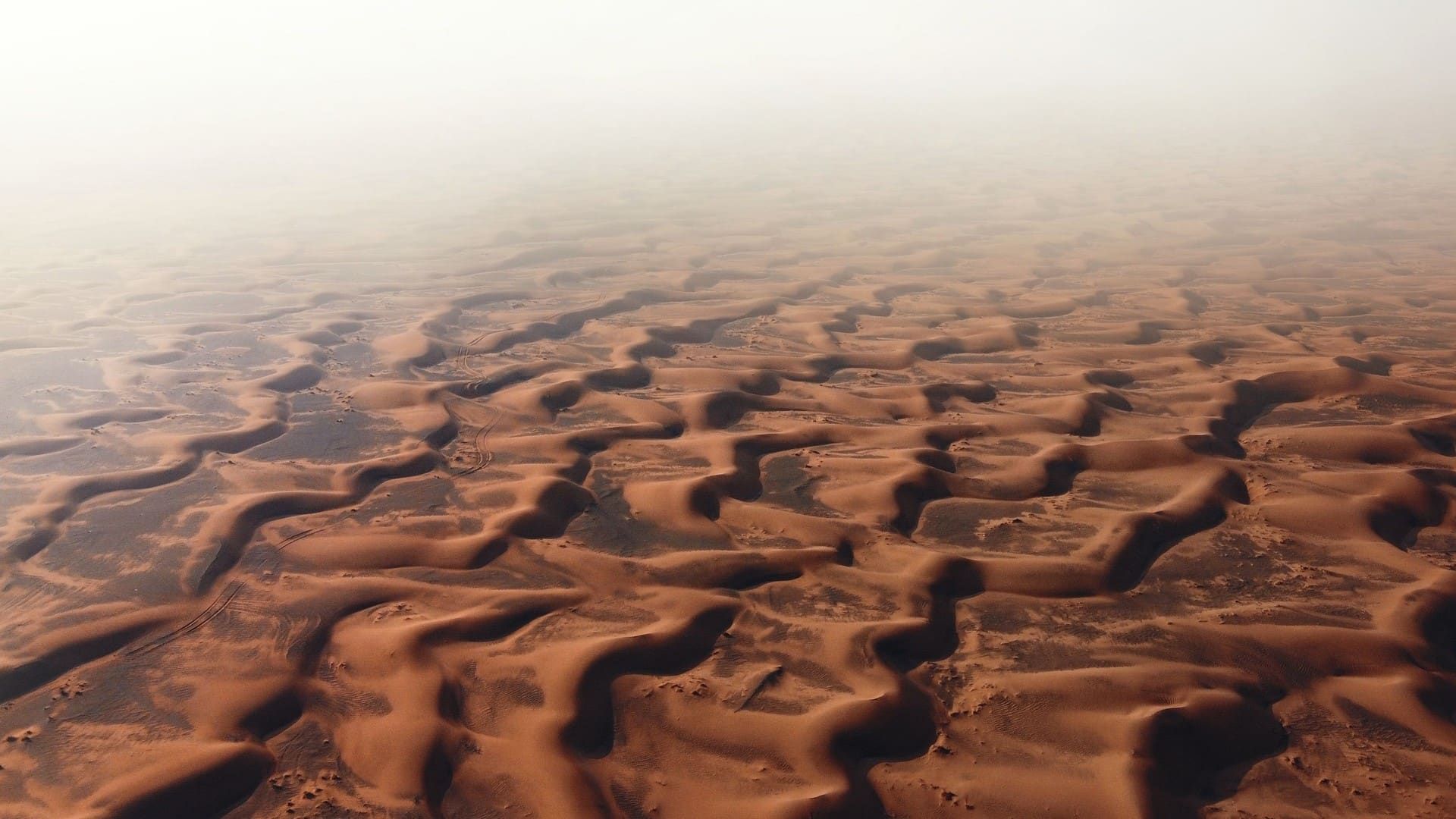
What rain, fog and sandstorms mean for a desert safari
Which weather can change a safari day?
Three kinds of weather change a safari day: rain with thunder, fog, and dust carried by wind. NCM, the UAE's weather service, has a safety page for each, and its recent warnings notices show how it describes them.
- Dust. On 4 March 2026 NCM warned of active northwesterly winds, fresh to strong at times, causing blowing dust and sand and cutting horizontal visibility to under 2,000 metres in some coastal and inland areas. The warning ran from 14:55 to 19:00.
- Fog. On 17 February 2026 NCM warned of possible fog and sharply reduced visibility across several western regions, from 21:30 that night to 10:00 the next morning, with visibility possibly dropping to zero at times.
- Rain. On 16 April 2024 NCM called the previous 24 hours an exceptional event in the UAE's climate history, with 254 mm at Khatm Al Shakla in Al Ain. WAM reported it as the heaviest rainfall since data collection began in 1949.
Each is a single day, not a measure of how often such days happen. NCM's pages are written for households and drivers. They do not say when a tour should run, which is why the last section of this page turns to the booking conversation.
Rain and thunder: how often, and what the advice says
Rain is rare in Dubai and falls mostly in winter. The WMO 1991 to 2020 climate normals for Dubai International Airport give 79 mm for a full year, and December to March supply 67 mm of it. From May to September the monthly average stays at about 1 mm or less.
| Month | Average rain (mm) | Wettest day (mm) | Date of that day |
|---|---|---|---|
| January | 20.8 | 65.0 | 15 January 2008 |
| February | 9.9 | 56.5 | 6 February 1993 |
| March | 21.7 | 90.5 | 12 March 1996 |
| April | 3.3 | 16.0 | 10 April 2011 |
| May | 0.1 | 1.1 | 11 May 2002 |
| June | under 0.1 | 0.6 | 21 June 2019 |
| July | 1.1 | 17.0 | 22 July 1995 |
| August | under 0.1 | under 0.1 | 4 August 2012 |
| September | under 0.1 | 1.3 | 10 September 1994 |
| October | 1.5 | 32.7 | 31 October 1997 |
| November | 5.9 | 42.2 | 30 November 2012 |
| December | 14.8 | 45.0 | 2 December 2006 |
The figures come from one station at the airport, so they describe the airport and not the dunes. An average also hides the extremes: March averages 21.7 mm, yet its wettest day in the same 30 years brought 90.5 mm, on 12 March 1996, more than four times the monthly figure. The averages here carry no promise about any given date. For the temperatures and daylight of each month, the best time of year for a Dubai desert safari guide has the month-by-month calendar.
For heavy rain, NCM asks people at home to leave only in an emergency and to keep away from glass doors and windows. Outdoors it says to avoid flowing water and valley ducts, to avoid standing under tall trees or poles that stand alone, and to use a mobile phone outdoors only in urgent cases during thunder. Drivers are told to slow down, not overtake, turn on their lights, and keep out of flooded areas, where flowing water can take control of a car. A safari in the rain is an outdoor plan, and this advice is written around staying in. If NCM has a rain warning out for your date, raise it with the desk before the day, not at the pickup.

Fog: when it forms and what drivers are told
Fog is first a driving hazard. NCM's thick-fog page says fog forms in some areas of the country in the early morning, and the warning of 17 February 2026 ran overnight, from 21:30 to 10:00. A window like that covers both a late-evening return and an early start. That warning named several western regions, so it shows timing, not a pattern for Dubai.
The page is addressed to drivers. It says to reduce speed on entering fog, leave extra distance to the vehicle ahead, and not overtake unless necessary. It says to keep to low-beam lights and use hazard lights only in an emergency, and to stop off the road, away from traffic, if driving becomes impossible. It asks drivers to keep their attention on the road and off the phone, and it asks parents to delay outdoor trips in bad weather.
254 mm
Rain recorded at Khatm Al Shakla in Al Ain in under 24 hours, to 9 pm on 16 April 2024
NCM called it exceptional in the UAE's climate history. It fell in Al Ain, not Dubai, and is more than three times the 79 mm Dubai International records in a whole year.
Sandstorms: what drives them and what NCM advises
A sandstorm is wind lifting dust and sand until visibility drops. NCM's own warnings use the loss of horizontal visibility as the measure: under 2,000 metres in the 4 March 2026 warning, where the cause was northwesterly wind.
That wind has a local name, the shamal. A 2022 peer-reviewed paper on the atmosphere near the Empty Quarter separates two kinds. Winter shamal events follow the passage of a cold front, are generally the stronger of the two, and have a time scale of 24 to 36 hours or 3 to 5 days. That is the time scale of the wind event, not how long dust or a sandstorm lasts. Summer events are generally weaker but, the authors write, play a larger part in dust activity across the Arabian Peninsula. The paper describes patterns across the whole region. It gives no rate of dust days for Dubai, so this page gives none.
In a sandstorm, NCM tells people outdoors to find a safe place, to cover the nose and mouth with a mask or a wet cloth, to wear glasses, and to avoid tall trees. It tells people with allergies, asthma or chest infections to avoid open areas, and it asks everyone to postpone outdoor activity until the storm ends. Drivers are told to avoid sand blown onto open roads, slow down, not overtake, and shut the air conditioning's outside-air intake. If visibility is extremely poor, they leave the main road for a side road if possible, stop, and keep the lights on. After a storm, NCM asks drivers to check that the road is clear of sand and to drive carefully where sand remains, since a car can slip.
The three NCM safety pages side by side
The pages share a shape: what to do before, during and after, for people at home and for drivers. The table lines up the parts that matter on a safari day.
| Situation | Heavy rain and thunder | Thick fog | Sandstorm |
|---|---|---|---|
| Outdoors | Avoid flowing water and valley ducts; avoid lone tall trees and poles; phone only in urgent cases | Parents delay outdoor trips in bad weather | Find a safe place; mask or wet cloth and glasses; avoid tall trees; postpone outdoor activity |
| Driving | Slow down; no overtaking; lights on; stay out of flooded areas | Slow down on entering fog; extra distance; low beams; hazard lights only in an emergency | Slow down; no overtaking; shut the outside-air intake; avoid sand blown onto open roads |
| If you cannot continue | Park off the road and tell family you are safe | Stop off the road, away from traffic | Leave the main road for a side road if possible, stop, keep the lights on |
| People it names | Children kept out of open areas | Parents | People with allergies, asthma or chest infections; children with respiratory disease |
The table is the public's advice from the weather service, not an operator's rulebook.
How to check the forecast and warnings for your date
Check NCM first. It publishes a forecast, a warnings map, an Early Warnings for All platform, and a UAE Weather app for iOS and Android. Its FAQ page says its outlook covers only three days, to keep the forecasts accurate.
That sets a simple routine. Weeks ahead, the monthly rainfall table above is the only guide, and it is a rough one. Two or three days before, read the forecast. On the morning, read the warnings map again before you leave. If a warning covers your date, tell the desk as early as you can.
Guests who should plan around weather first
Two groups sit in NCM's advice by name. The sandstorm page tells people with allergies, asthma or chest infections to avoid open areas, and says children with respiratory disease, asthma or allergies should not go out in a sandstorm except in urgent cases. The fog page asks parents to delay outdoor trips in bad weather.
If anyone in your group fits either line, say so when you book and ask about moving the date when a warning is out. The Dubai desert safari safety guide covers the other health points, and the Dubai desert safari with kids page covers each age.

Questions to ask before you pay
Whether a safari runs in rain, fog or dust, and what follows if it does not, is settled by the terms of your booking, not by NCM, so the useful step is a short conversation before you pay. Ask these seven questions and keep the answers in writing.
- Who decides whether the safari runs on a warning day, and when do I hear?
- Is the outcome a refund, a new date or a credit, and is it my choice?
- Does the answer change for rain, for fog and for dust?
- Is any deposit or fee kept if the safari does not run?
- How long do I have to use a new date?
- What happens if the safari runs and I choose not to go?
- Can you confirm all of this in writing, on WhatsApp or by email?
The questions above are for your date, so send them to BookMySafari on WhatsApp and keep the reply.
Ask the desk about your date
Send your date, your hotel area and anything from this page that applies to your group, such as asthma, and ask the seven questions above. Bookings on this page are fulfilled by Velari Tourism L.L.C, DET license #1491675.
WhatsApp the desk about the weather on your dateQuick answers
Frequently asked questions about rain, fog and sandstorms on safari
-
What happens to a desert safari in rain, and can it be cancelled?
Whether a tour runs in rain depends on the operator and the booking terms, not on the weather centre. The National Center of Meteorology (NCM) publishes a heavy-rain page for the public: people at home leave only in an emergency, and people outdoors keep away from flowing water, valley ducts and tall trees or poles standing alone. NCM does not say when a tour should run. If NCM has a rain warning out for your date, ask the desk what happens to your booking before the day, and ask for the answer in writing. -
What should you do in a sandstorm on a desert safari day?
NCM's sandstorm page tells people outdoors to find a safe place, cover the nose and mouth with a mask or a wet cloth, wear glasses, avoid standing under tall trees, and avoid open areas if they have allergies, asthma or a chest infection. It also asks people to postpone outdoor activity until the storm ends. Drivers are told to slow down, not overtake and keep a safe distance. Ask the desk about your date before the day, since NCM does not set safari rules. -
Does fog affect a desert safari?
Fog affects driving first. NCM's thick-fog page is addressed to drivers: reduce speed on entering fog, leave extra distance, do not overtake unless necessary, use low-beam lights, and stop off the road if you cannot continue. NCM's warning of 17 February 2026 for several western regions ran from 21:30 to 10:00 the next morning, so a fog warning can cover both a late return and an early start. -
How much does it rain in Dubai?
Little, and mostly in winter. The WMO 1991 to 2020 climate normals for Dubai International Airport give 79 mm for a whole year, and December to March supply 67 mm of that. From May to September the monthly average stays at about 1 mm or less. The table above lists each month and the wettest single day in those 30 years. -
Where can I check the forecast and warnings for my safari date?
Start with the National Center of Meteorology: its forecast and its warnings map, the Early Warnings for All platform, and the UAE Weather app for iOS and Android that NCM lists on its FAQ page. NCM says on that page that its outlook covers only three days, so for a date weeks away, treat the monthly figures as a rough guide, and check again two or three days before and on the morning itself. -
How do I protect my nose, mouth and eyes from blowing dust?
NCM's advice for people outdoors in a sandstorm is a mask or wet cloth over the nose and mouth and glasses for the eyes. A scarf and sunglasses cover most of that. The what to wear on a Dubai desert safari guide covers fabrics and footwear. -
Is a dusty day a problem for a child with asthma?
NCM's sandstorm page says children with respiratory disease, asthma or allergies should not go out in a sandstorm except in urgent cases, and its thick-fog page asks parents to delay outdoor trips in bad weather. Tell the desk about the condition when you book, and ask your child's doctor before a day in open desert.
