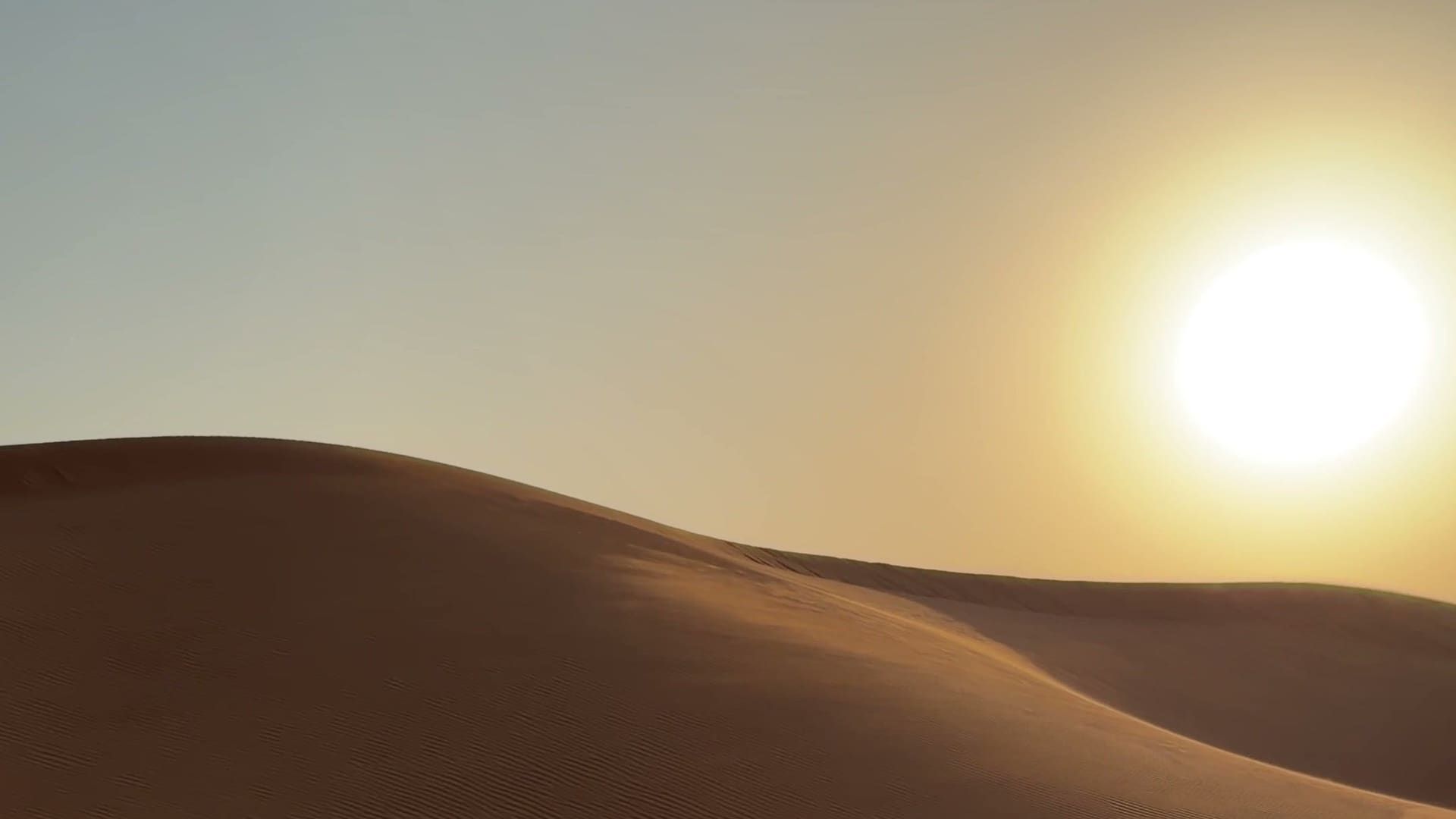
The Arabian Desert and where Dubai sits within it
Where Dubai sits in the Arabian Desert
Dubai sits inside the Arabian Desert. The UAE Government Media Office describes the emirate as situated on the eastern coast of the Arabian Peninsula, southwest of the Arabian Gulf, and says it "lies directly within the Arabian Desert."
The emirate covers 4,114 square kilometres, equal to 5% of the UAE, with a coast of about 72 kilometres. The Media Office adds that much of the city's landscape shows sandy desert patterns.
Where one desert ends and the next begins is hard to draw. Guinness World Records says precise boundaries for the Rub' al Khali are difficult to assess because it abuts other deserts in the region. The sources checked for this guide do not agree on one area for the Arabian Desert as a whole, so this guide gives no total and compares only areas it can source.
The names heard on a Dubai trip, Lahbab, Al Awir, Al Marmoom and the Dubai Desert Conservation Reserve, are places inside Dubai's part of this desert. Dubai desert safari locations: Lahbab, Al Marmoom, DDCR and more sets them side by side.
Dubai's reserves and the Rub' al Khali, by area
The Rub' al Khali covers 136 to 158 times the area of the whole emirate of Dubai. The Rub' al Khali, called the Empty Quarter, lies on the Arabian Peninsula, and NASA's Earth Observatory describes it as the world's largest sand sea, roughly the size of France. The table sets it against Dubai's own ground. Dubai Municipality's list also names other desert reserves, among them Ghaf Nazwa and Al Wohoosh, which the table leaves out.
| Place | Area | What the source says |
|---|---|---|
| Emirate of Dubai | 4,114 km² | Equal to 5% of the UAE (UAE Government Media Office). |
| Al Marmoom Desert Conservation Reserve | 949.35 km² | Total area in Dubai Municipality's protected-areas list. Key habitats include dunes, gravel plains and artificial lakes. |
| Dubai Desert Conservation Reserve | 225.9 km² | Total area in Dubai Municipality's protected-areas list. Key habitats include sand sheets, dunes and gravel plains. |
| Rub' al Khali, lower figure | 560,000 km² | Guinness World Records. About 80% lies in Saudi Arabia, with the rest in Oman, Yemen and the UAE. |
| Rub' al Khali, higher figure | 650,000 km² | Saudi Archaeology (Layan Cultural Foundation Project): 1,000 km long and 500 km wide. |
| The Arabian Desert as a whole | No agreed figure | The sources checked for this guide do not agree, so none is printed here. |
The two Rub' al Khali figures differ by 90,000 square kilometres, and Guinness says the boundary is hard to fix. Either figure dwarfs Dubai. NASA adds that the sand sea holds about half as much sand as the entire Sahara Desert.
136 to 158 times
the area of the emirate of Dubai: the size of the Rub' al Khali (560,000 to 650,000 km²)
Areas from the UAE Government Media Office, Guinness World Records and Saudi Archaeology. The ratio is computed for this guide.

Where the Rub' al Khali reaches the UAE
In the UAE, the Rub' al Khali's northern edge runs past Liwa, in Abu Dhabi, not Dubai. A Liwa entry on the UNEP/GRID-Geneva Environmental Hotspots site places it in central Abu Dhabi Emirate on the northern edge of the Rub al Khali, the "Empty Quarter" desert, and Visit Abu Dhabi describes the Liwa Hotel as sitting at the gateway of the Empty Quarter.
Visit Abu Dhabi gives the journey to the Liwa Hotel, in the Al Dhafra region, as around 3.5 hours from Dubai and around 2.5 hours from Abu Dhabi.
Two sources describe the dunes at Liwa. The UNEP page says the Liwa Crescent stretches 120 kilometres from east to west, with fifty communities along it, and that its red mega-dunes reach 150 metres. Visit Abu Dhabi gives Tal Moreeb, the dune of the Liwa International Festival, as 300 metres tall. The two sources give different heights and neither says how the height is measured, so this guide gives both and picks neither.
A Dubai trip does not reach Liwa. The evening safari runs in the Lahbab or Al Awir dunes and the overnight safari in the Lahbab dunes, both inside Dubai. The choice between the two emirates is set out in Dubai vs Abu Dhabi desert safari, which emirate wins for you?
What the desert looks like inside Dubai
Inside Dubai the desert holds several ground types. Dubai Municipality lists seven key habitats for Al Marmoom Desert Conservation Reserve: sand sheets with Panicum, ghaf (Prosopis cineraria) woodland, dunes, aeolianite, sabkhas listed as interdunal plains, gravel plains and artificial lakes. For the Dubai Desert Conservation Reserve it lists three: inland sand sheets and dunes, ghaf woodland, and interdunal or gravel plains.
The climate is hot and dry. Dubai gets 87.3 millimetres of rain a year, and 64.9 of them fall in January, February and March, according to the UAE Government Media Office. The Office calls the summers extremely hot and humid and the winters warm and short.
| Measure | Figure | Note |
|---|---|---|
| Summer | 41.8 °C high, 29.7 °C overnight low | Average high and average overnight low. |
| Winter | 23 °C high, 14 °C overnight low | Average high and average overnight low. |
| Rain in the year | 87.3 mm | Accumulated rain per year. |
| Rain, January to March | 15 mm, 31 mm, 18.9 mm | Media Office figures, station and years not stated; 64.9 mm in the three months, the sum computed for this guide. |
Month-by-month temperatures and daylight are in Best time of year for a Dubai desert safari. The animals and plants of this ground are in Wildlife of the UAE desert and Plants of the UAE desert and when they flower.
Three places to see Dubai's part of the desert
Each of the three below has its own guide with access, rules and what the ground looks like.
- The Lahbab desert: Dubai's red dunes explained, the dune system the overnight safari uses, and one of two the evening safari uses.
- Al Marmoom Desert Reserve, Dubai's open conservation desert, listed by Dubai Municipality at 949.35 square kilometres.
- Inside the Dubai Desert Conservation Reserve (DDCR), listed by Dubai Municipality at 225.9 square kilometres.
Ask the desk which dunes fit your trip
Send your date and hotel on WhatsApp and the BookMySafari desk matches a package to your trip. Bookings on this page are fulfilled by Velari Tourism L.L.C, DET license #1491675.
Message us on WhatsAppQuick answers
Frequently asked questions about the Arabian Desert and Dubai
-
Is Dubai in the Arabian Desert?
Yes. The UAE Government Media Office states that Dubai lies directly within the Arabian Desert. The emirate sits on the eastern coast of the Arabian Peninsula and covers 4,114 square kilometres, 5% of the UAE. Its inland ground includes dunes, gravel plains and ghaf woodland, according to the habitat lists Dubai Municipality publishes for Al Marmoom and the Dubai Desert Conservation Reserve. -
What is the Rub' al Khali, or Empty Quarter?
The Rub' al Khali is the great sand desert of the Arabian Peninsula. Guinness World Records gives 560,000 square kilometres, about 80% of it in Saudi Arabia, with the rest in Oman, Yemen and the UAE. Saudi Archaeology gives 650,000 square kilometres, 1,000 kilometres long and 500 wide. NASA's Earth Observatory calls it the world's largest sand sea and says it holds about half as much sand as the entire Sahara. -
Is any of the Rub' al Khali in Dubai?
No source checked for this guide places any of it in the emirate of Dubai. In the UAE, Liwa, in the emirate of Abu Dhabi, sits on the northern edge of the desert. Visit Abu Dhabi gives the journey from Dubai to the Liwa Hotel, which it places at the gateway of the Empty Quarter, as around 3.5 hours. -
How big is the Arabian Desert?
The sources checked for this guide do not agree on one area for the Arabian Desert as a whole, so no total is given here. Two parts have sourced areas: the emirate of Dubai at 4,114 square kilometres, and the Rub' al Khali at 560,000 to 650,000 square kilometres, depending on the source. Guinness World Records adds that precise boundaries are hard to assess because the sand sea abuts other deserts. -
How much rain does Dubai get in a year?
Dubai gets about 87.3 millimetres of rain a year, according to the UAE Government Media Office. Most falls in winter, on the Media Office figures: 15 millimetres in January, 31 in February and 18.9 in March, which adds up to 64.9 millimetres across the three months. The Office does not say which station or years the figures cover. -
What kinds of ground make up Dubai's desert?
Dubai Municipality lists seven key habitats for Al Marmoom Desert Conservation Reserve: sand sheets with Panicum, ghaf (Prosopis cineraria) woodland, dunes, aeolianite, sabkhas listed as interdunal plains, gravel plains and artificial lakes. For the Dubai Desert Conservation Reserve it lists inland sand sheets and dunes, ghaf woodland, and interdunal or gravel plains.
